Coast Guard D-G Sivamani chairs 138th OSCC meet in Ahmedabad
Synopsis
India's top Coast Guard officer gathered over a dozen agencies in Ahmedabad to stress-test the country's offshore security grid — with drone threats and expanding Andaman and Nicobar exploration putting new pressure on a framework built in 1978. The 138th OSCC meeting signals a significant upgrade in how India plans to defend its critical energy infrastructure at sea.
Key Takeaways
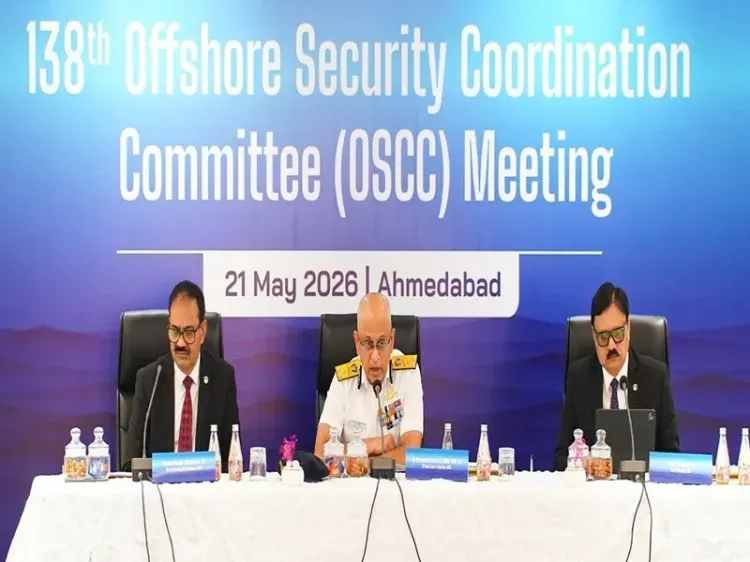
Director General Paramesh Sivamani chaired the 138th OSCC meeting in Ahmedabad on 22 May 2025 .
The meeting reviewed security of India's offshore installations and critical energy infrastructure .
Drone-enabled and unmanned threats, as well as expanding exploration in the Andaman and Nicobar region , were discussed.
Representatives from over 12 agencies attended, including the Indian Navy , IAF , ONGC , Intelligence Bureau , and state police forces.
The OSCC was established in 1978 to frame offshore defence policy and coordinate security arrangements.
Coast Guard Headquarters separately held a farewell for officers superannuating on 31 May .
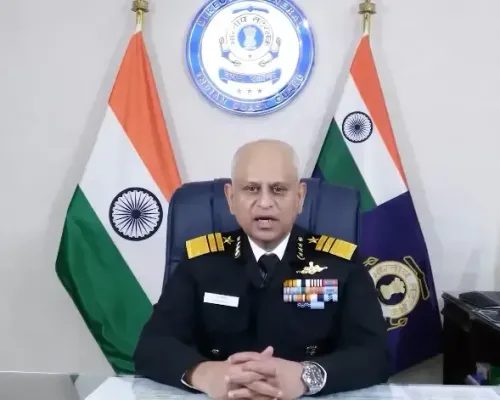
Director General of the Indian Coast Guard, Paramesh Sivamani, on Thursday, 22 May chaired the 138th Offshore Security Coordination Committee (OSCC) meeting in Ahmedabad, conducting a comprehensive review of the security architecture protecting India's offshore installations and critical energy infrastructure. The meeting brought together senior representatives from over a dozen central agencies and state forces to address mounting offshore security challenges.
Key Areas of Focus
Sivamani directed deliberations toward enhancing maritime domain awareness, reinforcing inter-agency coordination, and upgrading surveillance capabilities. Improving joint response mechanisms to counter emerging threats was also high on the agenda, according to an official statement.
Notably, the meeting examined the evolving global and regional security environment, including modern warfare dynamics such as unmanned systems and drone-enabled threats — a growing concern across maritime theatres worldwide. Expanding offshore exploration activities in the Andaman and Nicobar region were also discussed, reflecting India's deepening strategic and energy interests in those waters.
Agencies Represented
The 138th OSCC session was attended by officials from the Indian Coast Guard (ICG), Indian Navy, Indian Air Force, Ministry of Home Affairs, Ministry of External Affairs, Ministry of Petroleum and Natural Gas, Director General Hydrographer, DG Shipping, Intelligence Bureau, Oil and Natural Gas Commission (ONGC), and state police forces. The breadth of representation underscores the committee's role as a cross-government platform for offshore defence coordination.
OSCC's Mandate and History
The OSCC was constituted in 1978 with the specific mandate of ensuring effective offshore security arrangements. Over more than four decades, it has shaped policy and provided operational guidance on Offshore Defence Area issues. The committee's continued relevance has grown sharper as India's offshore oil and gas output, and its associated infrastructure, has expanded considerably since its founding.
Sivamani has previously stressed the strategic importance of energy security, calling for all possible measures to protect offshore assets — assets he has described as foundational to India's economic growth and energy independence.
Farewell to Retiring Officers
In a separate development on Friday, 23 May, Coast Guard Headquarters held a farewell ceremony for officers set to superannuate on 31 May. Director General Sivamani, AVSM, PTM, TM, personally felicitated the veterans, commending their service in safeguarding India's maritime frontiers.
The headquarters also hosted a curated session on financial planning and health management for the retiring officers. 'To ensure a seamless transition into retirement, the Coast Guard Headquarters hosted a curated session on financial planning and health management, reinforcing our lifelong commitment to guardians of the sea,' the Indian Coast Guard said on social media.
With drone threats on the rise and India's offshore energy footprint expanding into the Andaman and Nicobar waters, the OSCC's next cycle of deliberations will be closely watched by both security planners and the energy sector.
Point of View
The security perimeter India must defend has grown considerably, yet the OSCC framework dates to 1978. Whether the committee's inter-agency architecture can keep pace with the speed and asymmetry of modern drone threats remains the central question that the meeting raised but did not publicly answer.
NationPress
21 Oct 2026
Frequently Asked Questions
What is the Offshore Security Coordination Committee (OSCC)?
The OSCC is a multi-agency body constituted in 1978 to oversee and coordinate the security of India's offshore installations and maritime defence areas. It brings together the Coast Guard, Navy, Air Force, intelligence agencies, and energy ministries to frame policy and resolve offshore security issues.
What was discussed at the 138th OSCC meeting in Ahmedabad?
The meeting reviewed maritime domain awareness, inter-agency coordination, surveillance capabilities, and joint response mechanisms. It also addressed drone-enabled and unmanned threats, evolving global security dynamics, and expanding offshore exploration in the Andaman and Nicobar region.
Who attended the 138th OSCC meeting?
Representatives from the Indian Coast Guard, Indian Navy, Indian Air Force, Ministry of Home Affairs, Ministry of External Affairs, Ministry of Petroleum and Natural Gas, DG Hydrographer, DG Shipping, Intelligence Bureau, ONGC, and state police forces attended the meeting.
Why is offshore security important for India?
India's offshore installations produce a significant share of the country's oil and gas output, making them critical to energy security and economic stability. Director General Sivamani has previously described their protection as essential to India's growth and energy independence.
What is the significance of drone threats to Indian offshore security?
The OSCC meeting specifically flagged unmanned and drone-enabled threats as part of modern warfare dynamics, reflecting a broader global shift in how adversaries can target fixed offshore infrastructure. This marks an expansion of the traditional threat matrix that the OSCC was originally designed to address.