Congress Leader Questions Insurance Firms on Farmers' Compensation
Synopsis
Congress Rajya Sabha member Rajeev Shukla brings attention to the inadequacies of the crop insurance scheme, highlighting the meager compensation provided to farmers following natural disasters. His call for accountability seeks to ensure fair treatment for agricultural workers facing financial struggles.
Key Takeaways
Inadequate compensation from insurance firms affects farmers' livelihoods.
The verification process for claims is often delayed.
Farmers receive minimal amounts despite significant losses.
There is a need for systematic reforms to the insurance scheme.
Government accountability is essential for fair compensation.
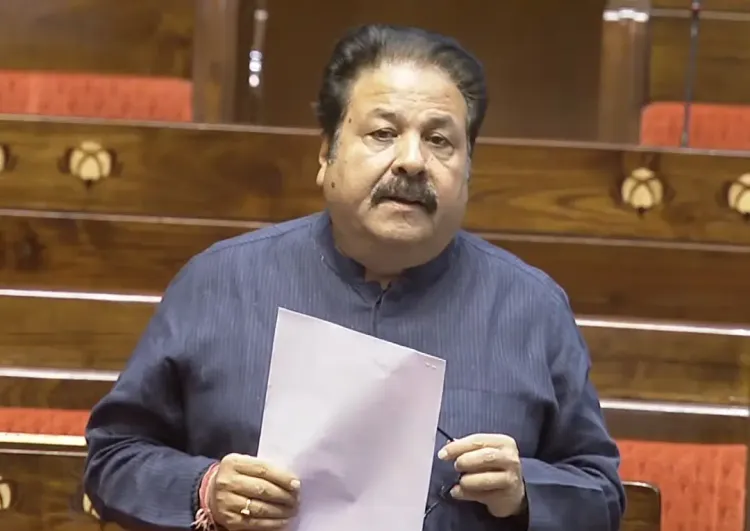
New Delhi, March 13 (NationPress) Rajeev Shukla, a member of the Congress in the Rajya Sabha, highlighted concerns in the House regarding the crop insurance scheme affecting farmers. He asserted that insurance companies are failing to offer adequate and complete compensation to farmers.
This issue is profound, impacting millions of agricultural workers across the country.
Shukla cited instances from various states, pinpointing significant shortcomings in the insurance program. For example, in Maharashtra, after crop destruction, some farmers received as little as Rs 21, while others got Rs 8 or even just Rs 3.
He referred to the Prime Minister’s Crop Insurance Scheme, which was designed to offer farmers protection against natural disasters like droughts, floods, hailstorms, and pests. By paying a nominal premium, farmers would receive financial assistance during challenging times, ensuring a steady income.
In the Bareilly district of Uttar Pradesh, Shukla reported that floods had devastated paddy crops. Although farmers applied for insurance, the compensation amounts were strikingly low—Rs 3.76 in some cases and Rs 2.62 in others. He questioned how a farmer could afford to replant crops or even buy diesel and pesticides with such minimal payments, sarcastically suggesting that they would need to showcase these small sums as proof of their insurance.
Shukla remarked that insurance is intended to provide essential support during crises. However, the current situation leaves farmers unable to even recharge their mobile phones with the compensation they receive.
Moreover, he indicated that the challenges extend beyond the compensation amounts. In many regions, the verification of crop damage doesn't happen timely. Officials often arrive only after the crops have been destroyed, when it's time to re-sow. There are frequent issues with the online portal and server failures, causing farmers to struggle for their compensation without success. Furthermore, under the 'area approach', averages are calculated, meaning even if a farmer's crops are entirely ruined, they are informed that the overall area is considered normal.
Shukla pointed out that farmers contribute merely 1.5 to 2 percent of the premiums, while the government covers the rest—essentially taxpayer money. Consequently, insurance companies collect vast sums in premiums. In favorable years, claims are minimal, yielding profits for these companies. Yet, when farmers seek compensation, they receive paltry amounts like Rs 3 or Rs 5. In some cases, premiums are even deducted from farmers’ accounts without adequate information.
He concluded that this model, where farmers and the government bear the risks while profits go elsewhere, is unjust.
Shukla called on the government to establish clear timelines for the settlement and payment of claims, ensure prompt and transparent assessments of crop damage, conduct evaluations at the actual farm level rather than relying on the area approach, and hold insurance companies accountable so that farmers receive fair and sufficient compensation.
Point of View
The concerns raised by Rajeev Shukla reflect a critical issue in the agricultural sector. The inadequate compensation provided by insurance companies poses a significant threat to farmers' livelihoods. Addressing these shortcomings is vital for ensuring the welfare of millions who rely on agriculture for their survival.
NationPress
19 Sept 2026
Frequently Asked Questions
What are the main concerns about the crop insurance scheme?
The main concerns include inadequate compensation amounts provided to farmers, delays in verification processes, and the reliance on area-based calculations that may not reflect individual losses.
How does the Prime Minister’s Crop Insurance Scheme work?
The scheme allows farmers to pay a small premium to protect their crops against natural disasters, aiming to provide financial support during crises.
What is the impact of low compensation on farmers?
Low compensation hampers farmers' ability to replant crops, purchase necessary resources, and can lead to severe financial distress.
What solutions did Shukla propose?
Shukla proposed clear timelines for claims settlement, timely damage assessments, and holding insurance companies accountable for fair compensation.
What percentage of the premium do farmers pay?
Farmers typically pay only 1.5 to 2 percent of the insurance premium, with the government covering the majority.