Congress raises 4 questions to Modi over Xi meet, cites Ladakh and trade deficit
Synopsis
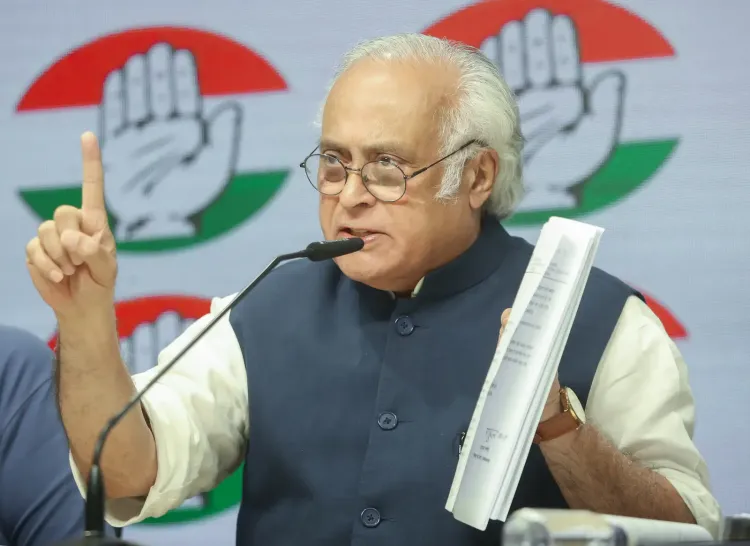
A day after PM Modi met Xi Jinping and stressed border peace as a prerequisite for better ties, Congress's Jairam Ramesh fired four pointed questions at the government — on a 2020 statement that allegedly hurt India's negotiating hand, surrendered patrolling rights in Ladakh, a shifting military narrative on China's Operation Sindoor role, and a record $112.6 billion trade deficit that he says is hollowing out Indian MSMEs.
Key Takeaways
Congress General Secretary Jairam Ramesh accused the BJP government of 'calibrated capitulation' before China on 13 September 2026 .
Ramesh questioned PM Modi's 19 June 2020 remarks that no one had entered Indian territory after the Galwan Valley clashes, saying it weakened India's negotiating stance.
He alleged India surrendered traditional patrolling and grazing rights in parts of eastern Ladakh .
Congress cited a shift in the military's public position on China's role during Operation Sindoor , between Lt.
Rahul Singh's July 2025 remarks and Gen.
Anil Chauhan's August 2026 lecture.
India's trade deficit with China hit a record $112.6 billion in 2025-26 , Ramesh said, warning of critical industrial and MSME damage.
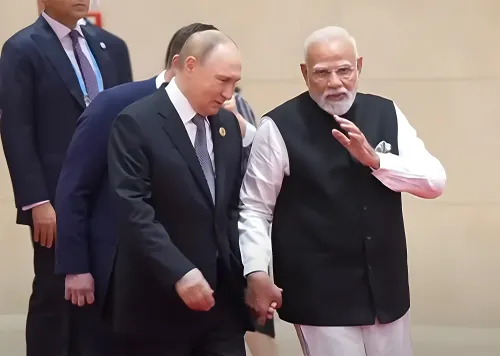
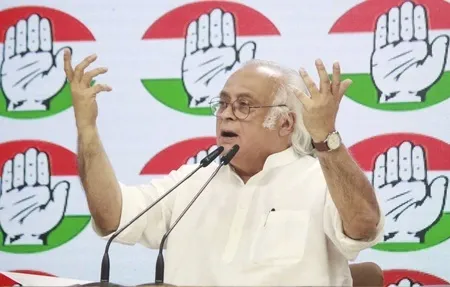
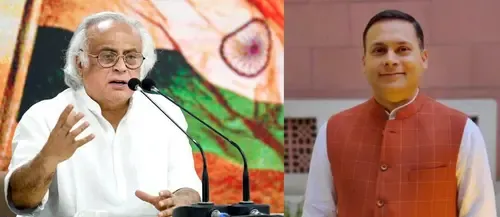
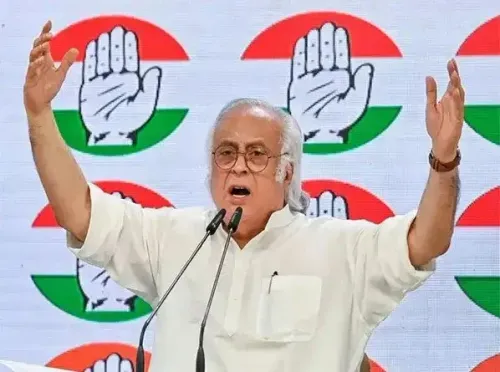
Congress General Secretary Jairam Ramesh on Sunday, 13 September 2026, posed four sharp questions to Prime Minister Narendra Modi over his bilateral meeting with Chinese President Xi Jinping, accusing the Bharatiya Janata Party (BJP) government of 'calibrated capitulation' before Beijing on issues ranging from border security to record trade imbalances.
The Core Accusations
Ramesh, who also serves as Congress in-charge of Communications, anchored his critique on PM Modi's remarks from 19 June 2020, in which the Prime Minister reportedly stated that no one had entered Indian territory following the Galwan Valley clashes. The Congress leader contended that those remarks weakened India's negotiating position at a critical juncture.
He further alleged that India had surrendered traditional patrolling and grazing rights in parts of eastern Ladakh to China — a charge the government has not formally addressed in this specific context.
Arunachal Pradesh and the Brahmaputra Dam
Ramesh raised fresh concerns over what he described as China's territorial assertiveness in Arunachal Pradesh, pointing to alleged loss of access to patrolling points and repeated standoffs. He highlighted Beijing's continued policy of renaming towns in the state and reasserting claims to what China calls 'South Tibet.'
'China's posture on Arunachal Pradesh has only hardened: renaming towns, reasserting claims to what it calls 'South Tibet', and pushing ahead with its 60,000-MW Medog mega-dam on the Brahmaputra's Great Bend, a project that gives it a stranglehold over the water security of our entire northeast,' Ramesh stated in a detailed press note.
Operation Sindoor and the Shifting Military Narrative
The Congress leader also questioned an apparent shift in the government's position on China's alleged role during Operation Sindoor. He cited Lt. General Rahul Singh, the then Deputy Chief of Army Staff, who on 4 July 2025 publicly described China's role in assisting Pakistan during the operation as 'deep and pivotal.' However, Ramesh noted that on 25 August 2026, former Chief of Defence Staff General Anil Chauhan took a 'completely different position' in a lecture at the Vivekananda International Foundation (VIF) — an institution with which the National Security Adviser has been closely associated.
Ramesh questioned whether this softening of stance was a deliberate atmospherics shift ahead of the Modi-Xi meeting.
Record Trade Deficit With China
On the economic front, Ramesh flagged that India's trade deficit with China reached a record $112.6 billion in 2025-26, calling it damaging to large sections of Indian industry, particularly MSMEs. He warned of dangerous levels of dependence on China for critical raw materials, manufacturing components, and intermediates, and demanded a clear government roadmap for addressing the imbalance.
This comes a day after PM Modi conveyed to President Xi that peace and tranquillity along the frontier remains an 'essential component' of building better bilateral ties — a framing that critics argue papers over unresolved structural tensions. How New Delhi navigates these competing imperatives — diplomacy with Beijing on one hand, domestic political accountability on the other — will define the next chapter of India-China relations.
Point of View
Military credibility, and economic nationalism — but the weight of each charge varies. The 2020 Galwan remarks have long been contested territory; the more potent allegation is the apparent divergence between two senior military voices on China's Operation Sindoor role, which, if true, points either to a strategic message shift or an institutional split neither comfortable for the government. The $112.6 billion trade deficit figure, if accurate, is the hardest to deflect — it is a number, not an interpretation. The real question mainstream coverage skips is whether the Modi-Xi meeting produced any verifiable commitment on border normalisation or trade rebalancing, or whether the 'essential component' language was diplomatic boilerplate that allows both sides to manage optics without resolving substance.
NationPress
13 Sept 2026
Frequently Asked Questions
What four questions did Congress pose to PM Modi over his meeting with Xi Jinping?
Congress's Jairam Ramesh questioned PM Modi on: his 2020 Galwan remarks allegedly weakening India's negotiating position; surrender of patrolling and grazing rights in eastern Ladakh; the apparent softening of India's position on China's role during Operation Sindoor; and the government's roadmap to address the record $112.6 billion trade deficit with China in 2025-26.
What did PM Modi say in his meeting with Chinese President Xi Jinping?
PM Modi conveyed to President Xi Jinping that peace and tranquillity along the India-China frontier remains an 'essential component' of building better bilateral ties between the two nations. The meeting took place a day before Congress issued its public critique.
What is the 'calibrated capitulation' charge against the Modi government?
Congress General Secretary Jairam Ramesh used the phrase 'calibrated capitulation' to allege that the BJP government has systematically softened its stance on China — on border patrolling rights in eastern Ladakh, on China's role in Operation Sindoor, and on the ballooning trade deficit — without securing reciprocal concessions from Beijing.
What is the significance of the Medog mega-dam on the Brahmaputra?
The 60,000-MW Medog mega-dam, which China is building on the Brahmaputra's Great Bend, is seen by critics as a potential tool for controlling downstream water flow into India's northeast. Congress raised it as evidence of China hardening its posture in the region, alongside renaming towns in Arunachal Pradesh.
What is India's trade deficit with China in 2025-26?
India's trade deficit with China reached a record $112.6 billion in 2025-26, according to figures cited by Jairam Ramesh. He argued this level of dependence on China for critical raw materials and manufacturing components poses a structural risk to Indian industry, especially MSMEs.