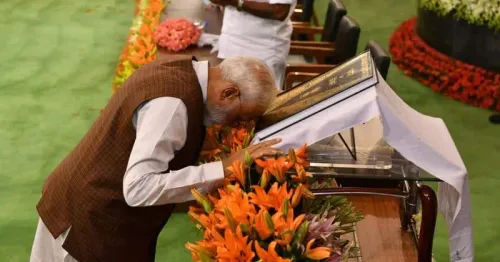
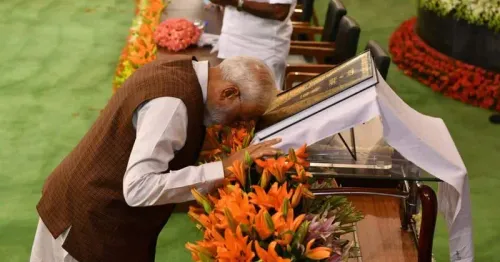
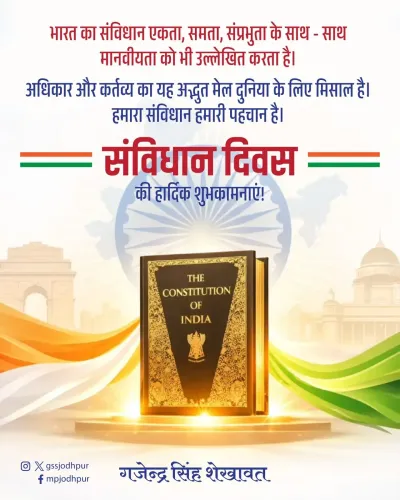
Culture Minister Shekhawat flags PM's Constitution Day article
Synopsis
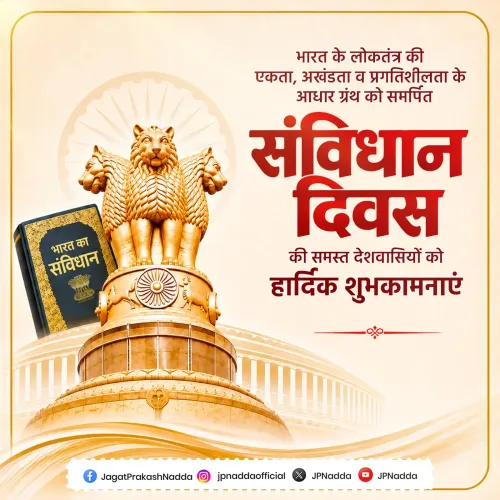
On Constitution Day 2026, Union Culture and Tourism Minister Gajendra Singh Shekhawat called the Constitution the foundation of India's unity, democracy and rights, and urged citizens to read PM Narendra Modi's article on its role in nation-building.
Key Takeaways
Union Culture and Tourism Minister Gajendra Singh Shekhawat posted on Constitution Day, 26 November 2026 , asking citizens to read PM Narendra Modi's article.
He described the Constitution as the foundation of India's unity, democracy and citizens' rights.
India adopted the Constitution on 26 November 1949 ; Constitution Day has been officially observed since 2015 .
The minister tagged the message with #SamvidhanDiwas and #ConstitutionDay.
Annual ministerial messaging since 2015 has stressed the same pillars of democracy and national unity.
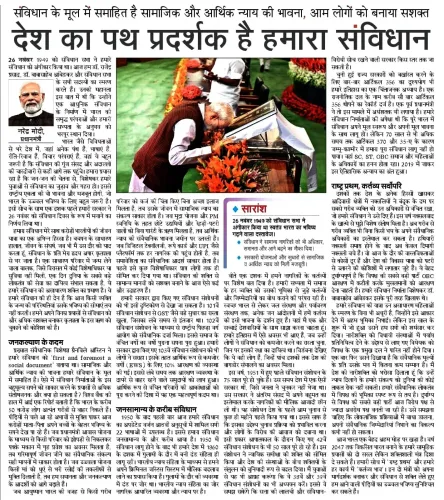
Union Culture and Tourism Minister Gajendra Singh Shekhawat used Constitution Day on 26 November 2026 to put India's supreme law at the centre of the republic's story and to send citizens toward Prime Minister Narendra Modi's article on its role in nation-building. The Jodhpur MP called the Constitution the foundation of the country's unity, democracy and citizens' rights — a civic charter, not a ceremonial prop.
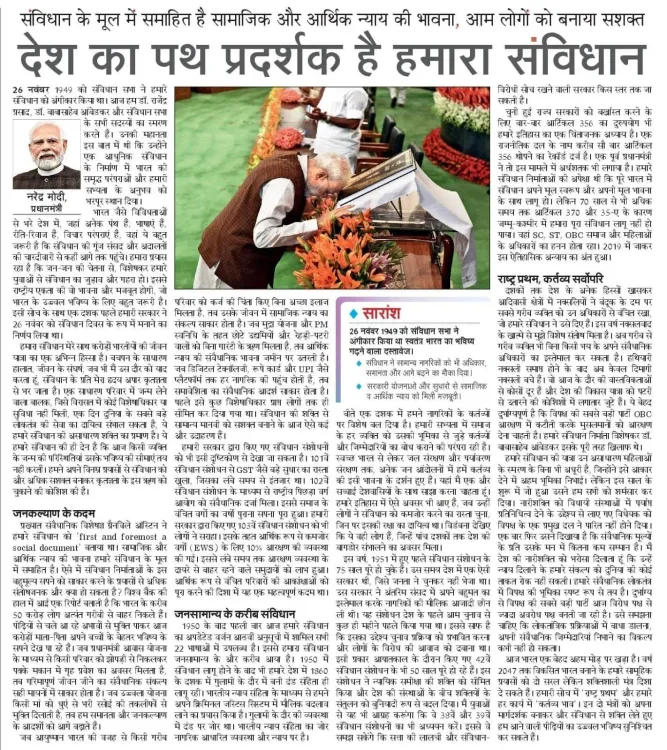
In his post he wrote, in Hindi, that hamara Samvidhan desh ki ekta, loktantra aur nagrikon ke adhikaron ka aadhar hai (our Constitution is the foundation of the country's unity, democracy and citizens' rights). On Samvidhan Diwas, he said, the Prime Minister had presented with simplicity the Constitution's importance and its part in building the nation. The ask was blunt: read that article.
Hashtags #SamvidhanDiwas and #ConstitutionDay locked the message to the national observance rather than a private exchange.
How 26 November became Constitution Day
India adopted its Constitution on 26 November 1949. The text came into force on 26 January 1950, which the country marks as Republic Day. The adoption date itself gained a separate official identity in 2015, when the Government of India declared 26 November as Constitution Day to commemorate that vote and to spread awareness of constitutional values.
The charter remains the supreme law setting the frame for democracy, unity and fundamental rights. Since that 2015 decision, senior ministers have returned to those same three pillars every year. Shekhawat's wording tracked that script almost line for line.
A minister's reading list for Samvidhan Diwas
This was cabinet amplification, not a new statute. A Culture and Tourism minister tying heritage and civic identity to the Prime Minister's written message is how New Delhi now marks the day: one article, many voices, a single constitutional vocabulary.
The post did not spell out the title or the detailed arguments of the 2026 piece. It named the author, the occasion and the duty to read. For a document meant to bind a subcontinent, that is the whole assignment.
As schools, courts and ministries observe Samvidhan Diwas, Shekhawat's note turns a calendar ritual into a reading list for the republic.
Point of View
When 26 November was designated Constitution Day, this date has been a recurring communications pillar, tying day-to-day governance back to the 1949 charter's language of unity, democracy and rights. The Culture and Tourism brief gives that message a heritage hue, folding civic identity into the day's ritual. The test is whether the PM article moves beyond ministerial timelines into classrooms and local administrations.
NationPress
26 Nov 2026
Frequently Asked Questions
When is Constitution Day celebrated in India?
Constitution Day, also called Samvidhan Diwas, is observed every year on 26 November, the date the Constituent Assembly adopted the Constitution of India in 1949.
What did Gajendra Singh Shekhawat say on Constitution Day 2026?
Union Culture and Tourism Minister Gajendra Singh Shekhawat said the Constitution is the foundation of India's unity, democracy and citizens' rights, and asked people to read Prime Minister Narendra Modi's article on its role in nation-building.
Why is 26 November observed as Constitution Day?
The Government of India declared 26 November as Constitution Day in 2015 to commemorate the adoption of the Constitution and to promote awareness of its values.
Who is Gajendra Singh Shekhawat?
He is the Union Minister of Culture and Tourism, a senior BJP leader and the Lok Sabha MP from Jodhpur, Rajasthan.
What is Samvidhan Diwas?
Samvidhan Diwas is the Hindi name for Constitution Day, marked on 26 November to honour the adoption of the Constitution of India.