CM Rekha Gupta Launches Delhi Mega Tree Drive, Targets 70 Lakh Saplings
Synopsis
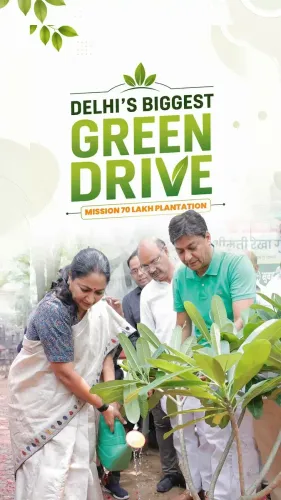
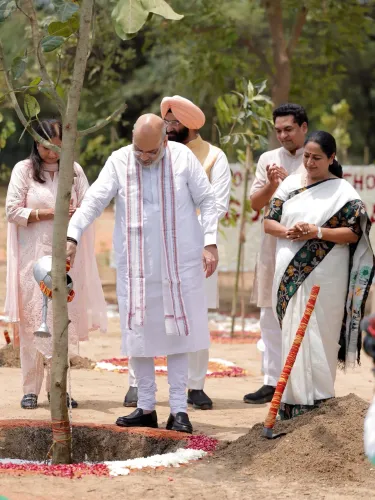
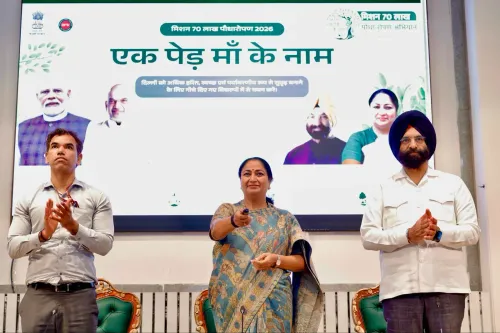
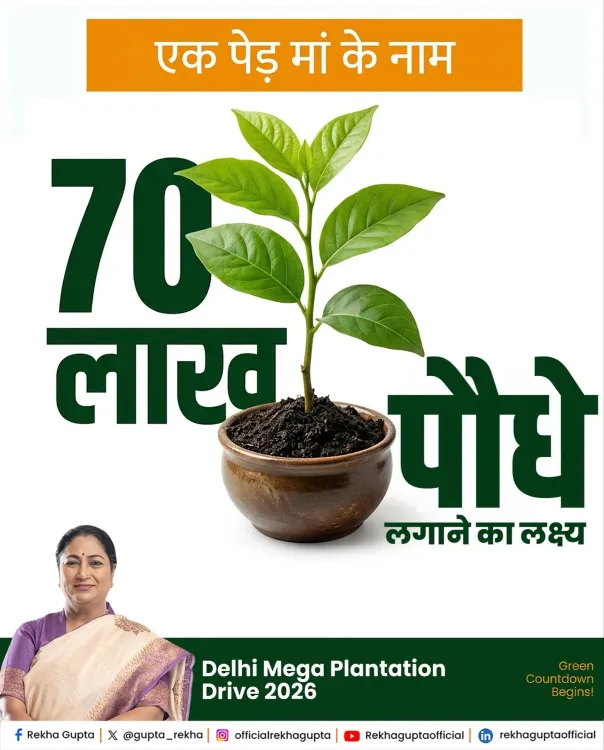
Delhi Chief Minister Rekha Gupta has announced the 'Ek Ped Maa Ke Naam: Delhi Mega Vriksharopan Abhiyan 2026', a citizen-participation tree plantation drive launching on 22 June 2026 with a target of 70 lakh saplings. The government will supply saplings free of cost as part of efforts to expand the capital's green cover and tackle chronic air pollution.
Key Takeaways
Delhi CM Rekha Gupta announced the 'Ek Ped Maa Ke Naam: Delhi Mega Vriksharopan Abhiyan 2026' on 17 June 2026 .
The drive will officially launch on 22 June 2026 with a target of planting 70 lakh saplings across the capital.
Saplings will be provided free of cost by the Delhi government to encourage citizen participation under the #DelhiGreenWarrior banner.
The campaign adapts the national Ek Ped Maa Ke Naam scheme, first launched in 2024 , into a large-scale state-level initiative.
The 70 lakh target represents a major scale-up from Delhi's earlier annual drives, which typically aimed for 5–10 lakh saplings.
Details on species selection, plantation sites, and survival monitoring have not yet been disclosed.
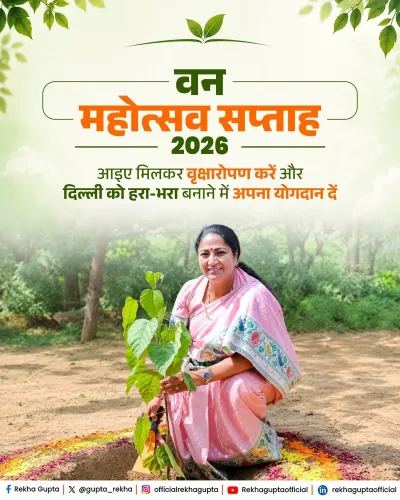
Delhi Chief Minister Rekha Gupta announced on Wednesday, 17 June 2026 that the 'Ek Ped Maa Ke Naam: Delhi Mega Vriksharopan Abhiyan 2026' will be launched on 22 June 2026, targeting the plantation of 70 lakh saplings across the national capital to expand green cover and combat air pollution.
Context
Posting in Hindi on X, CM Gupta described the drive as 'ek mahatvapurn kadam' (an important step) toward ensuring a clean and healthy environment for future generations. She urged citizens to join as 'Green Warriors' in this public-participation initiative, with saplings to be supplied free of cost by the Delhi government. The campaign is pegged to the hashtag #DelhiGreenWarrior.
The announcement adapts the national Ek Ped Maa Ke Naam scheme — launched in 2024 to encourage citizens to dedicate saplings to their mothers — into a large-scale state-level afforestation drive. Several states adopted the template after the national rollout, and Delhi's 2026 edition marks the capital's most ambitious iteration yet in terms of stated sapling targets.
Policy Backdrop
Delhi has historically struggled to cross the 20 percent green cover threshold despite legal mandates and successive annual plantation drives dating back to at least 2018. Earlier campaigns set targets ranging between 5 lakh and 10 lakh saplings annually under various pollution action plans. The 70 lakh target announced for 2026 is therefore a significant scale-up from those earlier efforts.
The capital's air quality consistently ranks among the worst in the country, particularly during winter months, making afforestation a recurring policy response alongside odd-even vehicle schemes, stubble-burning negotiations with neighbouring states, and industrial emission controls. Linking tree plantation to pollution control and intergenerational equity — as CM Gupta's post explicitly does — reflects a well-established communication frame used by governments across party lines in Delhi.
Stakeholders and Impact
The drive is framed as a jan-bhaagidaari (public participation) initiative, positioning Delhi residents, Resident Welfare Associations (RWAs), and environmental non-governmental organisations as co-implementers alongside the government. By committing to supply saplings directly, the administration lowers the barrier for citizen participation and removes the cost variable that has historically limited uptake in similar campaigns.
Environmental groups and urban ecologists have in the past raised concerns about sapling survival rates in plantation drives, noting that post-monsoon audits often reveal significant attrition due to inadequate follow-up care and unsuitable species selection. The specifics of the species mix, plantation sites, and survival monitoring mechanism for the 2026 drive have not yet been disclosed by the government.
What's Next
The formal launch is scheduled for 22 June 2026, with the monsoon season providing natural timing for large-scale plantation activity. Observers will watch for the release of post-monsoon survival audit data and any revision to the 70 lakh target during the 2026-27 budget session. The success of the #DelhiGreenWarrior mobilisation campaign will also be a key indicator of whether the public-participation model translates into ground-level outcomes at the scale the government is projecting.
Point of View
Scaling up a nationally resonant campaign — Ek Ped Maa Ke Naam — to a target that dwarfs previous state-level drives. Framing citizens as 'Green Warriors' and supplying saplings at no cost is a calculated move to broaden participation and deflect the criticism that past drives were government-only exercises with poor community ownership. However, the credibility of the 70 lakh figure will ultimately rest on post-monsoon survival data, which successive administrations have been slow to release. If robust monitoring mechanisms are put in place and made public, this drive could set a new accountability benchmark for urban afforestation in India.
NationPress
16 Sept 2026
Frequently Asked Questions
What is the 'Ek Ped Maa Ke Naam' Delhi campaign 2026?
'Ek Ped Maa Ke Naam: Delhi Mega Vriksharopan Abhiyan 2026' is a tree plantation drive announced by Delhi Chief Minister Rekha Gupta, targeting the planting of 70 lakh saplings across Delhi starting 22 June 2026 to increase green cover and reduce air pollution.
When does the Delhi tree plantation drive 2026 start?
The drive is set to launch on 22 June 2026, timed to coincide with the onset of the monsoon season, which is considered ideal for large-scale sapling plantation.
How can Delhi residents participate in the #DelhiGreenWarrior campaign?
Delhi residents can join as 'Green Warriors' under the public-participation initiative. The Delhi government will supply saplings free of cost, lowering the barrier for citizens, RWAs, and environmental groups to take part.
What is the national 'Ek Ped Maa Ke Naam' scheme?
The national Ek Ped Maa Ke Naam scheme was launched in 2024 to encourage citizens across India to plant a sapling dedicated to their mothers. Several states, including Delhi, have since adopted and scaled the template for state-level afforestation drives.
What is Delhi's current green cover and why does it matter?
Delhi's green cover has remained below 20 percent for years despite legal mandates, contributing to the city's severe seasonal air pollution. Afforestation drives are one of several policy tools used to address the capital's chronic air quality crisis.