Delhi Crime Branch arrests forgery accused after 12-year manhunt, ₹50,000 reward
Synopsis
A man who faked political office letterheads and then vanished for over 12 years was finally caught in a Tamil Nadu poultry farm — after Delhi Crime Branch tracked a single mobile number across state lines. The arrest closes one of the longer fugitive cases in the capital's recent crime records.
Key Takeaways
Delhi Police Crime Branch arrested proclaimed offender Manoharan Kandhasamy on 4 August 2025 , ending a 12-year manhunt.
Kandhasamy carried a reward of ₹50,000 and had been declared a Proclaimed Offender by Patiala House Courts in 2014 .
The forgery case ( FIR No.
33/2008 ) involved fake letterheads of prominent political offices and government authorities.
He was traced to a godown in Tiruchengode, Namakkal district, Tamil Nadu , where he was running a poultry business.
Aged approximately 62 , Kandhasamy admitted to absconding deliberately after securing bail, fearing conviction.
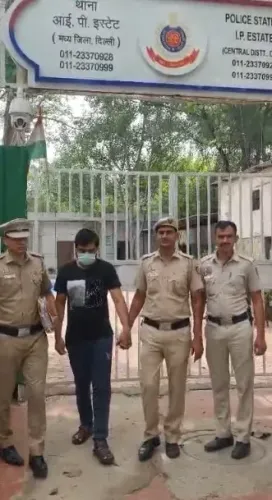
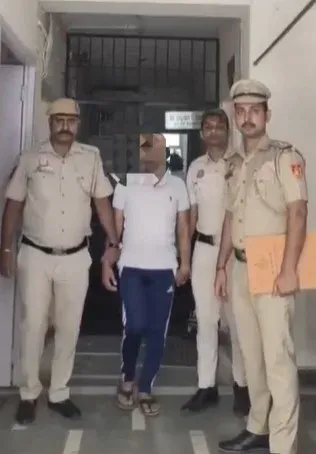
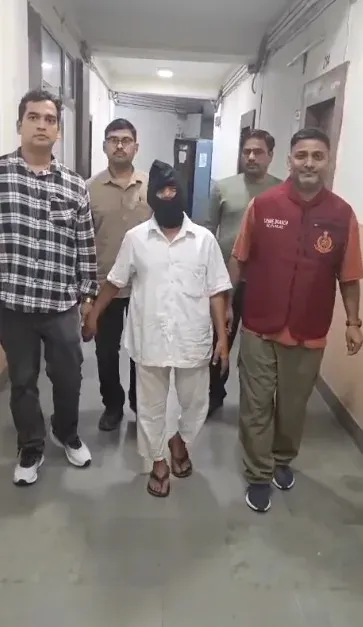
Delhi Police Crime Branch on Monday, 4 August 2025, arrested Manoharan Kandhasamy, a proclaimed offender carrying a reward of ₹50,000, ending a manhunt that had stretched over 12 years in a sensitive forgery case involving fake letterheads of prominent political offices and government authorities. The accused was traced to Tiruchengode in Namakkal district, Tamil Nadu, where he had been living under a concealed identity.
Origins of the Case
The chain of events began with FIR No. 384/2007 under Section 380 IPC at Mandir Marg Police Station, New Delhi, filed on the complaint of Vijay Kumar, a resident of Hyderabad. Kumar reported that gold ornaments and other valuables kept inside an almirah at a Dharamshala in Delhi were stolen after the lock was broken. During the subsequent investigation, police apprehended Kandhasamy, who originally hailed from Mangaluru, Karnataka.
Although the stolen property was not recovered from his possession, investigators found several printed and blank letterheads purportedly issued by eminent political offices and government authorities. The gravity of the discovery led to a separate FIR No. 33/2008 under Sections 465 and 468 of the Indian Penal Code at Mandir Marg Police Station. Both cases were subsequently transferred to the Crime Branch for deeper investigation.
How He Evaded Arrest for Over a Decade
Kandhasamy was arrested in connection with the forgery case and remanded to judicial custody. After approximately one month, the court granted him bail. According to police, he deliberately failed to appear before the court thereafter, absconding and obstructing the judicial process.
In 2014, the Court of the Chief Metropolitan Magistrate at Patiala House Courts, New Delhi, formally declared him a Proclaimed Offender. Despite sustained efforts by investigators over the following years, he remained untraceable, prompting authorities to announce a reward of ₹50,000 for credible information leading to his arrest.
During interrogation, Kandhasamy reportedly admitted that he absconded intentionally, fearing conviction and re-imprisonment. He told investigators he severed ties with former associates, relocated to Tamil Nadu, and continuously concealed his identity and whereabouts from law enforcement.
The Operation That Led to His Arrest
After more than a month of sustained technical surveillance and field verification, the Crime Branch team identified a mobile number allegedly being used by the accused in Tamil Nadu. Continuous surveillance and ground inquiries in the state eventually led investigators to a godown on the outskirts of Tiruchengode, where Kandhasamy was reportedly engaged in the poultry business.
He was arrested on 4 August by the Crime Branch team. Aged approximately 62 years, Kandhasamy had settled in Tiruchengode with his wife and two children, operating a poultry farm as his primary source of income.
Significance of the Arrest
The case is notable not only for the duration of the accused's evasion but also for the nature of the original offence — the alleged misuse of letterheads bearing the identities of prominent political and government offices raises questions about the potential scale of document fraud. This comes amid broader concerns about identity and document forgery in India, where such offences can be leveraged to fraudulently obtain state benefits, influence official proceedings, or impersonate authorities.
The Crime Branch arrest closes a long-pending judicial matter and is expected to bring the case to trial, with Kandhasamy now in custody after more than a decade as a fugitive.
Point of View
Involving fake letterheads of political and government offices, is more serious than routine forgery: such documents can be used to manipulate official processes at scale. That this case sat unresolved for over a decade, despite a court declaration in 2014, points to resource and prioritisation gaps in pursuing white-collar fugitives who do not pose an immediate physical threat. The arrest is a win, but the timeline is a cautionary note.
NationPress
24 Sept 2026
Frequently Asked Questions
Who is Manoharan Kandhasamy and why was he arrested?
Manoharan Kandhasamy is a 62-year-old man originally from Mangaluru, Karnataka, arrested by Delhi Police Crime Branch on 4 August 2025 in connection with a forgery case involving fake letterheads of political offices and government authorities. He had been a proclaimed offender since 2014, evading arrest for over 12 years after jumping bail.
What was the forgery case about?
The case, registered as FIR No. 33/2008 under Sections 465 and 468 IPC at Mandir Marg Police Station in New Delhi, involved the alleged misuse of printed and blank letterheads purportedly issued by prominent political offices and government authorities. The letterheads were recovered during a separate theft investigation.
How did Delhi Police track down the accused after 12 years?
After more than a month of technical surveillance, the Crime Branch identified a mobile number allegedly used by Kandhasamy in Tamil Nadu. Field inquiries led investigators to a godown on the outskirts of Tiruchengode in Namakkal district, where he was arrested while reportedly engaged in the poultry business.
Why had a ₹50,000 reward been announced for Kandhasamy?
The ₹50,000 reward was announced because Kandhasamy had been declared a Proclaimed Offender by the Court of the Chief Metropolitan Magistrate at Patiala House Courts in 2014, after he jumped bail and remained untraceable despite extensive efforts by investigators.
Where was Kandhasamy living when he was arrested?
He had been living with his wife and two children in Tiruchengode, Namakkal district, Tamil Nadu, operating a poultry farm as his primary livelihood. He had reportedly concealed his identity and severed ties with former associates to avoid detection.