DFS directs banks to adopt RBI's MuleHunter.AI to curb mule account fraud

Synopsis
India's Department of Financial Services has ordered banks to fast-track adoption of the RBI's MuleHunter.AI tool — a direct response to Operation Octopus, Hyderabad Police's sweeping crackdown that exposed how weak KYC enforcement at branch level has turned thousands of innocent people's accounts into cyber fraud pipelines.
Key Takeaways
DFS Secretary on 30 April 2025 directed all banks to adopt MuleHunter.AI , an RBI-developed tool to detect and prevent mule accounts.
A high-level meeting in New Delhi reviewed Operation Octopus , Hyderabad Police's recent crackdown on mule accounts used in digital financial fraud.
Hyderabad Police Commissioner V.
Sajjanar wrote to RBI Governor Sanjay Malhotra urging stringent directives and branch-level accountability for KYC lapses.
State Level Bankers' Committees have been asked to sensitise state police authorities and ramp up public awareness on cyber fraud prevention.
Real-time intelligence sharing and faster response mechanisms between banks and law enforcement are now a stated priority under the Operation Octopus framework.
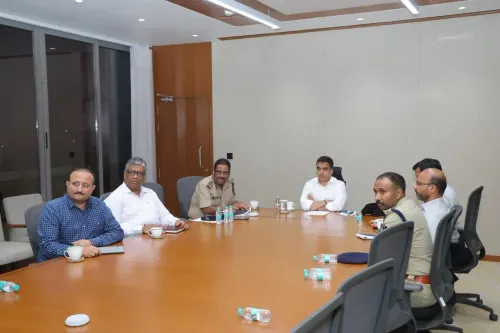
The Secretary, Department of Financial Services (DFS), on Thursday, 30 April 2025, instructed banks across India to adopt MuleHunter.AI — a tool developed by the Reserve Bank of India (RBI) — at the earliest, to identify and shut down mule accounts being exploited in digital financial frauds. The directive came during a high-level inter-agency meeting held in New Delhi, chaired by the DFS Secretary.
Key Developments from the High-Level Meeting
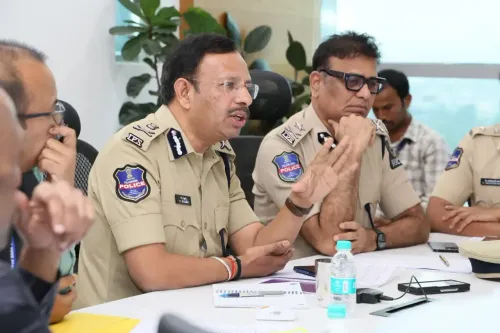
The DFS Secretary chaired a meeting with Hyderabad Police Commissioner V. C. Sajjanar and senior officials from the Indian Cyber Crime Coordination Centre (I4C), the Central Bureau of Investigation (CBI), the Reserve Bank of India, the Indian Digital Payments Infrastructure Company, and representatives from multiple banks. The agenda: reviewing the alarming rise in digital financial frauds and the systematic misuse of mule accounts by cybercriminals.
A significant portion of the discussion centred on Operation Octopus, a recent crackdown by Hyderabad Police that exposed critical vulnerabilities in the banking system — including gross negligence in Know Your Customer (KYC) verification at the branch level. The operation revealed how mule accounts, opened in the names of innocent individuals, have become the primary conduit for cyber fraud syndicates operating across the country.
What the Government Has Directed
Beyond the MuleHunter.AI mandate, the DFS Secretary advised State Level Bankers' Committees (SLBCs) to sensitise state police authorities about the preventive steps banks are taking against cyber financial fraud. The meeting also emphasised the need for real-time intelligence sharing between law enforcement agencies and banks, and faster response mechanisms to detect and freeze fraudulent transactions.
Coordinated efforts under Operation Octopus were held up as a model, with officials stressing that such inter-agency collaboration must be institutionalised rather than treated as a one-off exercise.
Hyderabad Police Commissioner's Push for Systemic Reform
Commissioner V. C. Sajjanar confirmed his participation in the New Delhi meeting via a post on X, noting the focus on learnings from Operation Octopus and strengthening coordinated efforts to tackle cyber-enabled financial fraud.
Last week, Sajjanar had written a detailed letter to RBI Governor Sanjay Malhotra, urging the central bank to issue stringent directives to all commercial banks. He recommended that branch-level officials be held accountable for KYC lapses and called for an immediate systemic audit to ensure field-level compliance with KYC guidelines. The Commissioner argued that such reforms are imperative to dismantle organised fraud syndicates operating at scale across India.
Why Mule Accounts Are a Growing Threat
Mule accounts — bank accounts opened in the names of unsuspecting individuals and then handed over to fraudsters — have emerged as the backbone of cyber fraud operations in India. They allow criminals to receive, layer, and transfer stolen funds while shielding the actual perpetrators from direct detection. Operation Octopus surfaced the extent to which weak KYC enforcement at branch level has enabled this ecosystem to flourish.
Notably, this is not the first time regulators have flagged the mule account problem, but the deployment of an AI-driven detection tool like MuleHunter.AI marks a significant technological escalation in the government's response. With inter-agency coordination now formally on the agenda and the RBI's tool being pushed for rapid adoption, the next phase will test whether banks can translate policy directives into on-ground enforcement.
Point of View
But the deeper problem Operation Octopus has surfaced is institutional: KYC failures at the branch level are not a technology gap — they are an accountability gap. Banks have had KYC guidelines for years; the issue is that field-level enforcement has been lax, and no one has been held responsible. Pushing an AI tool onto a system where branch officials are not yet accountable for the accounts they open risks treating the symptom rather than the disease. Commissioner Sajjanar's call for a systemic audit is arguably more consequential than any software deployment.
NationPress
20 Sept 2026
Frequently Asked Questions
What is MuleHunter.AI and why is it being adopted by banks?
MuleHunter.AI is an artificial intelligence tool developed by the Reserve Bank of India to detect mule accounts — bank accounts misused by cybercriminals to route stolen funds. The DFS Secretary directed banks to adopt it urgently on 30 April 2025 to curb the sharp rise in digital financial fraud across India.
What is Operation Octopus and what did it uncover?
Operation Octopus is a cyber fraud crackdown conducted by Hyderabad Police that exposed how mule accounts, opened in the names of innocent individuals, are being systematically used by organised fraud syndicates. The operation also revealed gross negligence in KYC verification processes at the branch level of several banks.
What has Hyderabad Police Commissioner V. C. Sajjanar recommended?
Commissioner Sajjanar wrote to RBI Governor Sanjay Malhotra urging the central bank to issue stringent directives requiring banks to hold branch-level officials accountable for KYC lapses. He also recommended an immediate systemic audit to ensure field-level compliance with KYC guidelines.
What are mule accounts and how do they enable cyber fraud?
Mule accounts are bank accounts opened in the names of unsuspecting individuals and then used by fraudsters to receive, layer, and transfer stolen money. They allow cybercriminals to obscure the trail of funds, making it harder for law enforcement to trace the actual perpetrators.
What steps have been directed to strengthen inter-agency coordination?
The DFS meeting directed real-time intelligence sharing between banks and law enforcement agencies, faster transaction-freeze mechanisms, and instructed State Level Bankers' Committees to sensitise state police about bank-level fraud prevention measures and to increase public awareness initiatives.