DMK president Stalin wishes Udhayanidhi, seeks a 'great leap'
Synopsis
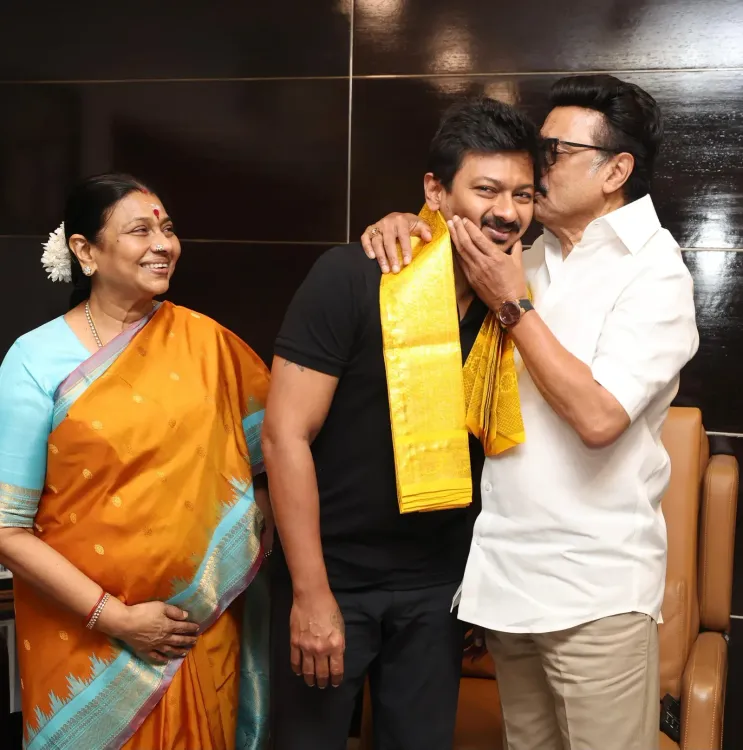
DMK president M. K. Stalin wished Udhayanidhi Stalin on his birthday, praising work on the ideological path and saying the party's youth wing now needs a great leap, not mere speed, to protect Tamil society's future.
Key Takeaways
Stalin wished Udhayanidhi Stalin on 27 November 2026 .
He praised labour on the ideological path and service to the people.
He said time has given a duty to protect Tamil society's future from visual errors.
He called the youth wing the party's lifeblood and asked for a 'great leap', not speed.
He wrote 'Let your work define you!' and tied life's success to ideological victory.
The hashtag used was #HBDUdhay .
A birthday in the Stalin household rarely arrives without a political brief attached. On Friday, 27 November 2026, DMK president M. K. Stalin wished Udhayanidhi Stalin well from Tamil Nadu — then told the party's youth that the next chapter needs a 'great leap', not mere speed. The greeting fused a father's pride with a cadre-level warning: protect a thought-rich Tamil society from being thrown off course by visual errors.
In Tamil, Stalin sent birthday wishes to his thambi (younger brother) @Udhaystalin, saying he had made labour his identity on the path of ideology and should excel on the journey of ideals while serving the people. He then widened the frame: time, he wrote, has given 'the great responsibility of protecting the future of Tamil society, which has grown rich through thought, so that it is not derailed by visual errors.'
The close mixed English and Tamil. 'Let your work define you!' he wrote, then urged him to rise through labour, advance on the path of ideals, and find the success of his life in the victory of ideology. The post carried the hashtag #HBDUdhay.
Youth wing named the party's lifeblood
Stalin did not stop at cake-and-candles language. He described the youth formation as the blood vessel of the kazhagam — the Dravida Munnetra Kazhagam — and said he had himself nurtured that force. In its ideological work, he argued, what is required now is not velocity but a 'great leap'.
That line sits inside a long DMK habit: treating the DMK Youth Wing as an ideological school, not only a campaign machine. Stalin's own rise was tied to organising younger cadres. The public reminder, on his son's birthday, places Udhayanidhi Stalin — a former actor now in party leadership roles — inside that lineage of work, discipline and social-justice messaging.
A family date on the Dravidian succession clock
Dravidian parties have long braided household occasions with organisational instruction. This post fits that pattern. A personal milestone becomes a stage for talking about Tamil society's future, cadre ethics, and the next generation's duty.
The party roots itself in social justice and regional identity, and successive leaders have used youth structures for ideological training. The audience here is concrete: DMK youth members and Tamil Nadu party workers. The message does not launch a scheme or name a new office.
What follows is practical. Watch Udhayanidhi Stalin's next party assignments or electoral roles in upcoming Tamil Nadu political events. The birthday note sets a tempo — leap, not rush — and ties a son's public life to the party's claim on Tamil society's future.
Work, Stalin told him, should be the name on the door. In Dravidian politics, that is how a greeting becomes a brief.
Point of View
And this one follows the Dravidian habit of folding family time into cadre instruction. By naming the youth wing as the party's lifeblood and asking for a leap rather than speed, Stalin is restating an old DMK claim: ideology and labour, not spectacle, should set the tempo. The message also continues the public grooming of Udhayanidhi Stalin as a next-generation face without announcing a new office. Watch the assignments that follow, not the cake.
NationPress
27 Nov 2026
Frequently Asked Questions
What did MK Stalin post on Udhayanidhi Stalin's birthday?
DMK president M. K. Stalin posted Tamil birthday wishes on 27 November 2026, praising Udhayanidhi Stalin's work on the ideological path and calling for a 'great leap' in the DMK youth wing's work. He also wrote 'Let your work define you!' and used the hashtag #HBDUdhay.
Who is Udhayanidhi Stalin?
Udhayanidhi Stalin is the son of DMK president M. K. Stalin, a DMK politician and former actor who holds party leadership roles. He was addressed in the post as thambi, or younger brother.
What is the DMK youth wing?
The DMK Youth Wing is the youth structure of the Dravida Munnetra Kazhagam, long used as an ideological training platform for party cadres. Stalin said he had nurtured it as the lifeblood of the party.
When did Stalin send the birthday message?
The post went up on Friday, 27 November 2026. It was a public greeting to Udhayanidhi Stalin with an ideological charge attached.
Did Stalin announce a new post for Udhayanidhi?
No. The message offered birthday wishes and an ideological charge about a 'great leap' in youth-wing work. It did not name a new office or election assignment.