CM Conrad Sangma marks East Garo Hills' Golden Jubilee
Synopsis
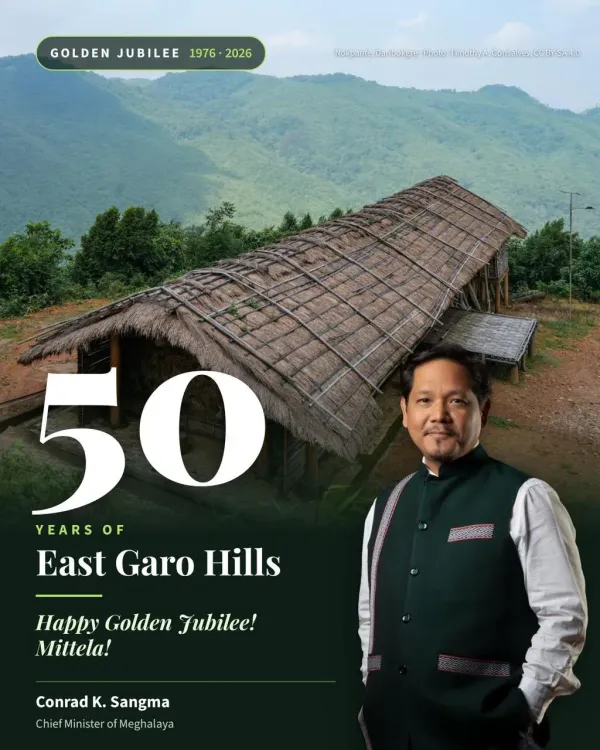
Meghalaya Chief Minister Conrad Sangma marked East Garo Hills' Golden Jubilee on October 29, 2026, honouring the district's 50-year journey since 1976, its Nokma-led cultural institutions, and its role in spawning North Garo Hills, while outlining road, health and education priorities ahead.
Key Takeaways
East Garo Hills was established in October 1976 with Williamnagar as its headquarters, four years after Meghalaya's statehood.
Williamnagar is named after Captain Williamson A.
Sangma , Meghalaya's first Chief Minister.
North Garo Hills was carved out of East Garo Hills to decentralise administration and bring governance closer to remote villages.
CM Conrad Sangma specifically credited Nokmas , teachers, missionaries, doctors, nurses and farming families as the builders of the district.
The CM outlined future priorities: better roads , stronger health and education services, and local employment opportunities for youth.
Sangma closed with 'Mittela!' — a Garo expression of celebration — signalling cultural continuity alongside development ambition.
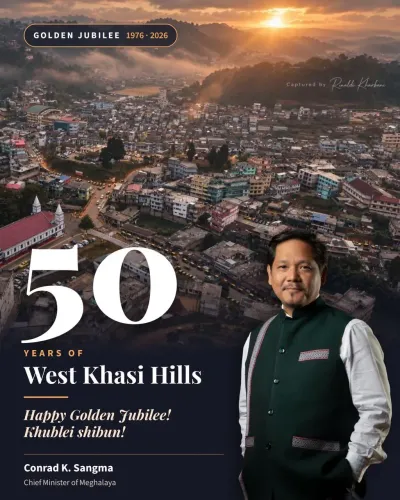
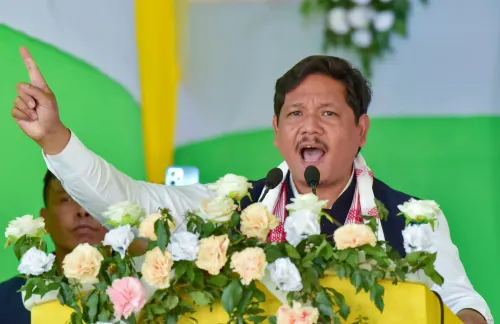
Fifty years ago, a new district was born in the hills of Meghalaya — and today, Meghalaya Chief Minister Conrad Sangma marked that milestone with a tribute to the people, institutions, and legacy that built East Garo Hills into what it is today.
A district named after a founding father
East Garo Hills was formally established in October 1976, just four years after Meghalaya attained full statehood in 1972. Its headquarters, Williamnagar, carries the name of Captain Williamson A. Sangma, the first Chief Minister of Meghalaya — a deliberate act of memory that ties the district's administrative identity to the man who shaped the state itself.
CM Conrad Sangma, himself a member of the Sangma political lineage, acknowledged the weight of that naming: 'Williamnagar,' he wrote, 'carries the name of Captain Williamson A. Sangma, the first Chief Minister of Meghalaya.' The district is not merely a unit of governance — it is a living monument to the state's founding generation.
How East Garo Hills gave birth to North Garo Hills
Growth, in Meghalaya's model of administration, eventually demands subdivision. East Garo Hills grew large enough to warrant a carve-out, and North Garo Hills was separated from it to bring government closer to villages that were otherwise too remote to access district services. It is a pattern repeated across the Northeast since the 1970s — bifurcation not as fragmentation, but as reach.
The Chief Minister framed this as a feature, not a loss: 'The district has grown so much that it has given birth to North Garo Hills, bringing governance closer to every village.'
Nokmas, missionaries, and the people who built the district
At the heart of CM Sangma's tribute is an acknowledgment of who actually built East Garo Hills — not administrators alone, but Nokmas (traditional Garo village headmen), teachers, missionaries, doctors, nurses, and farming families who kept culture and community alive across five decades. The Nokma institution is central to Garo society, functioning as a custodian of land rights and village governance in ways that formal district administration often complements rather than replaces.
'This journey belongs to the people,' Sangma wrote — a line that reads as both tribute and political philosophy, underscoring Meghalaya's consistent approach of pairing development goals with the preservation of indigenous institutions.
Roads, schools, hospitals: what the next 50 years demand
The Golden Jubilee marks a look forward as much as a look back. CM Sangma listed the priorities plainly: better roads, stronger health and education services, and more opportunities for young people 'close to home' — the last phrase carrying particular resonance in a state where youth migration to larger cities remains a quiet drain on community vitality.
Closing with 'Mittela!' — a Garo expression of joy and celebration — the Chief Minister grounded a formal milestone message in the language of the people it honours. East Garo Hills turns fifty not with ceremony alone, but with a stated agenda for the next half-century.
Point of View
Not just efficiency. By naming Nokmas alongside missionaries and doctors, Sangma signals that indigenous governance structures remain politically and practically central to the NPP's model — a deliberate contrast to centralising impulses seen elsewhere. The 'close to home' jobs framing is shrewd: in a state where youth outmigration is structurally difficult to reverse, tying development promises to local retention is both policy and politics. The Golden Jubilee also quietly reinforces the Sangma family's deep roots in the Garo Hills narrative, with Williamson A. Sangma's legacy literally written into the district's geography.
NationPress
29 Oct 2026
Frequently Asked Questions
When was East Garo Hills district established?
East Garo Hills district was established in October 1976 , four years after Meghalaya attained full statehood in 1972, with Williamnagar as its headquarters.
Who is Williamnagar named after?
Williamnagar is named after Captain Williamson A. Sangma , the first Chief Minister of Meghalaya, in recognition of his foundational role in the state's creation.
How is North Garo Hills related to East Garo Hills?
North Garo Hills was carved out of East Garo Hills to decentralise administration and bring government services closer to remote villages — part of a broader Northeast India pattern of district bifurcation.
What are Nokmas in Meghalaya?
Nokmas are traditional Garo village headmen who serve as custodians of land rights and local governance, functioning as a cornerstone of Garo social and administrative life alongside formal district structures.
What did Conrad Sangma say on East Garo Hills' Golden Jubilee?
CM Conrad Sangma congratulated the people of East Garo Hills, honoured Nokmas, teachers, missionaries and farming families, and pledged better roads, health services and local employment opportunities for the district's next fifty years.