ECI orders observers at all 294 Bengal seats for May 4 vote count

Synopsis
The ECI is leaving nothing to chance for West Bengal's 4 May vote count — deploying 200 CAPF companies inside counting rooms, slashing centres to 77 for tighter security, introducing QR-code entry verification, and keeping 700 CAPF companies in the state indefinitely to prevent a repeat of the 2021 post-poll violence.
Key Takeaways
The ECI has directed general observers to be present at all 294 West Bengal Assembly counting centres from 8 am on 4 May until winning certificates are issued.
Observers are now personally accountable for any disturbance or irregularity during the counting process.
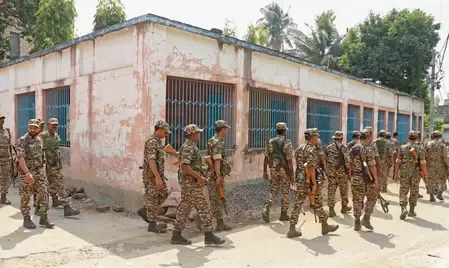
200 CAPF companies will be deployed inside counting rooms, with two additional security layers outside.
Counting centres have been reduced to 77 to concentrate security more effectively.
Entry requires a three-stage verification — two manual checks and one QR code scan .
700 CAPF companies will remain in West Bengal beyond counting day to prevent post-poll violence.
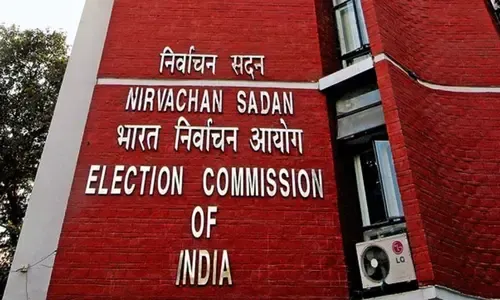
The Election Commission of India (ECI) on Friday, 1 May directed general observers for all 294 Assembly constituencies in West Bengal to be present at their respective counting centres and halls before the commencement of vote counting at 8 am on 4 May, and to remain until winning certificates are handed over to elected candidates. The directive underscores the Commission's intent to ensure a closely supervised and irregularity-free counting process for one of India's most politically sensitive state elections.
Observers Made Accountable for Counting Irregularities
According to an insider from the office of the West Bengal Chief Electoral Officer (CEO), the Commission has made general observers directly accountable for any disturbance or irregularity that arises during the counting process. Observers have been instructed to provide regular updates on counting proceedings to the central control room at the CEO's office in Kolkata, as well as to district-level control rooms at the offices of the respective District Magistrates, who also serve as district electoral officers.
This marks a notable tightening of oversight protocols compared to previous election cycles, placing individual accountability on senior poll officials stationed at each centre.
Security Deployment: 200 CAPF Companies Inside Counting Stations
The ECI has directed the deployment of 200 companies of Central Armed Police Forces (CAPFs) to secure the innermost circles of counting stations — the counting rooms themselves. Beyond this inner ring, two additional layers of security will be maintained: one within the counting centres and another outside the premises.
To enable tighter security concentration, the total number of counting centres has been significantly reduced to 77, down from a larger number in previous elections. Officials believe fewer, better-secured venues will reduce the risk of infiltration or disruption.
Three-Stage Identity Verification for Entry
Entry to counting centres will be subject to a three-stage verification process for all authorised electoral officers, staff, political party agents, and candidates. In the first two stages, identity cards will be verified manually. The third and final stage will require QR code verification, adding a digital layer of authentication that was not part of earlier counting-day protocols.
700 CAPF Companies to Stay On Against Post-Poll Violence Risk
In a significant precautionary measure, the ECI has decided to retain 700 companies of CAPF in West Bengal till further orders, specifically to prevent a recurrence of the post-poll violence that erupted following the 2021 West Bengal Assembly elections. That episode drew widespread condemnation and legal scrutiny, and the Commission appears determined not to allow similar incidents this time. This continued deployment well beyond counting day signals the ECI's recognition that electoral violence in Bengal is not merely a polling-day phenomenon but a sustained post-result risk.
Point of View
Which is rare. The reduction of counting centres to 77 is a pragmatic security call, but it also concentrates logistical pressure. Most telling is the retention of 700 CAPF companies indefinitely: the Commission is effectively acknowledging that West Bengal's electoral violence problem does not end on counting day. Whether these measures translate into a genuinely peaceful result day — or merely displace flashpoints — will depend on ground-level enforcement, not just paper directives.
NationPress
15 Sept 2026
Frequently Asked Questions
When will West Bengal vote counting begin on 4 May?
Vote counting for the West Bengal Assembly elections will begin at 8 am on 4 May 2025. General observers have been directed to be present at counting centres before that time and to remain until winning certificates are handed over to elected candidates.
Why has the ECI reduced counting centres to 77 in West Bengal?
The ECI has reduced counting centres to 77 — significantly fewer than in previous elections — to concentrate security resources more effectively. Fewer venues allow for tighter deployment of CAPF personnel and better control over entry and exit points.
What security arrangements are in place for the West Bengal vote count?
200 companies of CAPF will be deployed inside counting rooms, with two additional security layers within and outside counting centres. Entry requires a three-stage verification process including QR code scanning. A further 700 CAPF companies will remain in the state beyond counting day.
Why is the ECI retaining 700 CAPF companies in West Bengal after counting?
The ECI is retaining 700 CAPF companies in West Bengal till further orders to prevent post-poll violence, which occurred on a significant scale after the 2021 West Bengal Assembly elections. The Commission aims to deter retaliatory or politically motivated violence once results are declared.
What is the three-stage verification process for entering counting centres?
All authorised electoral officers, staff, political party agents, and candidates must pass three identity checks to enter counting centres. The first two stages involve manual verification of identity cards, while the third stage requires QR code scanning for digital authentication.