ECI says Rahul Gandhi, 240 MPs had no appointment; learnt of plan from police at 4 pm
Synopsis
The Election Commission revealed it had zero advance notice of Rahul Gandhi and 240 MPs descending on its doorstep — finding out only through Delhi Police at 4 pm. With a senior-official olive branch rejected by the Opposition and detentions following a nine-hour sit-in, the confrontation marks a sharp escalation in tensions between the INDIA bloc and India's constitutional poll body.
Key Takeaways
The ECI stated it received no appointment request from Rahul Gandhi or any INDIA bloc MP before their march on 6 October .
The Commission first learnt of the delegation's intent from Delhi Police at 4 pm .
The ECI rejected a proposed meeting at Parliament Annexe , citing protocol that restricts such meetings to Nirvachan Sadan .
The Commission's offer to send its most senior official to receive the memorandum — described as 'unprecedented' — was also declined by the MPs.
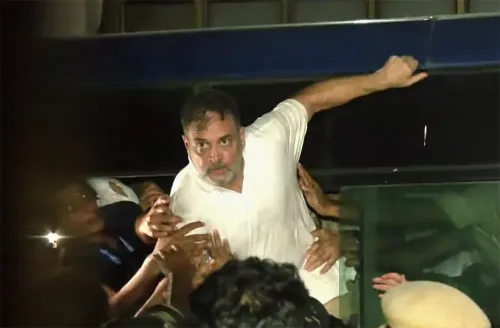
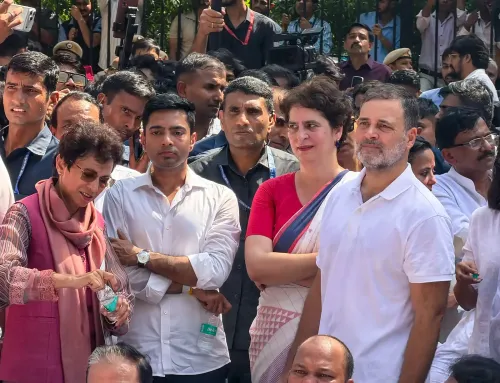
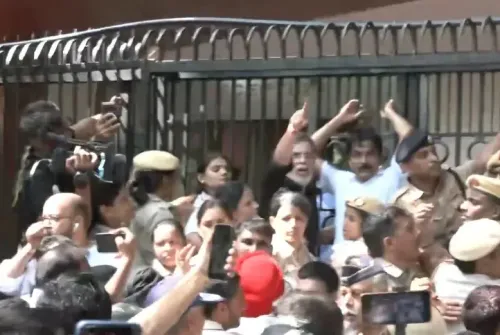
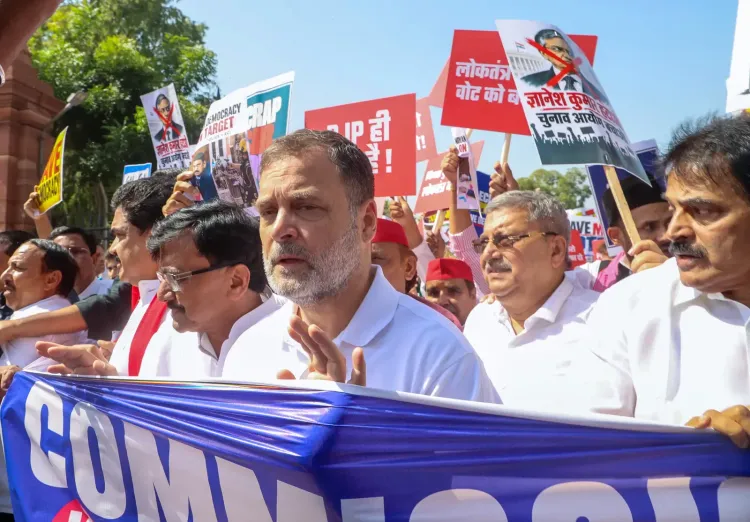
Rahul Gandhi , Priyanka Gandhi Vadra , and other INDIA bloc leaders were detained from Akashvani Bhavan around 8 pm after a nine-hour sit-in.
Opposition MPs were demanding the resignation of Chief Election Commissioner Gyanesh Kumar over alleged vote theft.
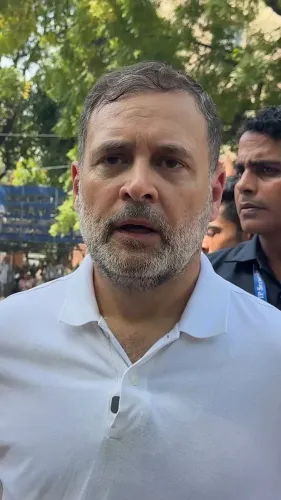
The Election Commission of India (ECI) clarified on 6 October that no political party or its representative had sought an appointment with the Commission ahead of the dramatic march and sit-in staged by Leader of the Opposition Rahul Gandhi and nearly 240 Opposition MPs near its office in New Delhi. The poll body said it first came to know of the delegation's intent not through any direct communication, but through the Delhi Police — and only at 4 pm.
How the ECI Found Out
According to an official ECI statement, it was Delhi Police that informed the Commission at 4 pm that a team of MPs led by Rahul Gandhi wished to submit a memorandum. The Commission said it received no advance notice, no direct communication, and no formal appointment request from Gandhi or any other participating MP prior to that hour.
The police later conveyed that the 240 MPs wished to hold a meeting with the Commission at Parliament Annexe. The ECI rejected this outright, stating that its protocol does not permit such meetings to be held anywhere other than Nirvachan Sadan, the Commission's official premises.
The ECI's Accommodation Offer — and Its Rejection
In what the Commission itself described as an 'unprecedented' gesture, it proposed to dispatch its most senior official to the MPs' chosen venue to personally receive the memorandum on the Commission's behalf. This offer, too, was declined by the delegation.
The ECI statement noted that the Commission 'respects the parliamentary and democratic processes of the country' and equally respects 'its own protocols and traditions, which are of utmost importance.'
'Any political party may request a meeting with the Election Commission at any time, and the Commission may schedule a meeting, taking into account logistical conveniences. This is a natural process,' the ECI statement said.
ECI's Appointment Procedure Explained
The Commission said it had established a formal procedure for meetings with political parties in 2025, and that all parties had been duly informed of this process. Under the procedure, a party or joint delegation must seek an appointment through a 'duly authorised representative,' after which a mutually convenient time is agreed upon.
'Whenever a political party delegation or a joint delegation of several parties wishes to meet the Commission, they seek an appointment through their duly authorised representative. The meeting is then held at a time mutually agreed upon by both parties,' the statement said.
Detentions at Akashvani Bhavan
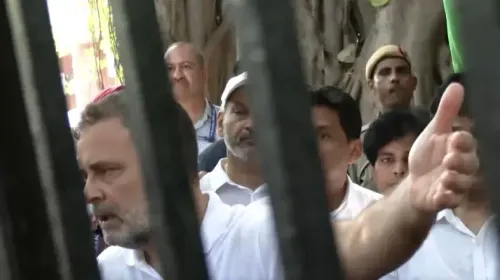
Rahul Gandhi, Congress MP Priyanka Gandhi Vadra, and other INDIA bloc leaders were detained by Delhi Police from Akashvani Bhavan on Parliament Street around 8 pm, after more than nine hours of sit-in protest at the premises, which is located near the ECI's office. During the course of the day, INDIA bloc MPs reportedly attempted to push open the gates of Akashvani Bhavan as the protest intensified.
The Opposition MPs were demanding the resignation of Chief Election Commissioner (CEC) Gyanesh Kumar over what they alleged was vote theft — a charge the Commission has not formally responded to in this statement.
What Comes Next
The standoff raises pointed questions about the breakdown in institutional communication between India's principal Opposition grouping and its constitutional poll body. Whether the INDIA bloc formally files for an appointment through established channels — and whether the ECI grants one — will be closely watched in the days ahead. The episode is likely to deepen the already fraught relationship between the Opposition and the Commission ahead of any future electoral exercise.
Point of View
But it also exposes a governance paradox: India's Opposition and its poll body appear to have no functioning back-channel for urgent democratic dialogue. The Commission is technically correct on protocol — but protocols exist to facilitate democracy, not to forestall it. The rejection of even an unprecedented senior-official outreach to receive the memorandum suggests the INDIA bloc was more interested in the spectacle of confrontation than in actually submitting its grievance. Meanwhile, the demand for CEC Gyanesh Kumar's resignation — the core of the protest — remains entirely unaddressed in the ECI's response, which risks looking more procedural than substantive.
NationPress
6 Oct 2026
Frequently Asked Questions
Why did Rahul Gandhi and INDIA bloc MPs march to the Election Commission on 6 October?
Rahul Gandhi and approximately 240 INDIA bloc MPs staged a march and sit-in near the ECI's office on 6 October, demanding the resignation of Chief Election Commissioner Gyanesh Kumar over alleged vote theft. The protest lasted over nine hours before Delhi Police detained the leaders.
Did Rahul Gandhi seek an appointment with the Election Commission before the march?
No. According to the ECI, no political party or representative sought an appointment ahead of the protest. The Commission said it learnt of the delegation's plan only at 4 pm on 6 October, when Delhi Police informed it of their intent.
Why did the ECI refuse to meet the MPs at Parliament Annexe?
The ECI said its established protocol requires meetings with political parties to be held exclusively at Nirvachan Sadan, its official premises. A meeting at any other location, including Parliament Annexe, is not permitted under that procedure.
What was the ECI's offer to the protesting MPs, and why was it refused?
The Commission proposed sending its most senior official to the MPs' chosen venue to receive the memorandum — a step the ECI itself described as unprecedented. The Opposition delegation rejected this offer, according to the ECI statement.
What is the ECI's procedure for meetings with political parties?
The ECI established a formal meeting procedure in 2025, under which a political party or joint delegation must seek an appointment through a duly authorised representative. The meeting is then held at Nirvachan Sadan at a mutually agreed time. All parties have been informed of this process, the Commission said.