Strait of Hormuz blockage by Iran and US 'illegal': Ex-Indian envoy Navdeep Suri
Synopsis
India's former envoy to the UAE calls out every party in the Strait of Hormuz standoff — the US, Israel, and Iran — as acting illegally, and warns that India, heavily dependent on Gulf trade, could end up among the biggest losers as Iran discovers the full leverage of its chokehold on the world's most critical energy waterway.
Key Takeaways
Former Ambassador Navdeep Singh Suri termed both Iran's blockage of the Strait of Hormuz and the US counter-blockade "illegal" on 30 April 2025 .
The conflict began with a US-Israel joint military strike on Iran on 28 February , killing Supreme Leader Ayatollah Ali Khamenei .
A two-week ceasefire from 8 April was followed by talks that collapsed after 21 hours of negotiations.
Suri warned Iran may impose tolls or shipping fees on the Strait, directly hurting India's Gulf trade .
He cautioned that the precedent could inspire similar moves at the Strait of Malacca , citing remarks by an Indonesian minister .
Suri called for India, Australia, and European middle powers to act in concert to restore pre-war navigational freedom.
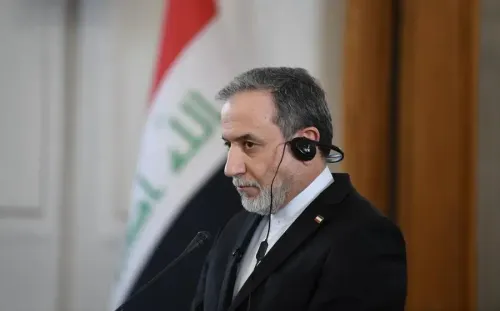
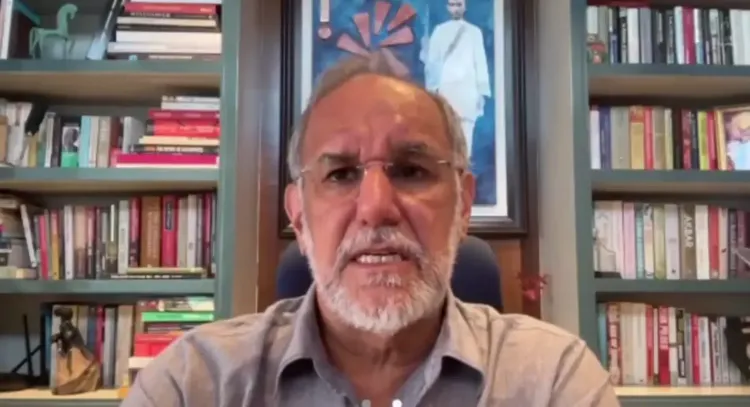
India's former Ambassador to the UAE and Egypt, Navdeep Singh Suri, on Thursday, 30 April termed both Iran's blockage of the Strait of Hormuz and the US counter-blockade as "illegal", warning that the ongoing West Asia conflict poses a direct and growing threat to the Indian economy. Speaking in an interview with IANS, Suri called the entire chain of military actions in the region — from the US-Israel joint strike on Iran to Iran's retaliatory operations — a sweeping breakdown of international law.
The Illegal Actions on All Sides
Suri was unequivocal in his assessment. "The US and Israeli attack on Iran was illegal. Iran's attack on its neighbours as a retaliatory step was illegal. Iran's blockage of the Strait of Hormuz is illegal, and the US blockading the blockage is illegal," he said, adding that India, as a major country in the neighbourhood, "should be very concerned about this kind of lawlessness or a might-is-right policy."
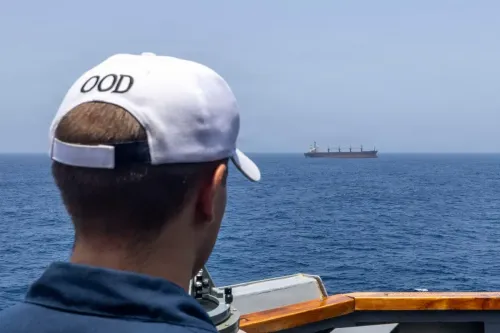
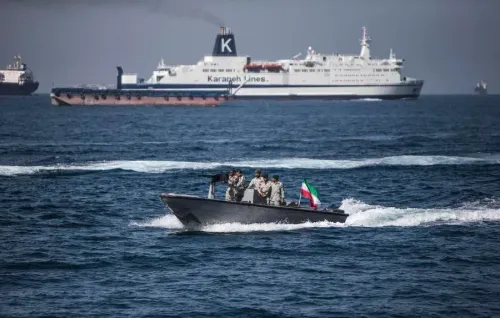
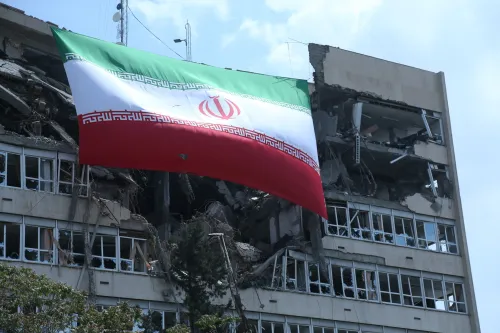
The conflict escalated after the US and Israel carried out a joint military operation against Iran on 28 February, killing Supreme Leader Ayatollah Ali Khamenei. The strikes triggered a large-scale Iranian military response against Israel and US bases in Gulf nations, culminating in the closure of the Strait of Hormuz — one of the world's most critical energy chokepoints — and a consequent global energy crisis.
Ceasefire Talks Collapse After 21 Hours
Iran and the US reached a two-week ceasefire starting 8 April, followed by the first round of direct talks on 11–12 April aimed at ending the conflict. However, negotiations collapsed after 21 hours, leaving the situation unresolved. Suri noted that while the US holds clear military superiority as a global superpower — and Israel as a regional one — Iran has secured significant strategic leverage through its stranglehold on the Strait.
"Strategically, Iran seems to be the greater beneficiary or seems to be ahead, whereas tactically the US has won the military victories," he observed.
India Among Potential Losers, Suri Warns
Suri raised sharp concerns about the economic fallout for India. He warned that Iran, having now fully realised the "tremendous global impact" of its control over the Strait, may be reluctant to relinquish that leverage. "You may see a different regime come into place where there's some form of tacit acknowledgement of Iranian... a degree of control going forward," he said.
He cautioned that Iran could move to impose tolls, management fees, or maintenance charges on shipping — a scenario that would hit India particularly hard, given its heavy dependence on Gulf imports and the Gulf's role as a major destination for Indian exports. "I think we will end up as one of the losers," he stated plainly.
Suri also flagged a dangerous precedent being set for other strategically located nations. He cited remarks by an Indonesian minister about potentially applying a toll on the Strait of Malacca — another of the world's busiest shipping lanes. While Singapore and Malaysia have opposed the idea, Suri warned: "The genie is out of the bottle."
Call for Coordinated Middle-Power Response
The former envoy urged India, Australia, European nations, and other middle powers to act in concert to restore the Strait of Hormuz to its pre-28 February status — that of a freely navigable international waterway under the UN Convention on the Law of the Sea (UNCLOS). He noted, however, that neither Iran nor the United States is a signatory to UNCLOS, making enforcement legally complex.
Suri also expressed agreement with Defence Minister Rajnath Singh's statement at the Shanghai Cooperation Organisation (SCO) Defence Ministers' Meeting that terrorism has no nationality or theology, arguing that attaching terrorism to any single religion or geography is "fundamentally flawed." He stressed that Pakistan's use of terrorist groups is driven by strategic calculation, not religion alone, and cited examples ranging from Hamas and Hezbollah to the Irish Republican Army and Basque separatists as evidence that terrorism transcends religious and national boundaries.
With talks stalled and the Strait's status unresolved, the coming weeks will test whether middle powers can forge a coordinated diplomatic response before economic costs become irreversible.
Point of View
A posture that reflects India's traditional non-alignment but also its acute vulnerability. What mainstream coverage underplays is the UNCLOS blind spot: with neither Iran nor the US bound by the convention, the legal architecture that India relies on for free navigation is effectively toothless in this crisis. The Indonesian minister's Malacca remarks deserve far more attention than they have received — if the Hormuz precedent holds, every narrow waterway with a dominant littoral state becomes a potential toll booth. India, which sits at the intersection of multiple such chokepoints, has the most to lose from a world where might defines maritime access.
NationPress
16 Sept 2026
Frequently Asked Questions
Why did Navdeep Singh Suri call the Strait of Hormuz blockage illegal?
Former Ambassador Navdeep Singh Suri stated that both Iran's blockage of the Strait of Hormuz and the US counter-blockade are illegal under international law, including the UN Convention on the Law of the Sea, which treats international waterways as freely navigable. He applied the same legal standard to the original US-Israel military strike on Iran and Iran's retaliatory attacks, calling all of them violations of the rules-based order.
What triggered the Strait of Hormuz closure?
The Strait of Hormuz was closed following a joint US-Israel military operation against Iran on 28 February, which killed Supreme Leader Ayatollah Ali Khamenei. Iran responded with large-scale military strikes on Israel and US bases in Gulf nations, and subsequently blocked the Strait, triggering a global energy crisis.
What is the current status of Iran-US ceasefire talks?
Iran and the US agreed to a two-week ceasefire beginning 8 April, followed by the first round of direct talks on 11–12 April. However, negotiations collapsed after 21 hours without a resolution, leaving the conflict unresolved as of 30 April.
How does the Strait of Hormuz conflict affect India?
India is heavily dependent on Gulf imports and exports, making any restriction or toll on the Strait of Hormuz directly costly. Suri warned that Iran, now aware of its leverage, may impose shipping fees or tolls, raising the cost of trade for India and potentially making it one of the conflict's biggest economic losers.
What is the risk to the Strait of Malacca that Suri raised?
Suri cited remarks by an Indonesian minister about potentially applying a toll on the Strait of Malacca, another critical global shipping lane. He warned that Iran's actions have set a precedent that could embolden other nations controlling narrow waterways, and that Singapore and Malaysia's opposition may not be enough to put the idea to rest permanently.