CM Fadnavis Chairs High-Powered Meet on MH-Karnataka Border
Synopsis
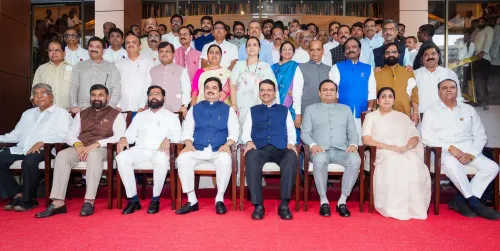
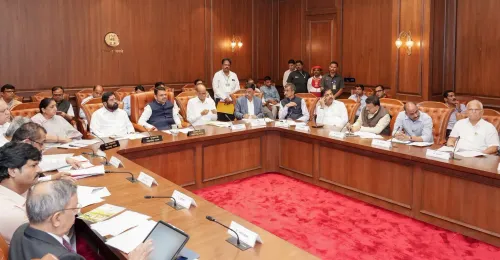
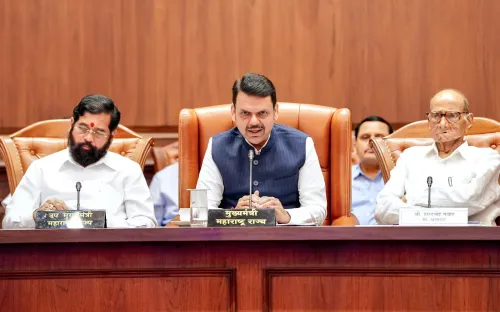
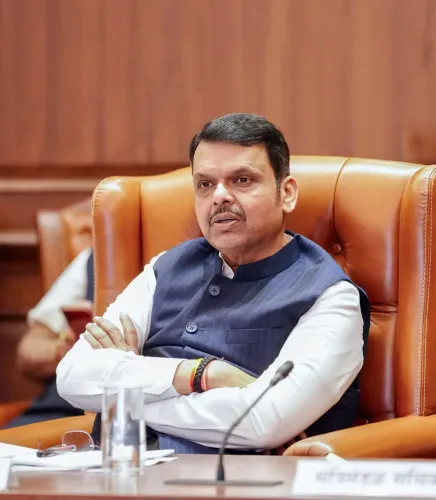
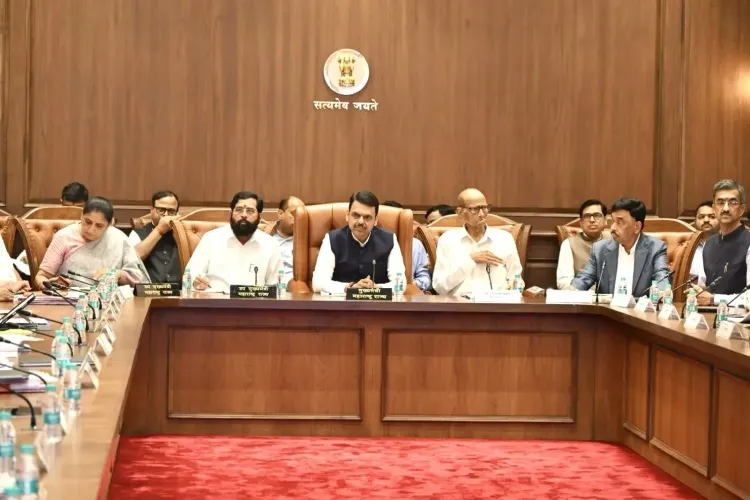
Chief Minister Devendra Fadnavis on 8 July 2026 chaired a high-powered committee meeting on the Maharashtra-Karnataka border dispute at Vidhan Bhavan, Mumbai. Deputy CMs Eknath Shinde and Sunetra Ajit Pawar, senior ministers, and MPs Sharad Pawar and Narayan Rane attended, reflecting rare cross-party unity on the decades-old territorial issue.
Key Takeaways
CM Devendra Fadnavis chaired the high-powered committee on the Maharashtra-Karnataka border issue on 8 July 2026 at Vidhan Bhavan, Mumbai .
Both Deputy Chief Ministers — Eknath Shinde and Sunetra Ajit Pawar — attended alongside Ministers Chandrakant Patil and Shambhuraj Desai .
Cross-party attendance included MP Sharad Pawar (NCP) and MP Narayan Rane (BJP), alongside members of the state legislature.
The border dispute originates from the States Reorganisation Act of 1956 and centres on Marathi-speaking areas, particularly Belagavi district .
The Mahajan Commission (1966) made recommendations on the boundary that have never been comprehensively implemented.
Committee outcomes are expected to inform any future reference to the central government for boundary resolution.
The Chief Minister's Office of Maharashtra announced on 8 July 2026 that Chief Minister Devendra Fadnavis chaired a meeting of the high-powered committee on the Maharashtra-Karnataka border issue at Vidhan Bhavan, Mumbai, at 3:40 pm.
Context
The meeting brought together a broad cross-party coalition of senior leaders. Deputy Chief Minister Eknath Shinde, Deputy Chief Minister Sunetra Ajit Pawar, Minister Chandrakant Patil, and Minister Shambhuraj Desai were present alongside members of the state legislature. Notably, MP Sharad Pawar and MP Narayan Rane — representing different parties — also attended, underscoring the cross-partisan character of the committee.
The CMO's post, issued in English, Marathi, and Hindi, stated: 'CM Devendra Fadnavis chairs a meeting of the high-powered committee on the Maharashtra-Karnataka border issue.'
Policy Backdrop
The Maharashtra-Karnataka border dispute is one of India's longest-running interstate territorial disagreements, rooted in the States Reorganisation Act of 1956, which redrew state boundaries along linguistic lines. Maharashtra has long claimed select talukas — most prominently in the Belagavi district — on the basis of Marathi-speaking demographics.
The Mahajan Commission, constituted in 1966, examined these competing claims and made recommendations, but a comprehensive settlement has never been implemented. Successive Maharashtra governments have constituted high-powered committees to pursue the state's position, keeping the issue alive in bilateral and central-government channels.
Stakeholders and Impact
Residents of the disputed talukas — including farmers and Marathi-speaking communities along the border — remain the most directly affected. The absence of a final boundary determination has implications for land records, local governance, and access to state welfare schemes for people in contested areas.
The presence of both ruling alliance members and opposition-aligned figures such as Sharad Pawar signals that the border question retains rare bipartisan salience in Maharashtra politics. Such committees serve both a diplomatic function — signalling the state's intent to the Centre — and a political one, consolidating regional sentiment ahead of any formal negotiations.
What's Next
The committee's deliberations are expected to feed into any formal reference Maharashtra may make to the central government for boundary adjustments or judicial processes. Observers will watch for whether the meeting produces a fresh set of recommendations or a timeline for escalating the matter to New Delhi.
With a senior multiparty committee now convened under the Chief Minister's direct chairmanship, the state appears to be signalling renewed political will to advance its long-pending border claim.
Point of View
Or remains a periodic ritual of political signalling, will depend on any recommendations that emerge in the weeks ahead.
NationPress
7 Oct 2026
Frequently Asked Questions
What is the Maharashtra-Karnataka border dispute about?
The dispute centres on claims by Maharashtra over Marathi-speaking areas — most notably Belagavi district — that were included in Karnataka under the States Reorganisation Act of 1956. Maharashtra argues these areas should belong to it based on linguistic demographics.
What did the Mahajan Commission recommend on the Maharashtra-Karnataka border?
The Mahajan Commission, set up in 1966, examined the competing boundary claims of Maharashtra and Karnataka and made recommendations for adjustments, but a comprehensive settlement based on its findings has never been implemented.
Who attended the high-powered committee meeting on 8 July 2026?
Chief Minister Devendra Fadnavis chaired the meeting. Deputy CMs Eknath Shinde and Sunetra Ajit Pawar, Ministers Chandrakant Patil and Shambhuraj Desai, MPs Sharad Pawar and Narayan Rane, and members of the state legislature were present at Vidhan Bhavan, Mumbai.
What is the high-powered committee on the Maharashtra-Karnataka border?
It is a senior committee constituted by the Maharashtra government to examine and advance the state's claims in the long-running border dispute with Karnataka. It has been reconstituted by successive governments to pursue implementation of earlier commission findings and to coordinate the state's position.
What happens next after the Maharashtra-Karnataka border committee meeting?
The committee's deliberations are expected to shape Maharashtra's formal position, which could be referred to the central government for potential boundary adjustments or pursued through judicial processes. Observers will watch for any formal recommendations or a timeline for escalation to New Delhi.