Fadnavis, Gadkari honour Charmakar students in Nagpur
Synopsis
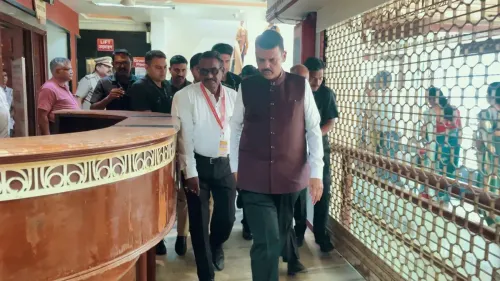
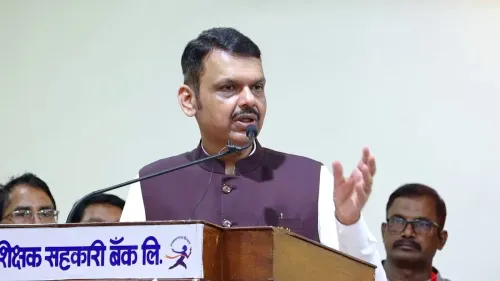
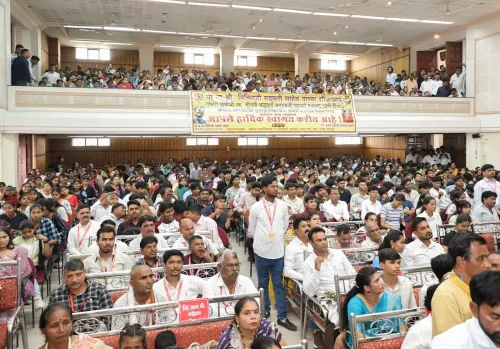
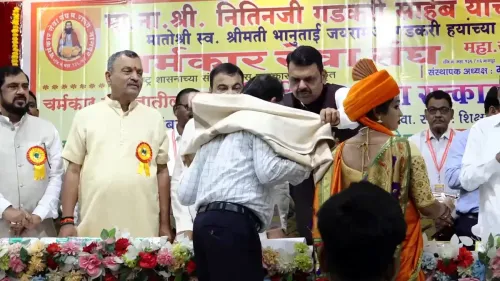
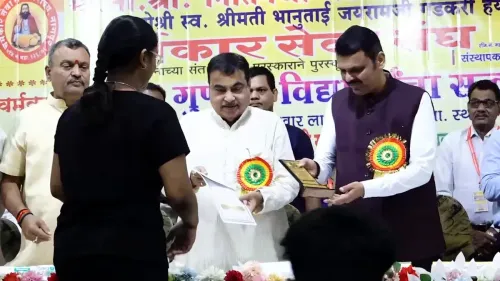
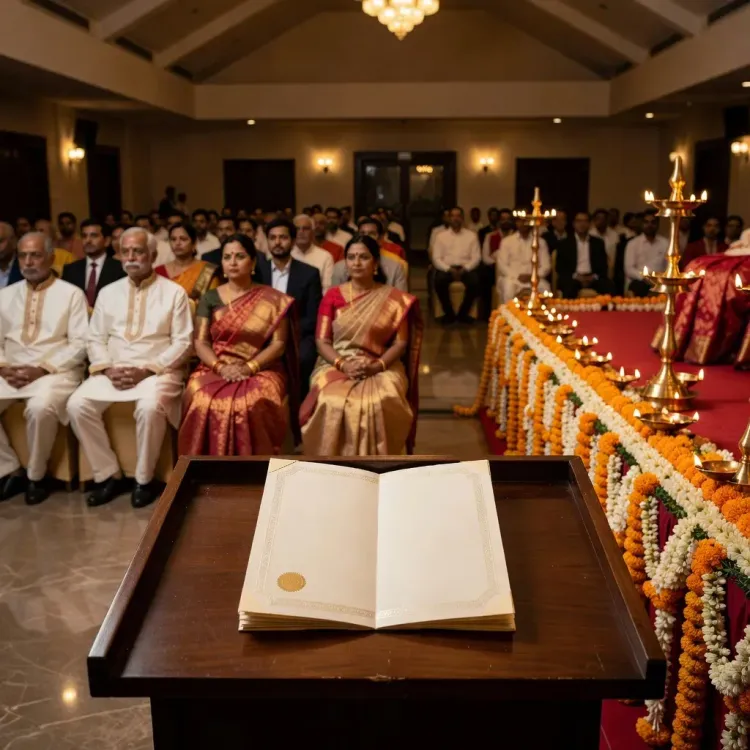
Chief Minister Devendra Fadnavis and Union Minister Nitin Gadkari attended a student felicitation and community gathering in Nagpur organised by Charmakar Seva Sangh in memory of late Smt. Bhanutai Gadkari, honouring meritorious students from the Charmakar Scheduled Caste community.
Key Takeaways
CM Devendra Fadnavis and Union Minister Nitin Gadkari were the chief guests at the Nagpur event on 27 September 2026 .
The event was organised by Charmakar Seva Sangh in memory of late Smt.
Meritorious students from the Charmakar Scheduled Caste community were felicitated at the gathering.
MLA Krishna Khopde , former Mayor Dayashankar Tiwari , and Sangh founder Bhaiyasaheb Bighane were also present.
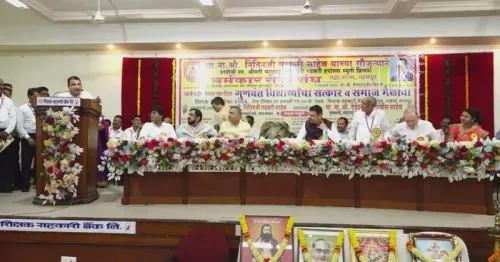
The event combined a Samaj Melava (community assembly) format with a student recognition ceremony.
Nagpur continues to serve as a key venue for BJP leaders' outreach to Scheduled Caste community organisations in Maharashtra.
In the heart of Nagpur, a city that carries deep political and social weight for Maharashtra's ruling establishment, Chief Minister Devendra Fadnavis and Union Minister Nitin Gadkari gathered on Sunday, 27 September 2026 to honour meritorious students from the Charmakar community — and to pay tribute to the memory of late Smt. Bhanutai Gadkari, in whose name the event was organised.
A felicitation rooted in memory and merit
The event — a student felicitation and Samaj Melava (community gathering) — was organised by the Charmakar Seva Sangh, a body dedicated to the welfare and recognition of the Charmakar Scheduled Caste community. Founder and President Bhaiyasaheb Bighane presided alongside the two senior leaders, with MLA Krishna Khopde and former Mayor Dayashankar Tiwari also present on the dais.
The gathering combined community outreach with an act of remembrance — celebrating young academic achievers from the Charmakar community while honouring the late Bhanutai Gadkari, whose legacy lent the occasion its emotional anchor.
Nagpur's role as BJP's community-outreach hub
Nagpur is no coincidence as a venue. The city is the organisational heartland of the RSS and a base that both Gadkari and Fadnavis have cultivated over decades. State and central BJP leaders regularly use Nagpur's civic fabric — its Scheduled Caste organisations, educational bodies, and community associations — as platforms to signal commitment to marginalised groups.
For the Charmakar community, which falls under the Scheduled Caste category, public felicitations of this kind carry visible symbolic weight: the presence of the Chief Minister and a Cabinet minister at a single community function is rarely incidental.
What the Charmakar Seva Sangh represents
The Charmakar Seva Sangh, under Bighane's leadership, has positioned itself as a bridge between the community's grassroots aspirations and the corridors of political power. By focusing on student recognition, the organisation draws attention to education as the primary ladder of social mobility for a community historically engaged in leather work and cobbling — occupations long associated with social stigma.
The Samaj Melava format — part award ceremony, part community assembly — allows leaders to speak directly to voters, hear local concerns, and project a message of inclusion without the formality of a government programme launch.
Whether the occasion translates into concrete education or scholarship schemes for the Charmakar community in Maharashtra remains the question worth watching.
Point of View
Visible recognition events serve a dual purpose: reinforcing the party's social-inclusion narrative while building grassroots loyalty ahead of future electoral cycles. The tribute dimension — honouring Bhanutai Gadkari — also humanises a political gathering, lending it community credibility beyond standard vote-bank optics. The key test will be whether such ceremonial presence is followed by substantive policy action on education and livelihoods for the Charmakar community.
NationPress
27 Sept 2026
Frequently Asked Questions
Who organised the Charmakar student felicitation in Nagpur?
The event was organised by the Charmakar Seva Sangh , founded and led by Bhaiyasaheb Bighane , in memory of late Smt. Bhanutai Gadkari.
Why did Devendra Fadnavis and Nitin Gadkari attend the Nagpur event?
CM Devendra Fadnavis and Union Minister Nitin Gadkari attended as chief guests to honour meritorious Charmakar community students and pay tribute to late Smt. Bhanutai Gadkari at the Samaj Melava on 27 September 2026 .
Who is Bhanutai Gadkari?
Late Smt. Bhanutai Gadkari is the individual in whose memory the Charmakar Seva Sangh organised the felicitation event in Nagpur. The post does not specify further details about her.
What is the Charmakar community in Maharashtra?
The Charmakar community is a Scheduled Caste group in Maharashtra, historically associated with leather work and cobbling. Organisations like Charmakar Seva Sangh work toward their educational and social advancement.
Who else attended the Charmakar Seva Sangh event in Nagpur?
MLA Krishna Khopde , former Mayor Dayashankar Tiwari , and Charmakar Seva Sangh founder and president Bhaiyasaheb Bighane were among the dignitaries present at the event.