CM Fadnavis Launches Wadala Mathadi Housing Project in Navi Mumbai
Synopsis
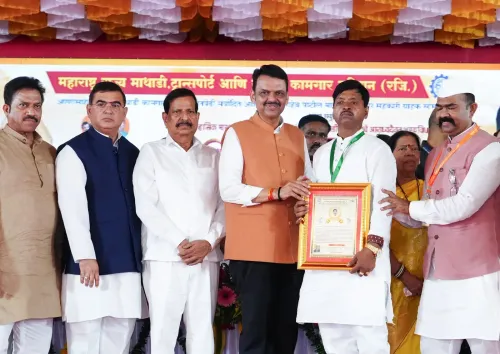
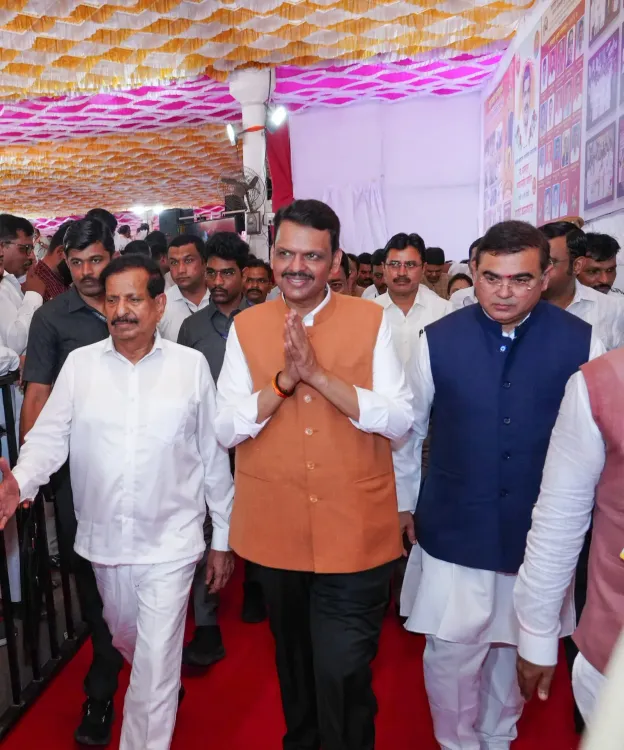
Chief Minister Devendra Fadnavis launched the Wadala Mathadi Housing Project in Navi Mumbai on 25 September 2026, coinciding with the 93rd birth anniversary of late Maratha leader Anna Saheb Patil. The event also featured the Gunwant Kamgar Awards and a grand workers' rally.
Key Takeaways
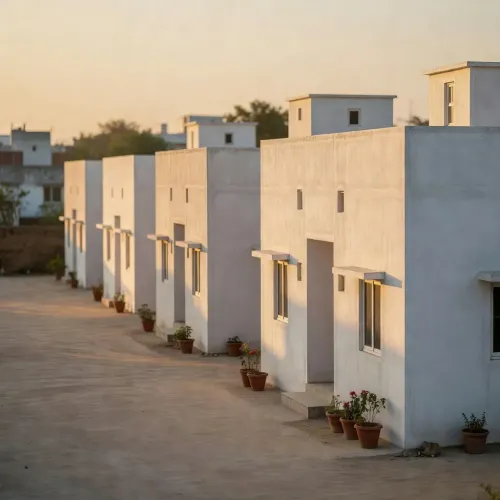
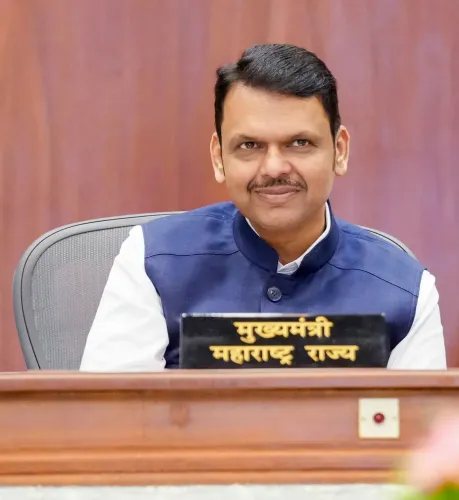
CM Devendra Fadnavis announced the launch of the Wadala Mathadi Housing Project in Navi Mumbai on 25 September 2026 .
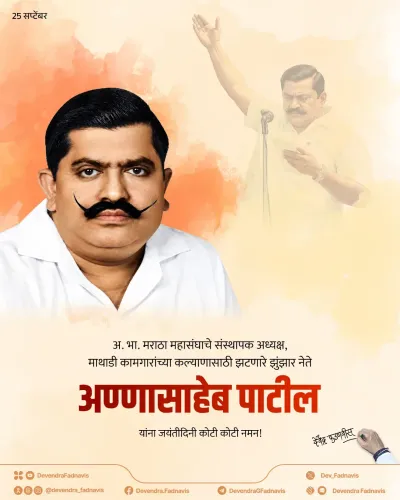
The event was held on the 93rd birth anniversary of late Maratha leader Anna Saheb Patil , revered as Maratha Krantisurya .
The Gunwant Kamgar Awards were distributed to meritorious Mathadi workers at the same ceremony.
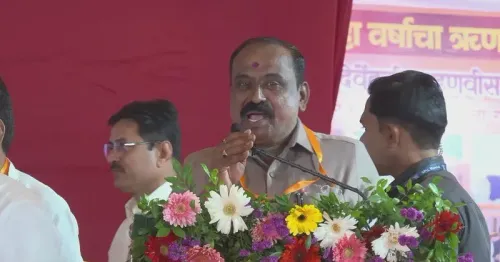
The Annasaheb Patil Arthik Magas Vikas Mahamandal , the state body for backward-class economic development, was represented by president Narendra Patil .
Senior leaders including Minister Ganesh Naik , Minister Jaykumar Rawal , and Navi Mumbai Mayor Sujata Patil were present.
Mathadi workers have been protected under Maharashtra's 1969 welfare act for over five decades, but dedicated housing has remained a gap the new project aims to address.
On the 93rd birth anniversary of late Maratha leader Anna Saheb Patil, Chief Minister Devendra Fadnavis stood before thousands of Mathadi workers in Navi Mumbai on 25 September 2026 and announced the launch of the Wadala Mathadi Housing Project — a dedicated housing initiative for one of Maharashtra's most underpaid and underserved labour communities.
A Promise Made on a Symbolic Day
The choice of date was deliberate. Anna Saheb Patil, revered as Maratha Krantisurya (the revolutionary sun of the Marathas), built his legacy around economic upliftment for backward communities. Tying a housing launch to his birth anniversary sends a clear political and social signal: that welfare delivery and community commemoration are inseparable in Maharashtra's governance playbook. The Annasaheb Patil Arthik Magas Vikas Mahamandal, the state body created in his name for backward-class economic development, was represented at the event by its president, Narendra Patil.
Flanking CM Fadnavis on the stage were Minister Ganesh Naik, Minister Jaykumar Rawal, MLC Niranjan Davkhare, MLA Manda Mhatre, and Navi Mumbai Mayor Sujata Patil — a cross-section of the ruling coalition and local government that underlines the political weight given to the occasion.
Who Are Mathadi Workers — and Why Does Housing Matter?
Mathadi workers — headload labourers who carry goods in markets, construction sites, warehouses, and ports — have been protected under the Maharashtra Mathadi, Hamals and Other Manual Workers (Regulation of Employment and Welfare) Act, 1969 for over five decades. The law established a welfare board that collects levies from employers and channels them into benefits for these workers. Yet adequate, affordable housing has remained an elusive pillar of that welfare architecture. The Wadala locality in Navi Mumbai has now been designated as the site for this project's inaugural phase.
The event doubled as a Gunwant Kamgar Awards ceremony — a recognition programme honouring meritorious workers — and a Bhavya Melava (grand workers' rally), transforming a policy announcement into a moment of community celebration.
What to Watch as the Project Moves Forward
Maharashtra governments have a pattern of announcing worker-welfare schemes on the anniversaries of regional leaders, with actual construction timelines and allotment processes often following months later. The key questions ahead: when will groundbreaking begin at Wadala, how many units will be allotted and on what criteria, and whether the model will be replicated in other Maharashtra cities where Mathadi worker populations are concentrated. The Mahamandal's institutional involvement suggests the project will be administered through that existing state mechanism — but the scale and pace of delivery will be the real measure of this announcement's weight.
For now, thousands of workers who turned up at the Bhavya Melava have a housing project with their name on it. Whether the foundation matches the fanfare is a story still being written.
Point of View
The event reinforces outreach to the Mathadi and broader backward-class worker base at a time when unorganised labour welfare is an increasingly prominent political fault line. The involvement of the Annasaheb Patil Mahamandal — a state institution with deep roots in Maratha economic upliftment — suggests the project will be channelled through an established bureaucratic mechanism, lending it structural credibility. The real test, however, lies in construction timelines and transparent allotment, areas where similar Maharashtra announcements have historically faced scrutiny.
NationPress
25 Sept 2026
Frequently Asked Questions
What is the Wadala Mathadi Housing Project?
The Wadala Mathadi Housing Project is a state-announced housing initiative for Mathadi workers — headload labourers — launched by CM Devendra Fadnavis in Navi Mumbai on 25 September 2026, with the Wadala locality designated as the project's inaugural site.
Who are Mathadi workers in Maharashtra?
Mathadi workers are headload labourers employed in markets, construction sites, warehouses, and ports in Maharashtra. They have been covered under the Maharashtra Mathadi, Hamals and Other Manual Workers (Regulation of Employment and Welfare) Act, 1969, which established a welfare board to provide them benefits.
Who was Anna Saheb Patil and why is his birth anniversary significant?
Anna Saheb Patil, titled Maratha Krantisurya, was a late Maharashtrian leader associated with the economic upliftment of backward communities. The state-run Annasaheb Patil Arthik Magas Vikas Mahamandal was established in his name, and his birth anniversary is frequently used as an occasion to announce welfare initiatives.
What is the Gunwant Kamgar Award?
The Gunwant Kamgar Award is a recognition programme honouring meritorious Mathadi workers, distributed at the 25 September 2026 event in Navi Mumbai alongside the housing project launch.
What is the Annasaheb Patil Arthik Magas Vikas Mahamandal?
It is a Maharashtra state body set up in the name of late leader Anna Saheb Patil, aimed at the economic development of backward classes. Its president Narendra Patil was present at the Navi Mumbai event and the Mahamandal is expected to play an institutional role in the housing project.