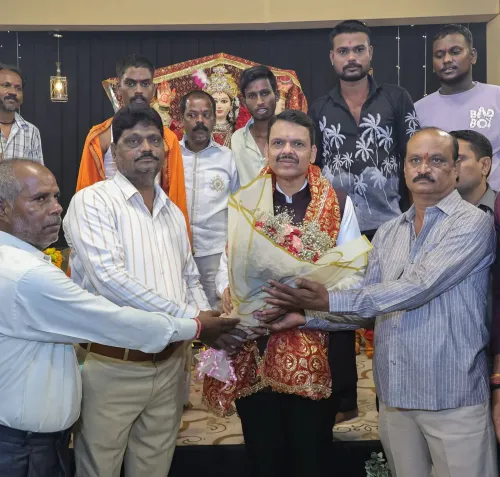
CM Fadnavis celebrates Bhau Beej with sisters in Nagpur
Synopsis
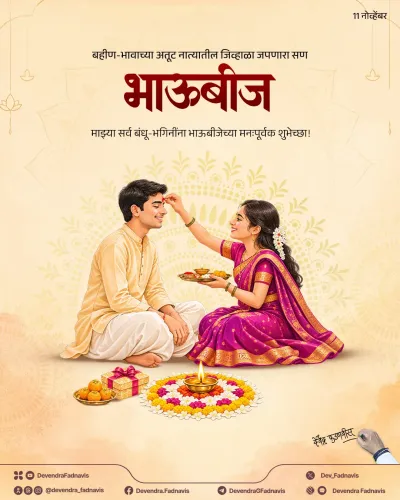
Maharashtra Chief Minister Devendra Fadnavis celebrated Bhau Beej with his sisters in Nagpur on 12 November 2026, sharing photographs and a heartfelt Marathi message about love, blessings, and the cherished brother-sister bond during the Diwali season.
Key Takeaways
Devendra Fadnavis , Chief Minister of Maharashtra, celebrated Bhau Beej in Nagpur on 12 November 2026 .
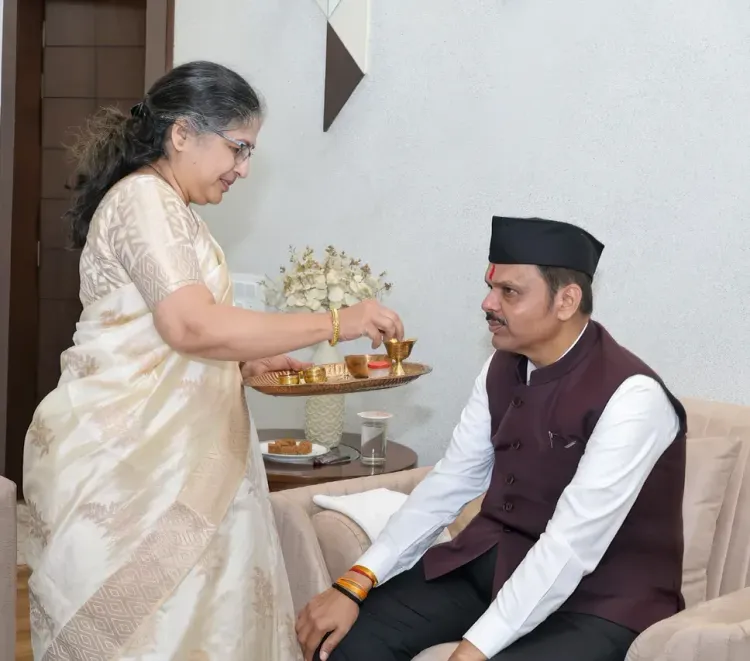
He posted four photographs from the occasion on X, accompanied by a message in Marathi.
Bhau Beej (also called Bhai Dooj) is observed on the second day after Diwali and centres on the aukshan ritual — sisters praying for their brothers' long life.
Fadnavis described the blessings received through each aukshan as his most treasured keepsake.
Nagpur is Fadnavis's political and personal home base in eastern Maharashtra.
Amid the closing glow of the Diwali season, Maharashtra Chief Minister Devendra Fadnavis marked Bhau Beej in his home city of Nagpur on Thursday, 12 November 2026, sharing a moment of personal celebration that resonated far beyond his household.
Posting four photographs from the occasion, Fadnavis described the day in Marathi as 'प्रेम, माया आणि आशीर्वादांचा अनमोल सोहळा' — 'a priceless celebration of love, affection and blessings.' He wrote that the warmth and blessings received through each aukshan (the traditional ritual in which a sister applies a tilak to her brother's forehead and prays for his wellbeing) are his most treasured keepsake.
What Bhau Beej means — and why Nagpur was the setting
Bhau Beej, celebrated on the second day after Diwali, is one of Maharashtra's most cherished festivals, observed across the state under the same spirit as Bhai Dooj across northern India. The ritual centres on sisters performing the aukshan for their brothers, symbolising a prayer for their long life and prosperity. For Fadnavis, Nagpur — his political and personal home base — was the natural setting for the gathering.
A Chief Minister's public-private moment
Indian political figures have long used festival posts to bridge their public roles with cultural identity, and Fadnavis is no exception. His closing wish — that the warmth of the brother-sister bond 'continues to bloom in every moment' — struck the gentle, personal register that such occasions call for. The post drew the hashtags #Maharashtra, #BhauBeej, and #BhaiDooj, situating a private family ritual within a shared civic conversation about Maharashtrian tradition.
Point of View
Reminding constituents of a shared identity outside the arena of governance. Fadnavis, whose political base is rooted in Nagpur and whose BJP draws heavily on Maharashtrian Hindu cultural pride, benefits from being seen participating authentically in regional traditions like Bhau Beej. It is a low-stakes, high-warmth signal that keeps the human dimension of political leadership visible between policy cycles. The gesture is routine, but its consistency across festival seasons is itself a deliberate brand-building choice.
NationPress
12 Nov 2026
Frequently Asked Questions
Where did Devendra Fadnavis celebrate Bhau Beej in 2026?
Devendra Fadnavis celebrated Bhau Beej with his sisters in Nagpur on 12 November 2026.
What did Fadnavis post about Bhau Beej?
Fadnavis shared four photographs and a Marathi message describing the day as 'a priceless celebration of love, affection and blessings,' saying the warmth and blessings from the aukshan ritual are his most treasured keepsake.
What is the aukshan ritual in Bhau Beej?
In the aukshan ritual, a sister applies a tilak to her brother's forehead, waves a lamp, and offers prayers for his long life and prosperity. It is the central rite of Bhau Beej celebrations in Maharashtra.
Is Nagpur Devendra Fadnavis's home city?
Yes, Nagpur is Devendra Fadnavis's political and personal home base. He represents a Nagpur constituency and the city holds strong personal significance for the Maharashtra Chief Minister.