Dhanendra Kumar, first CCI chairman, dies in AC blast fire at Delhi home
Synopsis
Dhanendra Kumar, the man who built India's competition regulator from the ground up, died at 80 after a fire at his South Delhi home — reportedly triggered by an AC unit explosion. His passing closes a chapter on the founding era of the CCI, an institution that now polices some of India's most consequential market battles.
Key Takeaways
Dhanendra Kumar , first Chairman of the Competition Commission of India (CCI) , died on Thursday night following a fire at his Hauz Khas home in South Delhi .
The blaze broke out at approximately 11:18 pm and is believed to have been caused by a suspected explosion in an air-conditioner's indoor unit .
Kumar, aged 80 , succumbed reportedly due to smoke inhalation ; his son was injured but is stated to be out of danger.
A 1968-batch IAS officer , Kumar served in the Ministry of Defence , Ministry of Road Transport , Ministry of Culture , and as Executive Director at the World Bank (2005–2009).
He chaired the CCI from February 2009 to June 2011 , laying the foundation for India's competition law framework.
Authorities have ruled out foul play ; forensic teams are investigating the exact cause of the fire.
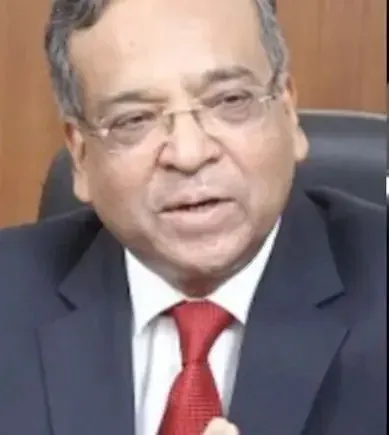
Dhanendra Kumar, the first Chairman of the Competition Commission of India (CCI) and a retired Indian Administrative Service (IAS) officer of the 1968 batch, died on Thursday night after a fire broke out at his residence in Hauz Khas, South Delhi, following a suspected air-conditioner explosion. He was 80 years old. His son, who was also rescued from the building, sustained injuries and is currently receiving treatment at a hospital.
How the Fire Broke Out
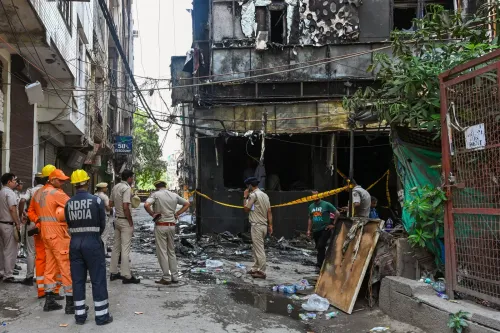
According to Delhi Police, the blaze started at approximately 11:18 pm at Kumar's home in the upscale Hauz Khas locality. At the time, five people — including family members and domestic staff — were present inside the house. Preliminary findings indicate the fire was triggered by a suspected explosion in the indoor unit of an air-conditioner installed on the premises.
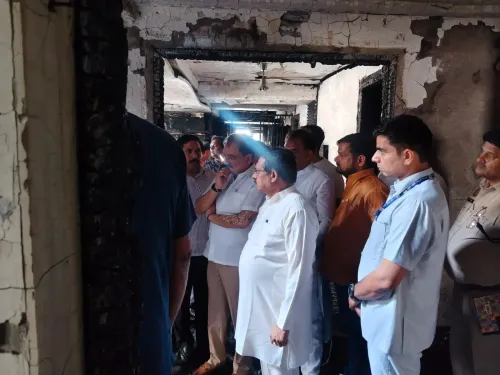
Police and Delhi Fire Services personnel rushed to the spot after receiving information about the incident. Rescue operations were launched immediately to evacuate those trapped, while firefighters worked to bring the blaze under control. Both Kumar and his son were pulled out of the building and transported to a nearby hospital. Kumar subsequently succumbed, reportedly due to smoke inhalation. Authorities have so far ruled out foul play. Investigating teams from the police and forensic departments have visited the site to examine the cause.
A Distinguished Bureaucratic Career
Kumar held senior positions across several Union ministries over his decades-long career, including the Ministry of Defence, the Ministry of Road Transport and Highways, and the Ministry of Culture. As Secretary in the Ministry of Culture, he oversaw matters relating to India's cultural institutions and heritage conservation. He also served as Chairman and Managing Director of the Rural Electrification Corporation, contributing to power infrastructure expansion in rural India.
Between November 2005 and January 2009, Kumar represented India as Executive Director at the World Bank, covering India, Bangladesh, Sri Lanka, and Bhutan. In that role, he participated in economic development and financial cooperation discussions across South Asia.
Founding the CCI: His Most Notable Chapter
Kumar became the first Chairman of the Competition Commission of India in February 2009, serving until June 2011. His tenure was foundational — the CCI was still a nascent institution, and Kumar played a central role in establishing its operational framework, promoting fair market competition, and curbing monopolistic practices by large corporations.
Recognising his expertise, the Ministry of Corporate Affairs later constituted a committee under his chairmanship to draft India's National Competition Policy, tasked with recommending reforms to strengthen the country's competition law and regulatory architecture. The Ministry of Housing and Urban Poverty Alleviation also appointed him Chairman of the SAPREP Committee, which focused on streamlining approval procedures for real estate projects.
Haryana and Post-Retirement Contributions
In Haryana, Kumar served as Principal Secretary to the Chief Minister and as Chairman and Managing Director of the Haryana State Industrial and Infrastructure Development Corporation (HSIIDC), where he contributed significantly to the expansion of industrial parks and infrastructure. He received the National Citizens Award from the Haryana government and was conferred an honorary doctorate for his contributions to public administration.
Even after retirement, Kumar remained active in policy and corporate affairs. He was the founding chairman of Competition Advisory Services India LLP (COMPAD) and served as Principal Advisor and Chief Mentor of the School of Competition Law at the Indian Institute of Corporate Affairs. His death marks the loss of one of the architects of India's modern competition law framework.
Point of View
Amazon, and Reliance — but that authority was built brick by brick during Kumar's 2009–2011 tenure, when the regulator had no precedent and no playbook. His post-retirement work on competition advisory and policy drafting also signals a gap that India rarely fills well: keeping retired expertise in productive public service rather than letting it dissipate. The circumstances of his death — a suspected AC unit failure in a private residence — will also renew scrutiny of electrical safety standards in urban housing, a recurring concern that rarely translates into enforceable reform.
NationPress
16 Sept 2026
Frequently Asked Questions
Who was Dhanendra Kumar?
Dhanendra Kumar was a retired IAS officer of the 1968 batch and the first Chairman of the Competition Commission of India (CCI), serving from February 2009 to June 2011. He held senior roles across multiple Union ministries and represented India at the World Bank between 2005 and 2009.
How did Dhanendra Kumar die?
Kumar died after a fire broke out at his residence in Hauz Khas, South Delhi, on Thursday night, reportedly triggered by a suspected explosion in an air-conditioner's indoor unit. He was rescued and taken to hospital but succumbed, reportedly due to smoke inhalation. He was 80 years old.
What was Dhanendra Kumar's role in the CCI?
Kumar was the founding Chairman of the Competition Commission of India, appointed in February 2009. During his tenure until June 2011, he established the CCI's operational framework, promoted fair market competition, and helped build the institutional foundation for India's competition law regime.
Was foul play suspected in the fire?
No. Delhi Police and forensic teams have so far ruled out foul play. Preliminary findings suggest the fire was caused by a suspected explosion in the indoor unit of an air-conditioner installed at the residence. Investigations are ongoing.
Who else was affected in the incident?
Five people were inside the house at the time, including family members and domestic staff. Kumar's son was also rescued and hospitalised with injuries; he is stated to be out of danger and continues to receive medical care.