How Did the 2025 Floods in Punjab and Haryana Affect Stubble Burning?
Synopsis
The unprecedented floods in Punjab and Haryana in 2025 led to a striking reduction in stubble burning, showcasing a remarkable 77% decrease in fire incidents. This, in turn, resulted in a significant 15.5% drop in Delhi's PM2.5 levels. Discover how these climatic events are reshaping air quality and agricultural practices in the region.
Key Takeaways
77% reduction in stubble burning in Punjab and Haryana due to floods.
15.5% decrease in Delhi's PM2.5 levels this month.
Floods disrupted harvest cycles and crop residue management.
Importance of addressing urban and industrial emissions for sustained air quality improvements.
Significant link between agricultural practices and air quality in the NCR.
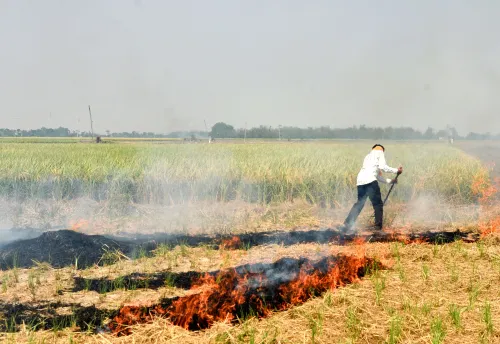
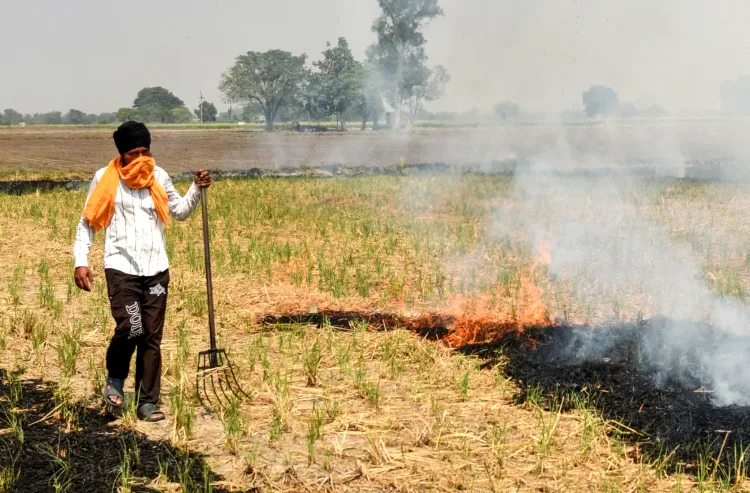
Chandigarh, Oct 15 (NationPress) The floods of 2025 in Punjab and Haryana acted as an unexpected intervention, resulting in a remarkable 77% reduction in rice crop residue burning. This decrease has contributed to a 15.5% drop in the average PM2.5 levels in Delhi this month compared to the previous year, according to an analysis released on Wednesday.
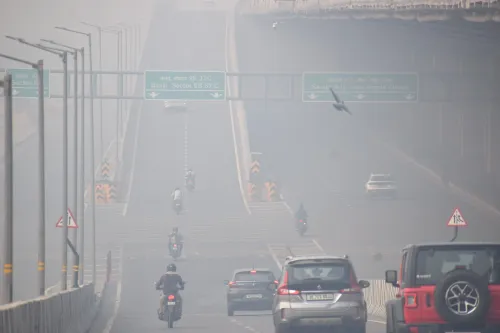
Utilizing data from the Central Pollution Control Board (CPCB) and NASA, the analysis indicated that although stubble burning was significantly reduced, Delhi's PM2.5 levels remained above 50 µg/m3, highlighting substantial pollution from other sources including traffic, industrial activities, and dust re-suspension.
PM2.5 refers to particulate matter measuring 2.5 microns or less in diameter. Continuous exposure to levels exceeding 50 μg/m3 poses serious health risks and can lead to premature death.
“The study, which examines the correlation between stubble burning in Punjab and Haryana and PM2.5 levels in Delhi for the first 12 days of October across two consecutive years—2024 and 2025—demonstrates that while curtailing farm fires can provide immediate benefits, achieving long-term air quality improvements necessitates comprehensive emission controls that extend beyond the agricultural sector,” stated a researcher in conversation with IANS.
This year, Punjab experienced widespread floods while Haryana faced scattered flooding, both of which significantly hindered agricultural operations and the management of crop residues.
“This climatic anomaly offers a unique perspective on how changes in stubble burning patterns affect Delhi's air quality,” remarked the researcher, who chose to remain anonymous.
According to the researcher, the 77.5% decline in stubble burning incidents this month can be directly linked to the severe flooding in Punjab and Haryana.
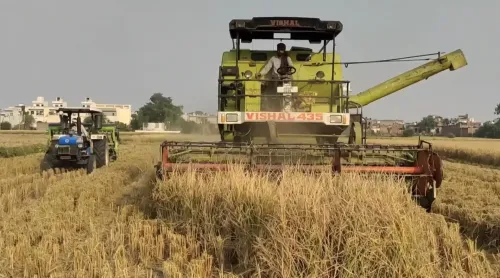
The flooding caused delays in harvest cycles, created waterlogged fields, and diminished the availability of dry residues, making it physically unfeasible for many farmers to engage in residue burning. This led to an involuntary yet substantial reduction in fire activity across both states, explained the researcher.
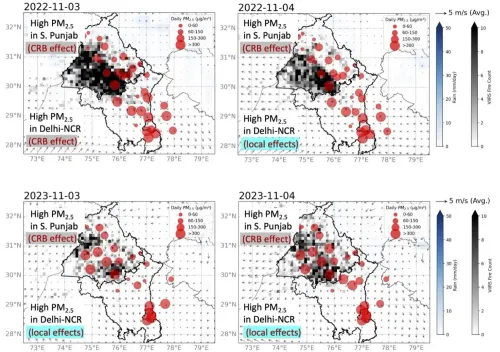
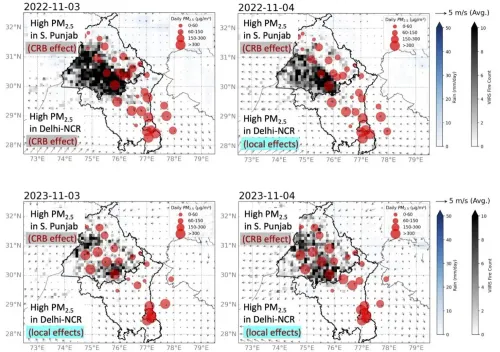
In parallel, the decrease in stubble burning coincided with a 15.5% reduction in Delhi's average PM2.5 levels during this timeframe. “This natural experiment highlights a strong causal relationship between biomass burning intensity in upwind states and the deterioration of air quality in the National Capital Region (NCR),” the researcher noted, adding, “fewer fires resulted in cleaner air, even in the absence of major policy or enforcement changes.”
In 2025, the correlation weakens as non-agricultural sources (vehicles, industries, dust, etc.) become more dominant in residual pollution levels.
“Data comparisons between October 2024 and 2025 reiterate that managing agricultural burning is crucial for improving Delhi's air quality; however, sustained improvements will depend on tackling urban and industrial emissions as well,” the expert added.
There were 392 stubble burning cases reported in Punjab from October 1 to 12 in 2024, which plummeted to 105 during the same period in 2025, marking a 73.2% decrease.
In Haryana, incidents of stubble burning dropped from 387 in 2024 to just 70 in 2025, reflecting an 81.9% decline. During this time, the average PM2.5 level in Delhi was 60.79 in 2024, while this year it was 51.48, representing a 15.5% reduction.
On Tuesday, Punjab recorded its highest single-day spike of the season in farm fires with 31 additional cases, bringing the total to 165 incidents.
Data from the Punjab Remote Sensing Centre indicates that Amritsar had the highest number of stubble burning incidents, totaling 68 cases, followed by Tarn Taran with 47 incidents.
In contrast, Haryana has reported a staggering 97% decline in stubble burning incidents between September 15 and October 13 compared to the same timeframe last year.
Officials attribute this drastic reduction in Haryana to stringent enforcement against violators. Agricultural experts suggest that farmers resort to burning leftover paddy straw to expedite field preparation for the next crop, rather than employing traditional methods or considering sustainable millet cultivation to disrupt the paddy-wheat cycle established during the Green Revolution period (1967-1978).
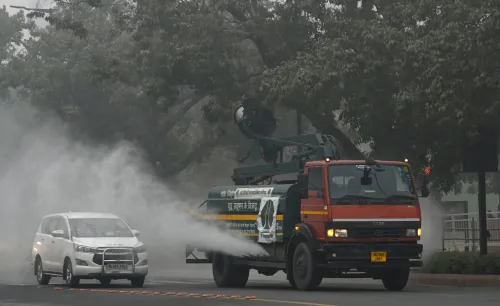
Aside from smoke from burning stubble, vehicle emissions and industrial pollutants combine each winter to envelop Delhi in a choking haze, primarily due to reduced wind speeds following the monsoon and cold air from the Himalayas.
(Vishal Gulati can be reached at vishal.g@ians.in)
Point of View
It is evident that natural disasters can inadvertently influence agricultural practices and air quality. While the reduction in stubble burning is a positive outcome, it is crucial to recognize that addressing pollution requires a holistic approach. As we move forward, it is essential to implement comprehensive strategies that target emissions from all sectors to ensure a sustainable solution for Delhi's air quality challenges.
NationPress
2 Oct 2026
Frequently Asked Questions
What impact did the floods have on stubble burning in 2025?
The floods in Punjab and Haryana led to a remarkable 77% reduction in stubble burning, significantly affecting air quality in Delhi.
How did the reduction in stubble burning affect Delhi's air quality?
The decrease in stubble burning resulted in a 15.5% drop in Delhi's average PM2.5 levels compared to the previous year.
What are PM2.5 levels and why are they important?
PM2.5 refers to fine particulate matter that can pose serious health risks when levels exceed 50 µg/m3 over prolonged periods.
What are the main sources of pollution contributing to PM2.5 levels in Delhi?
In addition to stubble burning, major contributors to PM2.5 levels in Delhi include traffic emissions, industrial activities, and dust.
What measures can be taken to improve air quality in Delhi?
Improving air quality requires a multi-faceted approach, including controlling agricultural burning, addressing urban emissions, and reducing industrial pollution.