Gadkari Approves Rs 1,359 Cr for NH-62 4-Laning in Rajasthan
Synopsis
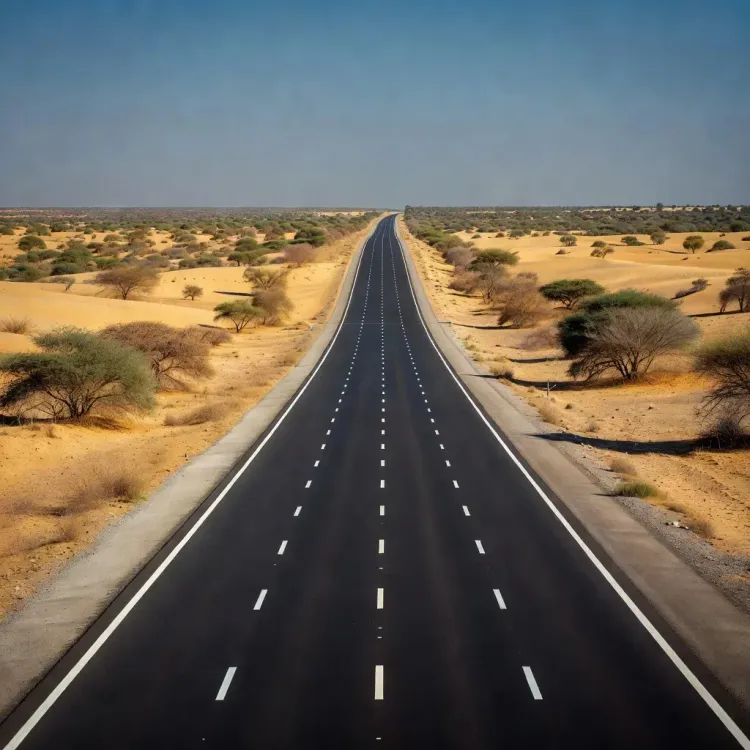
Union Minister Nitin Gadkari has approved Rs 1,359.33 crore to four-lane the 106.85 km Nagaur-Bikaner section of NH-62 in Rajasthan. The upgrade will complete a continuous four-lane corridor from Bikaner to Pindwara, easing congestion for 14,000 PCU of daily traffic and boosting regional connectivity and tourism.
Key Takeaways
Rs 1,359.33 crore has been approved for four-laning the Nagaur-Bikaner section of National Highway 62 in Rajasthan.
The approved stretch is 106.85 kilometres long and currently carries approximately 14,000 PCU of daily traffic on a two-lane road.
The route passes through Gogelao, Nokha, Rasisar, Deshnok, and Palana .
Completion will create a uniform four-lane carriageway with paved shoulders across the full NH-62 corridor from Bikaner to Pindwara .
The project is expected to improve connectivity between the two district headquarters of Bikaner and Nagaur , and boost tourism and economic activity in western Rajasthan.
The approval aligns with the Bharatmala Pariyojana and PM Gati Shakti frameworks for integrated national highway development.
Union Road Transport and Highways Minister Nitin Gadkari on Thursday, June 11, 2026, announced approval of Rs 1,359.33 crore to widen the Nagaur-Bikaner section of National Highway 62 in Rajasthan from a two-lane to a four-lane carriageway with paved shoulders, covering a stretch of 106.85 kilometres.
Context
Gadkari shared the approval on X, noting that the existing two-lane, paved-shoulder corridor currently carries approximately 14,000 PCU (Passenger Car Units) of daily traffic. The route passes through the towns of Gogelao, Nokha, Rasisar, Deshnok, and Palana before reaching Bikaner. In his post, the minister stated: 'Ise paved shoulder ke saath 4-lane mein upgrade karne se traffic aasani se guzar sakega aur sadak suraksha behtar hogi' ['Upgrading it to a four-lane with paved shoulders will allow traffic to move smoothly and improve road safety'].
The upgrade will create a uniform four-lane carriageway with paved shoulders across the entire length of NH-62 from Bikaner to Pindwara, completing a continuous corridor through western and southern Rajasthan.
Policy Backdrop
The approval falls under the broader framework of Bharatmala Pariyojana, the central government's flagship highway development programme launched in 2015, which prioritised four-laning of national highway corridors across India, including those in Rajasthan. The project also aligns with the PM Gati Shakti National Master Plan, introduced in 2021, which integrates multimodal infrastructure planning to reduce logistics costs and improve last-mile connectivity.
Rajasthan has been a significant focus of both programmes, with multiple two-to-four lane conversions sanctioned in recent years to strengthen the state's east-west and north-south highway linkages. The Nagaur-Bikaner section is among the last remaining two-lane gaps on NH-62, and its upgrade closes that gap to deliver a seamless four-lane facility along the full corridor.
Stakeholders and Impact
The two cities at the ends of the approved section — Bikaner and Nagaur — are both district headquarters in Rajasthan, and the highway is a primary artery for freight, commuters, and intercity bus services in the region. Better connectivity between the two cities is expected to benefit traders, transporters, and daily commuters who currently contend with congestion on the two-lane stretch.
The ministry's announcement also highlighted gains for the tourism sector. Bikaner is a prominent heritage and desert-tourism destination, and improved highway access is expected to ease travel for visitors arriving from southern Rajasthan and beyond. Local communities along the alignment — including those in Deshnok, home to the well-known Karni Mata temple — are also likely to see enhanced economic activity linked to smoother road access.
What's Next
With the financial sanction in place, the next steps involve project tendering and award of construction contracts for the 106.85 km stretch. Construction timelines and milestones will depend on the procurement process under the ministry's standard procedures. Observers will also watch for follow-up approvals covering any remaining NH sections in Rajasthan that are yet to be upgraded to four-lane standards, as the government continues to pursue its national objective of seamless corridor development across the highway network.
Point of View
The ministry can now present the entire Bikaner-Pindwara axis as a completed four-lane facility — a politically legible milestone in a BJP-governed state. The tagging of Rajasthan's BJP leadership and central ministers in the post signals an intent to share credit broadly ahead of any future electoral cycle. More substantively, the project reflects the Gati Shakti doctrine of treating individual road segments not as isolated works but as components of a seamless logistics corridor, with freight efficiency and tourism access as co-equal objectives alongside raw traffic capacity.
NationPress
19 Sept 2026
Frequently Asked Questions
What is the NH-62 Nagaur-Bikaner four-laning project?
It is a central government-approved road upgrade project worth Rs 1,359.33 crore that will widen the 106.85 km stretch of National Highway 62 between Nagaur and Bikaner in Rajasthan from two lanes to four lanes with paved shoulders.
How much will the NH-62 Nagaur-Bikaner upgrade cost?
The approved project cost is Rs 1,359.33 crore , sanctioned by the Union Ministry of Road Transport and Highways.
Which towns does the Nagaur-Bikaner section of NH-62 pass through?
The highway passes through Gogelao, Nokha, Rasisar, Deshnok, and Palana on its way from Nagaur to Bikaner.
What is the current traffic volume on the Nagaur-Bikaner NH-62 stretch?
The existing two-lane road carries approximately 14,000 PCU (Passenger Car Units) of daily traffic, according to the ministry's announcement.
How does this project fit into Bharatmala and Gati Shakti?
The project aligns with Bharatmala Pariyojana (2015), which prioritised four-laning of national highway corridors, and PM Gati Shakti (2021), which integrates multimodal infrastructure planning to reduce logistics costs and improve connectivity across India.