Gehlot urges Rajasthan CM to fix minimum wages ahead of Workers' Day
Synopsis
Rajasthan pays unskilled workers just ₹7,410 a month — while Kerala and Tamil Nadu have raised wages by up to 110% over the same decade. Former CM Ashok Gehlot's Workers' Day letter to CM Bhajan Lal Sharma puts hard numbers on a widening gap and demands a floor of ₹12,000–₹15,000, sector-specific rates, and mandatory six-monthly VDA revisions.
Key Takeaways
Ashok Gehlot wrote to CM Bhajan Lal Sharma on 30 April 2026 , ahead of International Workers' Day , flagging Rajasthan's low minimum wages.
Rajasthan's minimum wage stands at ₹7,410/month for unskilled workers and ₹9,334/month for highly skilled workers, per Labour Department data (March 2026) .
Wages in Rajasthan rose only 40–50% over the past decade, while the CPI nearly doubled ; Kerala recorded increases of 90–110% in the same period.
Gehlot has proposed revising minimum wages to ₹12,000–₹15,000/month and introducing mandatory six-monthly VDA revisions .
He also called for sector-specific wage rates , inclusion of transport, healthcare, and education costs, and stronger enforcement of the Minimum Wages Act .
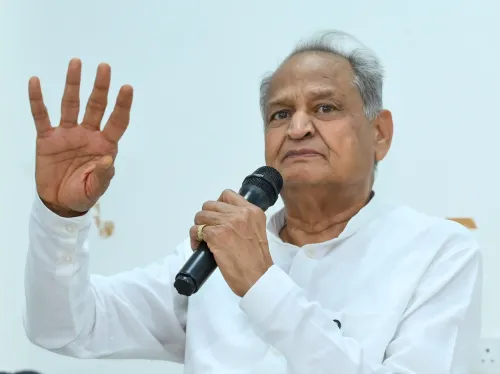
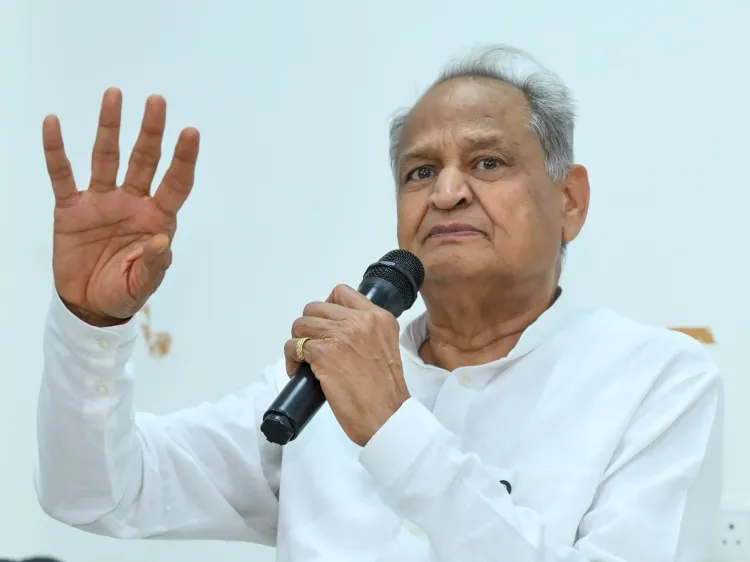
Former Chief Minister Ashok Gehlot has written to Chief Minister Bhajan Lal Sharma ahead of International Workers' Day on 1 May, flagging that Rajasthan ranks among the lowest-tier states in the country on minimum wages and urging immediate corrective action. The letter, sent from Jaipur on 30 April 2026, cites data from the state's Labour Department as of March 2026 and describes the situation as "extremely concerning."
Where Rajasthan Stands on Minimum Wages
According to Gehlot's letter, the current minimum wage in Rajasthan stands at ₹7,410 per month for unskilled workers and ₹9,334 per month for highly skilled workers. Over the past decade, wages in the state have risen by only 40–50 per cent, while the Consumer Price Index (CPI) has nearly doubled — resulting in only marginal real income growth for workers.
By comparison, Kerala has recorded wage increases of 90–110 per cent over the same period, while Tamil Nadu and Delhi have seen increases of 80–90 per cent, leaving Rajasthan significantly behind in both wage levels and revision pace.
Structural Problems in the Wage System
Gehlot also pointed to systemic gaps beyond the headline numbers. He noted that revisions in the Variable Dearness Allowance (VDA) are irregular and not time-bound, leaving workers exposed to inflationary pressures without periodic relief. The state currently applies a uniform wage rate for unlisted employments, despite wide variations in working conditions across sectors such as agriculture, construction, domestic work, and brick kilns.
He further flagged that key cost components — including transport, healthcare, and education — are excluded from wage calculations, even as household expenses in these areas have risen steadily. Several other states have already incorporated such allowances into their wage frameworks, he noted.
Reforms Suggested by Gehlot
The former Chief Minister put forward a concrete set of recommendations for the Sharma government. These include revising minimum wages to ₹12,000–₹15,000 per month, instituting mandatory six-monthly VDA revisions, introducing sector-specific wage rates for agriculture, construction, handicrafts, and domestic services, and incorporating essential living costs into wage calculations.
He also called for strengthening enforcement of the Minimum Wages Act through the appointment of additional labour inspectors, implementation of digital monitoring systems, and imposition of stricter penalties for violations.
What Gehlot Said
Stressing the broader economic stakes, Gehlot wrote: "Rajasthan is a state with a large workforce. The labourers and workers in the unorganised sector here constitute the backbone of the state's economy. If they do not receive fair remuneration, not only will their families be plunged into hardship, but the state's consumption capacity and economic growth will also be adversely affected. I earnestly urge you to give this matter serious consideration and to bring about positive changes."
Political and Economic Context
The letter comes as Gehlot's Indian National Congress (INC) remains in opposition in Rajasthan, having lost power to the Bharatiya Janata Party (BJP) in the December 2023 assembly elections. The timing — on the eve of International Workers' Day — amplifies the political signal, but the wage data cited from the state's own Labour Department lends the concerns independent weight. With a large unorganised workforce and rising living costs, how the Sharma government responds could have real implications for household incomes and consumption across the state.
Point of View
Which has shown limited appetite for wage-floor revision since taking office in December 2023, will engage with the substance or dismiss this as opposition posturing. The gap between nominal wage growth of 40–50% and a near-doubling CPI is not a political construct — it is a real erosion of purchasing power for Rajasthan's unorganised workforce. If the Sharma administration does not act, the issue will only sharpen ahead of the next electoral cycle.
NationPress
19 Sept 2026
Frequently Asked Questions
What is the current minimum wage in Rajasthan as of 2026?
According to Labour Department data cited by former CM Ashok Gehlot, Rajasthan's minimum wage stands at ₹7,410 per month for unskilled workers and ₹9,334 per month for highly skilled workers as of March 2026. This places Rajasthan among the lowest-tier states in the country on minimum wages.
What reforms has Gehlot proposed for Rajasthan's wage system?
Gehlot has proposed revising minimum wages to ₹12,000–₹15,000 per month, introducing mandatory six-monthly VDA revisions, establishing sector-specific wage rates, incorporating transport, healthcare, and education costs into wage calculations, and strengthening enforcement of the Minimum Wages Act through digital monitoring and stricter penalties.
How does Rajasthan's wage growth compare to other states?
Rajasthan has seen wage increases of only 40–50% over the past decade, while Kerala recorded increases of 90–110% and Tamil Nadu and Delhi saw 80–90% growth. Meanwhile, the Consumer Price Index has nearly doubled, meaning real wage growth in Rajasthan has been marginal.
Why is the Variable Dearness Allowance revision important for workers?
The VDA is a component of wages that is supposed to adjust for inflation. In Rajasthan, Gehlot notes that VDA revisions are irregular and not time-bound, meaning workers do not receive predictable inflation protection. He has called for mandatory six-monthly revisions to address this gap.
What is the political context of Gehlot's letter?
Ashok Gehlot, who served as Chief Minister of Rajasthan under the Indian National Congress, lost power to the BJP's Bhajan Lal Sharma in the December 2023 assembly elections. The letter, timed to International Workers' Day on 1 May, is part of the Congress's opposition campaign, though the wage data cited comes from the state's own Labour Department.