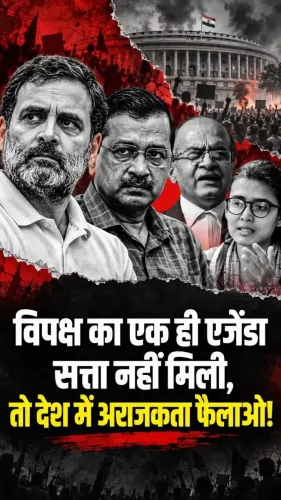
Giriraj Singh brands campus slogan writers 'anti-national conspirators'
Synopsis
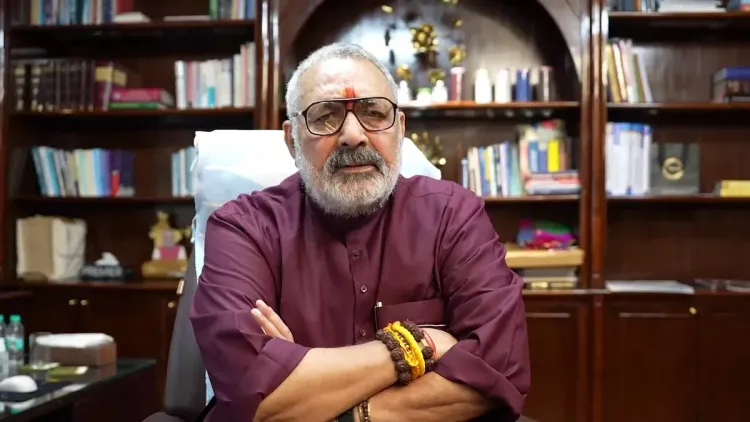
Union Textiles Minister Giriraj Singh, on 23 October 2026, called writing inflammatory slogans on university walls and defending sedition accused a direct conspiracy by anti-national forces, sharpening the BJP's long-running attack on campus dissent.
Key Takeaways
Giriraj Singh posted on X on 23 October 2026 calling campus slogan-writing and shielding sedition accused a 'direct anti-national conspiracy.' The minister described those involved as people who have 'repeatedly worked to destabilise the country and spread anarchy.' No specific university, incident, or individual was named — making the statement a broad political indictment rather than a targeted allegation.
The post continues a long-standing BJP pattern of framing solidarity with sedition accused as alignment with destabilising forces.
India's sedition provision remains under a Supreme Court-mandated review, keeping the law a live political flashpoint.
Responses from opposition parties and student bodies are expected to define how far the exchange escalates.
Writing incendiary slogans on university walls and then shielding those accused of sedition, Union Textiles Minister Giriraj Singh declared on Friday, 23 October 2026, is nothing less than a direct conspiracy by anti-national forces — the same forces he says have repeatedly tried to destabilise India and spread anarchy.
Posting in Hindi on X, Singh stated: 'विश्वविद्यालयों की दीवारों पर भड़काऊ नारे लिखकर देशद्रोह के आरोपियों की ढाल बनना सीधे तौर पर राष्ट्रविरोधी ताकतों की साजिश है' — ('Writing inflammatory slogans on university walls and becoming a shield for those accused of sedition is directly a conspiracy by anti-national forces.') He added that these are the very people who have, time and again, worked to destabilise the country and spread chaos.
The pattern behind the rhetoric
Singh's outburst fits a well-worn groove in Indian political discourse: whenever sedition cases touch university campuses, the ruling BJP's senior voices move quickly to frame solidarity with the accused as itself a marker of disloyalty. The minister's language — 'shield for the accused,' 'anti-national conspiracy,' 'anarchy' — is calibrated to collapse the distinction between legal defence and political allegiance.
No specific university, slogan, or individual is named in the post. The broadness is deliberate: it allows the statement to function as a general indictment of campus activism rather than a comment on any single incident, making it simultaneously harder to rebut and easier to amplify.
Sedition law, campus politics, and an unresolved debate
India's sedition provision — Section 124A of the Indian Penal Code, recently renumbered under the Bharatiya Nyaya Sanhita — has been a flashpoint for years. The Supreme Court effectively put its use in abeyance pending a constitutional review, yet sedition-adjacent charges continue to surface in campus-related cases, keeping the political temperature high.
Opposition parties and student organisations have consistently argued that the law is weaponised against dissent. The BJP, conversely, has argued that certain forms of campus activism cross from free speech into active subversion. Singh's post lands squarely on that fault line — not as a legal argument, but as a political signal to his base ahead of any parliamentary debate on reform of the provision.
Whether opposition benches or student federations respond formally will determine how far this particular exchange travels. But the minister has ensured the frame is set: any defence of campus protesters must now contend with the label he has planted.
Point of View
It raises the political cost of any opposition pushback before a single rebuttal is even issued. The timing — with sedition law reform still pending parliamentary resolution — suggests the BJP is keen to keep the 'anti-national campus' narrative alive as a mobilising frame. The deliberate vagueness of the target is a feature, not a bug: it broadens the net and forces opponents to either defend a position they haven't taken or stay silent. Watch whether this escalates into a floor debate on the Bharatiya Nyaya Sanhita's sedition-adjacent provisions.
NationPress
23 Oct 2026
Frequently Asked Questions
What did Giriraj Singh say about university slogans and sedition?
On 23 October 2026, Singh posted that writing inflammatory slogans on university walls and acting as a shield for those accused of sedition is a direct conspiracy by anti-national forces who have repeatedly tried to destabilise India.
Which university or incident was Giriraj Singh referring to?
Singh did not name any specific university, slogan, or individual in his post. The statement is a broad political remark rather than a comment on a verified specific incident.
What is India's current status on the sedition law?
India's sedition provision — originally Section 124A of the Indian Penal Code and renumbered under the Bharatiya Nyaya Sanhita — has been under a Supreme Court-mandated review, with its routine use put in abeyance pending a constitutional ruling.
Why do BJP leaders frequently link campus protests to anti-national activity?
Senior BJP figures have consistently framed certain campus activism — particularly around sedition cases — as aligned with forces seeking to destabilise India, a narrative that functions as both a security argument and a political mobilisation tool against opposition-linked student groups.
What could happen next after Giriraj Singh's statement?
Responses from opposition parties, student federations, and possibly a parliamentary debate on sedition law reform are the key developments to watch following the minister's remarks.