Giriraj Singh accuses Rahul Gandhi of seeking power by bullet, not ballot
Synopsis
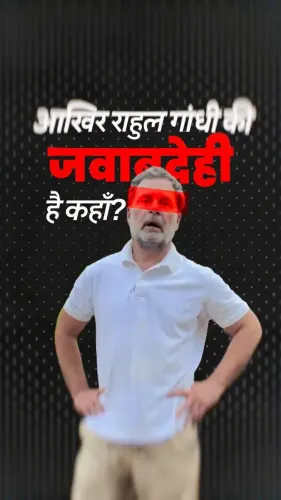
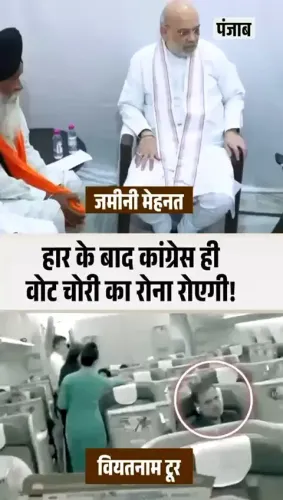
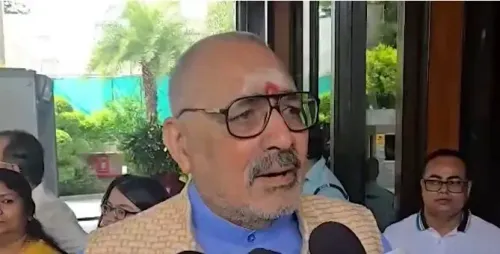
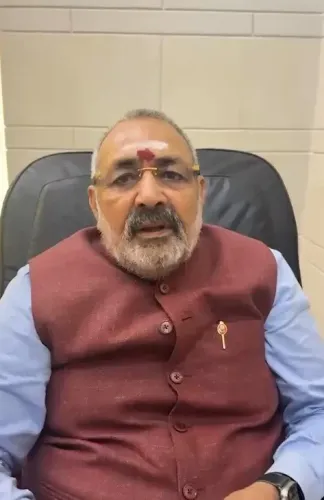
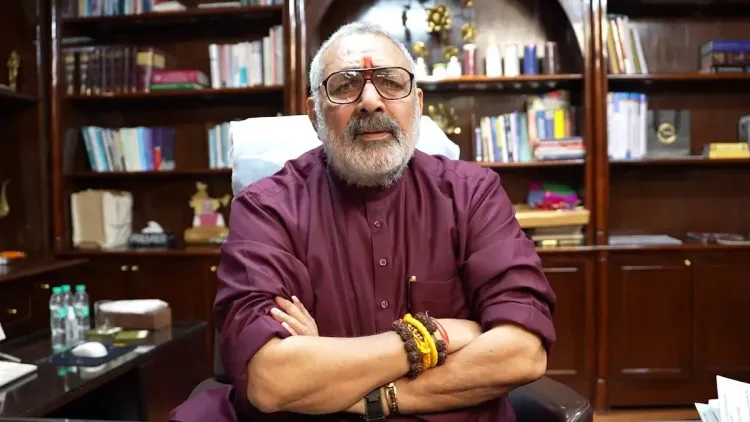
Union Textiles Minister Giriraj Singh accused Congress leader Rahul Gandhi of wanting to seize power through the bullet rather than the ballot, posting a pointed Hindi charge on X on October 23, 2026, alongside a video.
Key Takeaways
Giriraj Singh , Union Textiles Minister and BJP MP from Begusarai, Bihar , posted the accusation on X on October 23, 2026 .
The Hindi phrase translates as: 'Rahul Gandhi does not want to seize power through the ballot, but through the bullet.' The post was accompanied by a video, suggesting a structured communication offensive rather than an offhand remark.
The ballot-versus-bullet contrast is among the most loaded rhetorical weapons in Indian partisan politics, directly challenging the accused's democratic legitimacy.
Rahul Gandhi has built his recent political identity around constitutional and democratic values, making the charge a targeted strike at his public positioning.
A sharp political broadside landed on Friday evening when Union Textiles Minister Giriraj Singh accused Congress leader Rahul Gandhi of pursuing power through force rather than democratic means — framing the charge in a single, pointed Hindi phrase that cut straight to the bone of Indian electoral politics.
Posting on X on October 23, 2026, Singh wrote: 'Rahul Gandhi ballot se nahin, bullet se satta hathiyaana chahte hain!' — 'Rahul Gandhi does not want to seize power through the ballot, but through the bullet.' The line is a deliberate inversion of the foundational democratic principle, and in Indian political shorthand, the ballot-versus-bullet contrast is among the most loaded accusations one party can level at another.
The weight of 'ballot versus bullet' in Indian politics
The phrase carries particular charge in a democracy where the legitimacy of electoral outcomes is itself a recurring flashpoint. When senior BJP figures use this contrast, they are invoking a well-established rhetorical tradition — one that equates the opposition not merely with bad policy but with anti-democratic instinct. The accusation, deliberately blunt, is designed to stick.
Giriraj Singh, the Lok Sabha MP from Begusarai, Bihar, is no stranger to sharp-edged political commentary targeting Congress and its leaders. His statements on Rahul Gandhi have consistently been among the more aggressive in BJP's arsenal, and this post — accompanied by a video — signals that the tone is unlikely to soften ahead of any upcoming electoral contest.
Rahul Gandhi and the Congress response arc
Rahul Gandhi, who has contested multiple Lok Sabha elections including from Wayanad, has built his recent political identity around democratic accountability and constitutional values — making Singh's 'bullet' charge a direct strike at the Congress leader's core public positioning. The Congress camp has historically responded to such attacks by doubling down on constitutional rhetoric, framing BJP's own conduct as the real threat to democratic norms.
No official response from the Congress party was immediately available at the time of publication.
Bihar's voice in national political combat
That this charge originates from a minister who represents Begusarai — a constituency with its own charged political history — adds another layer. Bihar has been a fierce electoral battleground, and its senior political voices carry national amplification. Singh's intervention here is not merely a local skirmish; it is a nationally calibrated message, timed and worded for maximum reach.
Whether this marks the opening of a new political offensive or a standalone salvo, one thing is clear: the temperature of political discourse has just gone up another notch.
Point of View
Not an isolated outburst. With electoral cycles perpetually on the horizon in India, such framing is intended to shape voter perception well before ballots are cast.
NationPress
23 Oct 2026
Frequently Asked Questions
What did Giriraj Singh say about Rahul Gandhi?
Giriraj Singh posted on X that Rahul Gandhi wants to seize power through the bullet, not the ballot — a sharp accusation questioning Gandhi's commitment to democratic processes.
What does 'ballot se nahin, bullet se' mean?
The Hindi phrase means 'not through the ballot, but through the bullet' — implying that the target person seeks power through force or violence rather than through democratic elections.
Who is Giriraj Singh?
Giriraj Singh is the Union Minister of Textiles in the Indian government and a senior BJP leader who serves as the Lok Sabha MP from Begusarai, Bihar.
Has Congress responded to Giriraj Singh's accusation against Rahul Gandhi?
No official Congress response was available at the time of publication. Congress has historically countered such accusations by emphasising its own commitment to constitutional values.
Why is the ballot-versus-bullet phrase significant in Indian politics?
The contrast directly challenges a leader's democratic legitimacy — accusing them not of poor policy but of rejecting the democratic process itself, making it one of the most serious political charges in Indian electoral discourse.