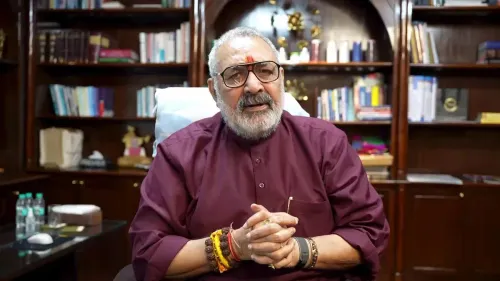
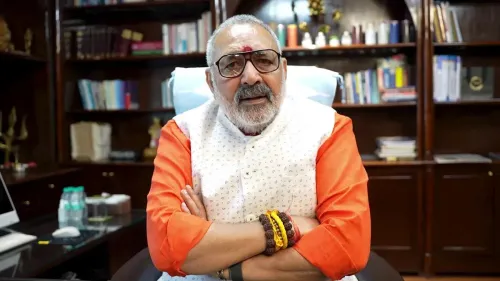
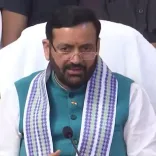
Giriraj Singh Alleges Foreign Plot to Destabilise India
Synopsis
Union Textiles Minister Giriraj Singh on 23 October 2026 alleged a coordinated plan to destabilise India, citing a reported secret meeting between the opposition and Progressive International at 10 Janpath and invoking a Fox News report, warning that India's electoral destiny belongs to its own voters.
Key Takeaways
Giriraj Singh on 23 October 2026 alleged a foreign-backed plot to destabilise India 'from France to India.' He specifically named Progressive International — a global left-wing network founded in 2020 — and 10 Janpath , New Delhi, as the alleged meeting point with the opposition.
The claim echoes BJP's 2023 accusations against George Soros and international figures over alleged election interference.
NationPress cannot independently verify the specific meeting or the Fox News report referenced in the post.
Singh's closing argument — that India's fate is decided by its 'aware voter, not foreign conspiracies' — is a direct electoral-nationalist appeal.
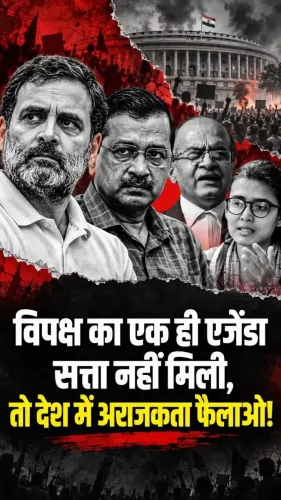
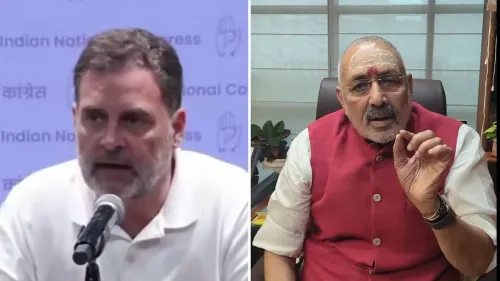
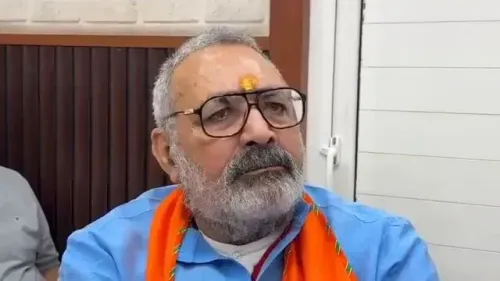
A charged political accusation landed on Friday evening when Union Textiles Minister Giriraj Singh posted a sweeping allegation on X on 23 October 2026, claiming that a coordinated plan to stoke unrest 'from France to India' has been exposed — and pointing the finger squarely at the domestic opposition and an international progressive network.
Singh's post, written in Hindi, states that a 'secret meeting' between opposition leaders and Progressive International at 10 Janpath in New Delhi — combined with a report by the American conservative channel Fox News — reveals what he calls a 'despicable attempt to destabilise the country out of lust for power.' He warned those 'dreaming of changing government with the help of anti-national forces' to 'listen carefully: India's destiny is decided not by foreign conspiracies, but by its aware voter.'
The 10 Janpath allegation and Progressive International
Progressive International is a global left-wing network founded in 2020 to coordinate progressive policy movements across countries. 10 Janpath, the New Delhi address long associated with senior Indian National Congress leadership, is the specific venue Singh names as the site of what he describes as a clandestine gathering. NationPress cannot independently verify the existence or details of this meeting from available information.
The allegation fits a well-established template in BJP political messaging. As far back as 2023, senior BJP leaders including the Prime Minister publicly accused international figures — notably financier George Soros — of attempting to manipulate Indian elections and public discourse. Singh's post extends that narrative into a new electoral cycle, adding a European dimension ('from France') and invoking a specific organisational name.
A recurring charge that sharpens before elections
This is not an isolated outburst — it is a pattern. Ruling-party figures have repeatedly framed domestic political opposition as the Indian arm of a larger international campaign against the Narendra Modi government. The framing serves a dual purpose: it questions the legitimacy of opposition activity, and it elevates the stakes of any election into a binary between sovereign self-determination and foreign meddling.
The rhetorical move is also globally familiar. Governments from Hungary to Brazil have at different times accused Soros-linked or progressive international networks of backing domestic rivals. In India, the charge carries particular potency because the memory of Cold War-era foreign interference in domestic politics remains part of the political consciousness.
Singh's closing line — that 'India's destiny is decided by its aware voter' — is the affirmative flip side of the attack: a direct appeal to electoral nationalism at a moment when the political temperature is already rising.
Point of View
He attempts to make an international-conspiracy frame feel locally concrete and verifiable. The timing, as electoral rhetoric intensifies, suggests the charge is designed as much to energise the BJP base as to put the opposition on the defensive. Opposition parties will face pressure to either deny the meeting publicly or risk the allegation gaining traction by silence.
NationPress
23 Oct 2026
Frequently Asked Questions
What did Giriraj Singh allege about the opposition and Progressive International?
Singh alleged that a secret meeting took place between opposition leaders and Progressive International at 10 Janpath, New Delhi, which he said exposed a plan to destabilise India with foreign help in order to change the government.
What is Progressive International?
Progressive International is a global left-wing network founded in 2020 that aims to coordinate progressive political movements and policy advocacy across multiple countries.
Has BJP made similar allegations about foreign interference before?
Yes. In 2023, senior BJP leaders including the Prime Minister publicly accused international figures such as George Soros of attempting to influence Indian elections and politics — Singh's post continues that established narrative.
Is the alleged 10 Janpath meeting confirmed?
No. The specific meeting and the Fox News report cited by Singh have not been independently verified and are flagged as unconfirmed from available information.