Piyush Goyal Greets Seven States on Statehood Day
Synopsis
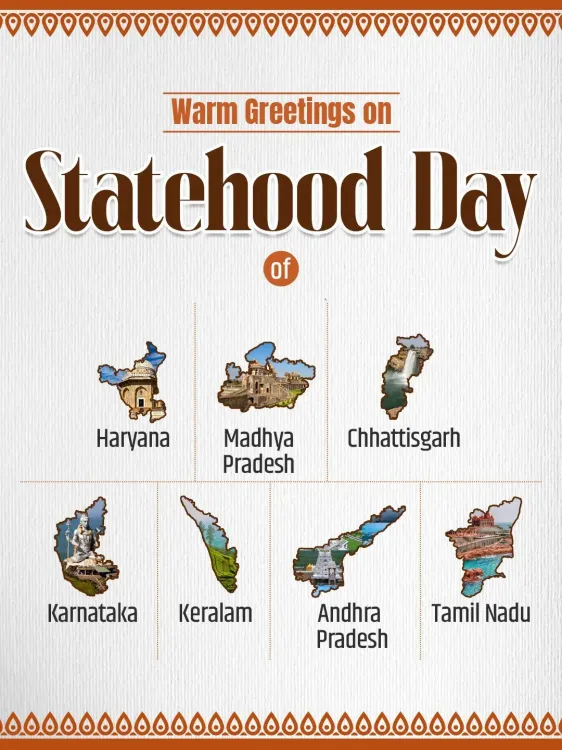
Union Commerce Minister Piyush Goyal greeted Madhya Pradesh, Andhra Pradesh, Chhattisgarh, Haryana, Karnataka, Tamil Nadu and Keralam on their Statehood Day on 1 November 2026, highlighting their contributions to agriculture, technology and culture while invoking the Viksit Bharat 2047 vision.
Key Takeaways
1 November marks Statehood Day for seven Indian states: Madhya Pradesh, Andhra Pradesh, Chhattisgarh, Haryana, Karnataka, Tamil Nadu and Keralam .
Union Minister Piyush Goyal extended greetings via X, linking state growth to the Viksit Bharat 2047 national development vision.
The date commemorates the States Reorganisation Act of 1956 , which redrew India's map along linguistic lines.
Goyal's message highlighted contributions spanning agriculture, enterprise, technology and cultural heritage across all seven states.
The practice of federal ministers issuing Statehood Day greetings reflects routine outreach that reinforces centre-state solidarity.
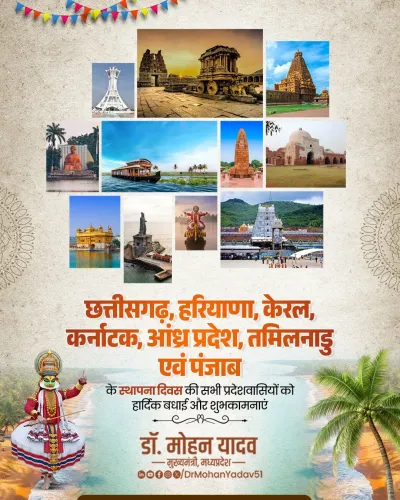
Every year on 1 November, India pauses to mark one of its quieter but foundational democratic moments — the day seven states were born out of linguistic reorganisation. Union Commerce and Industry Minister Piyush Goyal extended warm Statehood Day greetings to the people of Madhya Pradesh, Andhra Pradesh, Chhattisgarh, Haryana, Karnataka, Tamil Nadu and Keralam on Sunday, invoking the government's signature national vision along the way.
Posting on X, Goyal wrote: 'Warm greetings to our sisters and brothers in Madhya Pradesh, Andhra Pradesh, Chhattisgarh, Haryana, Karnataka, Tamil Nadu and Keralam on their Statehood Day. From agriculture and enterprise to technology and rich cultural heritage, each of these states makes invaluable contributions to India's growth. May they continue to scale new heights and contribute to building a Viksit Bharat.'
Seven states, one reorganisation moment
The date traces back to the States Reorganisation Act of 1956, which redrew India's internal map along linguistic lines — one of the most consequential acts of administrative nation-building after Independence. States like Karnataka (then Mysore) and Kerala came into being that day, while others such as Haryana and Chhattisgarh were carved out in later decades but share the 1 November anniversary. The convergence of seven different founding stories into a single calendar date makes it a recurring occasion for federal solidarity.
Agriculture to technology — a deliberate arc
Goyal's message was careful in its breadth. The phrase 'from agriculture and enterprise to technology and rich cultural heritage' spans the economic identities of all seven states without singling any one out. Madhya Pradesh and Chhattisgarh anchor India's agrarian heartland; Karnataka houses the country's largest technology cluster in Bengaluru; Tamil Nadu leads in manufacturing and exports; Andhra Pradesh and Haryana straddle industry and agriculture; Keralam is synonymous with human development indices and a globally connected diaspora. The sweep is intentional — federal outreach that speaks to everyone at once.
The 'Viksit Bharat' anchor
The closing invocation of Viksit Bharat — the government's vision for a developed India by 2047, the centenary of Independence — is now standard currency in official messaging. By threading it into a ceremonial greeting, Goyal reinforces the framing that state-level growth and national development targets are two sides of the same ledger. For a minister whose portfolio covers trade, industrial policy and export promotion, the linkage is more than rhetorical: the states he named collectively account for a substantial share of India's manufacturing output and export earnings.
As cultural programmes and state-level celebrations unfold across all seven capitals today, the message from New Delhi is consistent: regional pride and national ambition are not competing stories — they are the same one.
Point of View
But they carry a quiet federalism signal — particularly when the minister holds a portfolio as economically consequential as Commerce and Industry. Goyal's invocation of Viksit Bharat places state-level economic identity inside a unified national growth narrative, a framing the BJP has consistently pursued ahead of state elections. The specific mention of all seven states — spanning the South, Centre and North — underlines a political calculus of inclusive outreach. The message reinforces that for this government, federal occasions are rarely just symbolic; they are opportunities to restitch the centre-state compact around shared development goals.
NationPress
1 Nov 2026
Frequently Asked Questions
Why is 1 November celebrated as Statehood Day?
1 November marks the anniversary of the States Reorganisation Act of 1956 , which redrew India's state boundaries largely along linguistic lines, giving birth to several states including Karnataka and Kerala on that date.
Which states celebrate Statehood Day on 1 November?
Madhya Pradesh, Andhra Pradesh, Chhattisgarh, Haryana, Karnataka, Tamil Nadu and Keralam (Kerala) all observe their Statehood Day on 1 November , though some were formed in later reorganisations.
What is Viksit Bharat?
Viksit Bharat is the Indian government's vision to make India a fully developed nation by 2047 , the centenary of Independence — a goal frequently referenced in official policy communications.
What did Piyush Goyal say on Statehood Day 2026?
Minister Piyush Goyal extended greetings to the seven states, acknowledging their contributions 'from agriculture and enterprise to technology and rich cultural heritage' and called on them to contribute to building a Viksit Bharat .
Why does Piyush Goyal's Statehood Day message matter?
As Union Minister of Commerce and Industry and Leader of the House in the Rajya Sabha, Goyal's message carries federal weight, linking state economic identities — spanning agriculture to technology — directly to national development targets.