Goyal Plants Trees in Lucknow, Urges Green India Drive
Synopsis
Union Commerce Minister Piyush Goyal participated in a tree plantation drive in Lucknow on 11 June 2026, calling on citizens to turn afforestation into a mass public movement. The gesture aligns with India's National Mission for a Green India and its Paris Agreement commitments on expanding carbon sinks.
Key Takeaways
Piyush Goyal planted trees in Lucknow on 11 June 2026 as part of a Green India initiative.
He called on all citizens to plant as many trees as possible and make nature conservation a campaign of public participation.
India's National Mission for a Green India targets increasing forest and tree cover across 10 million hectares .
Van Mahotsav , India's annual tree plantation festival, has been held since 1950 to promote public afforestation.
Afforestation is a key part of India's commitments under the Paris Agreement to expand carbon sinks.
The upcoming monsoon season is the primary window for large-scale plantation activity across Uttar Pradesh and India.
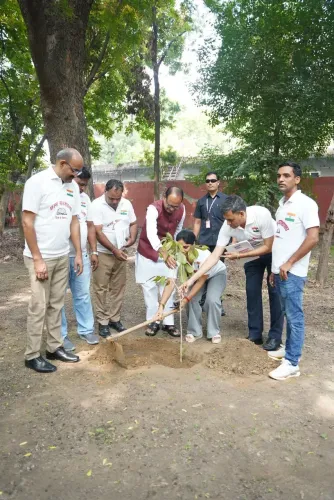
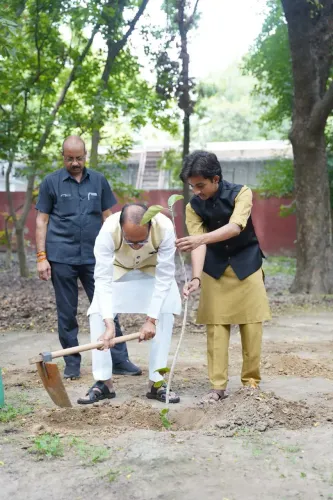
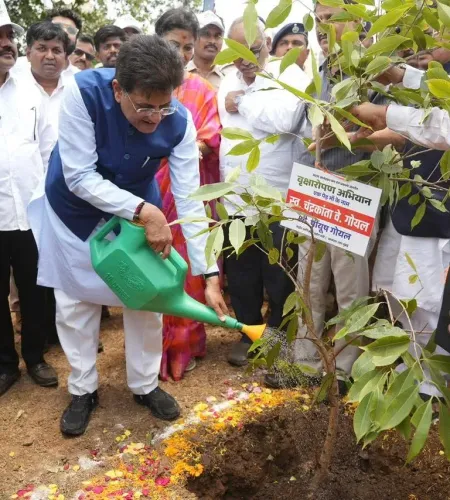
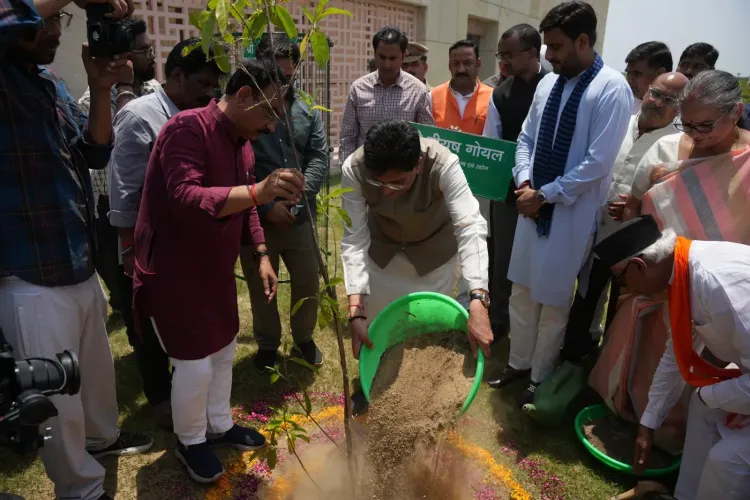
Union Commerce and Industry Minister Piyush Goyal participated in a tree plantation drive in Lucknow on Thursday, 11 June 2026, calling on citizens to make afforestation a mass public movement in the interest of future generations.
Posting on X with photographs from the event, Goyal wrote: 'एक वृक्ष पर्यावरण की रक्षा के साथ-साथ आने वाली पीढ़ियों के लिए स्वच्छ और स्वस्थ भविष्य की नींव भी रखता है' — 'A single tree not only protects the environment but also lays the foundation for a clean and healthy future for generations to come.' He added that the act of planting trees in Lucknow was his personal contribution to the resolve of a 'Green India', and invited all citizens to plant as many trees as possible, turning nature conservation into a campaign of public participation.
Context
The plantation event took place in Lucknow, the capital of Uttar Pradesh, during the pre-monsoon period when afforestation drives are traditionally organised across India. Goyal, whose primary portfolio covers commerce and industry, joined the initiative as part of a broader cross-government emphasis on environmental stewardship. Senior ministers from non-environment portfolios participating in such drives has become a recurring feature of the current administration's public communication on sustainability.
Policy Backdrop
India's afforestation efforts are anchored in the National Mission for a Green India, approved in 2014 under the National Action Plan on Climate Change, which targets increasing forest and tree cover across 10 million hectares. The country also has a long tradition of Van Mahotsav, an annual tree plantation festival first organised in 1950 by the Union Ministry of Agriculture to promote public afforestation at scale. Both initiatives reflect India's commitment to expanding carbon sinks in line with its obligations under the Paris Agreement.
India has repeatedly cited forest and tree cover expansion as a key component of its Nationally Determined Contributions under the Paris Agreement. Linking ministerial participation with grassroots public action is a deliberate strategy to signal that environmental goals are not siloed within a single ministry but are a whole-of-government priority alongside economic growth.
Stakeholders and Impact
The call to action is directed at the general public, particularly urban residents, who are being encouraged to treat individual tree-planting as a civic duty rather than a government-led exercise. Lucknow, as a dense state capital, represents the kind of urban environment where green cover has direct implications for air quality, heat mitigation, and public health. Campaigns of this kind, when sustained, contribute to the data tracked by the Forest Survey of India in its periodic assessments of national tree and forest cover.
What's Next
The monsoon season, which typically arrives in Uttar Pradesh by late June or early July, is the primary window for large-scale plantation activity, and state governments often announce fresh targets around this period. The next Forest Survey of India report will be a key indicator of whether recurring ministerial campaigns are translating into measurable gains in green cover. Goyal's post signals that the push for public participation in afforestation will continue through the season.
Point of View
Reinforcing the message that sustainability is not the exclusive domain of the environment ministry. The timing — ahead of the monsoon planting season — is deliberate, as it primes public participation when conditions are most favourable for saplings to survive. The explicit invocation of 'future generations' and 'public participation' echoes the language of India's climate diplomacy, subtly connecting a local event to the country's Paris Agreement commitments. Over time, the credibility of such campaigns will depend on whether they produce verifiable gains in the Forest Survey of India's cover data.
NationPress
26 Oct 2026
Frequently Asked Questions
Why did Piyush Goyal plant trees in Lucknow?
Piyush Goyal planted trees in Lucknow on 11 June 2026 to contribute to the Green India initiative and to call on citizens to make afforestation a mass public movement for environmental protection and the benefit of future generations.
What is the National Mission for a Green India?
The National Mission for a Green India was approved in 2014 under the National Action Plan on Climate Change. It aims to increase forest and tree cover across 10 million hectares and is a key part of India's climate action strategy.
What is Van Mahotsav?
Van Mahotsav is India's annual tree plantation festival, first organised in 1950 by the Union Ministry of Agriculture. It is held every year to promote public afforestation and increase green cover across the country.
How does India's tree plantation drive relate to the Paris Agreement?
India has committed under the Paris Agreement to expand its carbon sinks through increased forest and tree cover. Afforestation campaigns, including ministerial participation in plantation drives, are part of fulfilling India's Nationally Determined Contributions.
When is the best time to plant trees in Uttar Pradesh?
The monsoon season, which typically arrives in Uttar Pradesh by late June or early July, is the primary window for large-scale tree plantation activity, as rainfall improves the survival rate of newly planted saplings.