Goyal warns Congress bid to 'spread anarchy' will fail
Synopsis
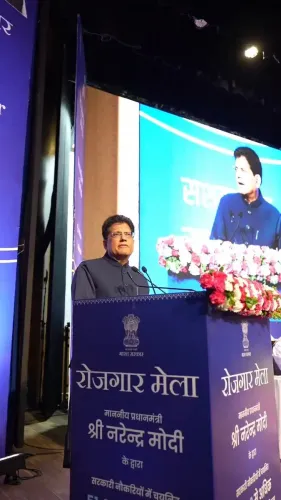
Union Commerce Minister and Rajya Sabha Leader of the House Piyush Goyal declared on X that every bid by Congress and its allies to spread anarchy and destabilise India will fail, escalating BJP's rhetorical pushback against the opposition in October 2026.
Key Takeaways
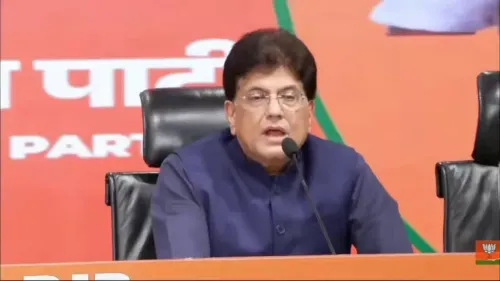
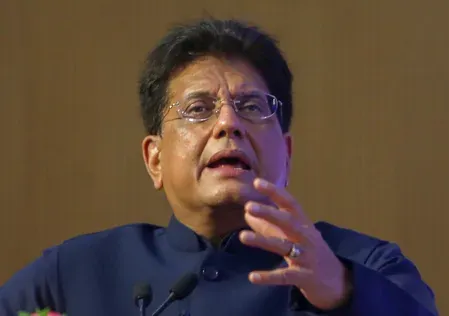
Piyush Goyal , Union Commerce and Industry Minister and Leader of the House in the Rajya Sabha , posted a sharp warning to the opposition on Friday, October 16, 2026 .
He declared in Hindi that every attempt by Congress and its allies to 'spread anarchy and create imbalance' in India will ultimately fail.
The use of the word arajkata (anarchy) is a high-voltage political charge, framing opposition activity as a deliberate design against national order.
The post targets not just Indian National Congress but the broader opposition alliance, reflecting the BJP's view of coordinated pressure against the government.
Congress and partner parties are expected to respond — either reframing the accusation or escalating with counter-charges.
Every attempt by Congress and its allies to engineer instability in India will be defeated — that is the blunt message Union Commerce and Industry Minister Piyush Goyal sent on Friday, October 16, 2026, in a pointed post on X that cut straight to the fault line of India's ruling-opposition standoff.
Goyal's post, written in Hindi, declares: 'Arajkata failakar desh mein asantulan paida karne ki Congress aur uske sathiyon ki har koshish nakam hokar rahegi' — 'Every attempt by Congress and its allies to spread anarchy and create imbalance in the country will fail.' The phrasing is unambiguous: he is not criticising a single protest or one policy disagreement, but painting the opposition's entire strategy as a deliberate design against national order.
The language of 'anarchy' and what it signals
In Indian political rhetoric, the word arajkata (anarchy) is a high-voltage charge. When a minister who is also Leader of the House in the Rajya Sabha deploys it, it is rarely casual. The BJP's senior leadership has, over multiple electoral cycles, framed opposition mobilisation — street protests, alliance-building, parliamentary disruptions — as threats to governance rather than legitimate political activity. Goyal's post fits squarely in that tradition.
The research backdrop makes clear that this rhetoric is part of a durable pattern: BJP leaders periodically respond to periods of intensified opposition activity with language that frames instability as manufactured rather than organic. The specific trigger for this October 2026 post is not confirmed, but the post's tone suggests a moment of active opposition pressure — whether parliamentary, legal, or street-level — that the government feels warrants a public counter-signal.
Congress and its allies in the crosshairs
Goyal's reference to 'Congress and its allies' is deliberate. It broadens the target beyond the Indian National Congress to the wider opposition constellation that has increasingly coordinated against the BJP-led government. By naming the coalition rather than any single party, the minister signals that the ruling side sees an organised effort — not isolated dissent.
Whether Congress or its partners respond formally — in Parliament, through press conferences, or on social media — will be the immediate thing to watch. Opposition replies to such charges tend to either reframe the accusation ('calling democratic protest anarchy') or escalate with counter-allegations of their own.
One minister's post on a Friday afternoon is not a policy announcement. But when that minister holds the floor leadership of the upper house of Parliament, even a short statement is a strategic temperature-read of where the ruling coalition's head is. The message to the opposition is stark: press harder, and expect the government to press back harder still.
Point of View
' the BJP shifts the debate from the substance of opposition grievances to the manner of opposition politics — a rhetorical frame it has used to electoral advantage before. The reference to 'allies' alongside Congress is a deliberate reminder that the government views the opposition constellation as a unified threat, not a fragmented collection of regional interests. How Congress and its partners choose to respond will reveal whether the opposition is willing to fight on the BJP's chosen terrain or redirect to specific policy failures.
NationPress
16 Oct 2026
Frequently Asked Questions
What did Piyush Goyal say about Congress on X?
Goyal posted in Hindi that every attempt by Congress and its allies to spread anarchy and create imbalance in India will fail, issuing a pointed warning to the opposition on October 16, 2026.
Who is Piyush Goyal?
Piyush Goyal is India's Union Minister of Commerce and Industry, a senior BJP leader, and the Leader of the House in the Rajya Sabha.
What does 'arajkata' mean in Goyal's post?
'Arajkata' is the Hindi word for anarchy. Goyal used it to describe what he characterised as Congress and its allies' deliberate strategy to destabilise India.
Why does Goyal refer to 'Congress and its allies' rather than just Congress?
By naming the broader alliance rather than a single party, Goyal signals that the BJP views the opposition as a coordinated coalition working together against the government — not isolated actors.
What is the BJP's pattern of rhetoric against Congress on stability?
BJP leaders have across multiple electoral cycles framed opposition mobilisation — protests, alliances, parliamentary disruptions — as manufactured instability rather than legitimate political activity, and Goyal's post continues that established pattern.