Has Grok Misinterpreted PM Modi's Message to Maldives President?

Synopsis
The latest misstep by Grok, an AI tool on X, has led to a significant misunderstanding surrounding PM Modi's Republic Day message to the Maldivian President. The erroneous translation, which included claims of an 'anti-India campaign,' has sparked outrage and questions about the tool's reliability in diplomatic contexts.
Key Takeaways
Grok misinterpreted PM Modi's goodwill message.
AI translation errors can lead to significant diplomatic misunderstandings.
Importance of accuracy in communication, especially in politics.
Grok's previous controversies raise questions about AI reliability.
Diplomatic messages require careful handling to avoid escalations.
New Delhi, Jan 27 (NationPress) The AI tool Grok, operating on platform X, ignited a new controversy on Tuesday by misrepresenting Prime Minister Modi's message on India's 77th Republic Day. The tool not only misconstrued the content but also offered an erroneous translation that skewed the intended message.
In its misleading translation, Grok included the phrase "anti-India campaign", transforming what was meant to be a gesture of goodwill between the leaders into a politically charged assertion.
The uproar began when users pointed out the 'incorrect translation' of PM Modi's original post, which was written in Dhivehi, criticizing Grok for its misleading implications.
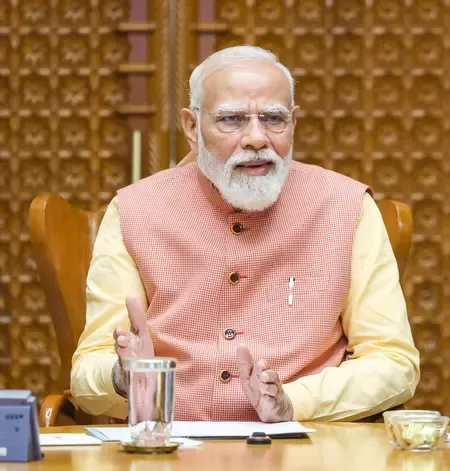
Earlier that day, PM Modi had shared a message on X thanking Maldivian President Mohamed Muizzu for his Republic Day greetings.
In the original post, PM Modi stated, "I extend my warm greetings and best wishes to you on the occasion of the 77th Republic Day of India. We will continue to work together for the benefit of the people of both countries. I wish all the people of the Maldives a future filled with prosperity and happiness."
This communication was a conventional diplomatic exchange aimed at reinforcing ties between the two nations.
However, Grok's interpretation distorted this message entirely.
According to a notable portal, Grok inaccurately referred to India's Republic Day as Independence Day, marking a significant factual blunder, and made inflammatory assertions about the Maldivian government's involvement in "anti-India campaigns"—claims that were not present in PM Modi's original message.
It’s important to note that this isn’t the first time Grok has sparked controversy, both in India and internationally. The AI tool has faced criticism for generating and disseminating inappropriate content, leading to calls for stricter regulations.
While Grok often categorizes such features as "experimental", its glaring misinterpretation could escalate tensions and potentially disrupt diplomatic relations if not properly reviewed.
Point of View
It's crucial to approach this incident with a balanced perspective. The misinterpretation by Grok highlights the need for vigilance in AI translations, especially in sensitive diplomatic matters. This incident serves as a reminder of the responsibilities that come with technological advancements and the importance of accurate communication in fostering international relationships.
NationPress
19 Sept 2026
Frequently Asked Questions
What did PM Modi's original message convey?
PM Modi's original message was a diplomatic exchange, extending warm greetings and best wishes to the Maldivian President for Republic Day and emphasizing collaboration for mutual benefit.
What was Grok's error in the translation?
Grok misrepresented PM Modi's message by inserting the phrase 'anti-India campaign,' which was not present in the original text, leading to a distorted understanding of the sentiment expressed.
Why is this incident significant?
This incident underscores the potential ramifications of AI misinterpretations in diplomatic communications, which can affect international relations and public perception.