Did Gujarat CM Bhupendra Patel Hand Over Appointment Letters to Over 4,700 GSRTC Recruits?
Click to start listening
Synopsis
In a significant event for Gujarat’s public transport, CM Bhupendra Patel handed over appointment letters to over 4,700 recruits, emphasizing the importance of professionalism and modernizing the transport system. This move aims to enhance connectivity and service delivery across the state.
Key Takeaways
- Appointment of over 4,700 recruits to GSRTC aims to enhance public transport.
- CM Patel emphasizes professionalism and discipline among drivers and helpers.
- Introduction of the ‘Jan Sarathi Driving School’ for driver training.
- Future goal to achieve 30 lakh daily ridership by 2027.
- Transition to 100% digital payment systems planned for GSRTC.
Gandhinagar, Jan 2 (NationPress) The Chief Minister of Gujarat, Bhupendra Patel, officially presented appointment letters to 3,084 drivers and 1,658 helpers who have been selected for the Gujarat State Road Transport Corporation (GSRTC) on Friday.
This event signifies a significant advancement in the state’s public transport framework, designed to enhance connectivity and improve service delivery throughout Gujarat.
While addressing the new recruits, the Chief Minister referred to GSRTC drivers as the “guardians of the state’s contemporary transport system”, stressing their essential role in providing safe, timely, and dependable travel for the public.
“The reputation of the government is mirrored in the behavior and professionalism of its bus drivers and helpers,” Patel remarked, highlighting the necessity of maintaining discipline, physical fitness, and mental stability while performing their duties.
He pointed out that under the guidance of Prime Minister Narendra Modi, even the most remote areas of the nation have been connected through roads, electricity, water supply, healthcare services, and public transport. Patel noted that the state government has modernized its transport fleet, replacing outdated vehicles with air-conditioned and Volvo buses equipped with GPS tracking and other digital features, allowing citizens to track bus locations via mobile applications.
Encouraging the recruits to uphold cleanliness and discipline, the Chief Minister stated that as India strives to evolve into a developed nation by 2047, a clean and efficient public transportation system would be a crucial component of that vision.
During the ceremony, he also launched the ‘Jan Sarathi Driving School’, a new initiative aimed at providing professional training for drivers.
Deputy Chief Minister Harsh Sanghavi, who also spoke at the event, commended the relentless efforts of government employees working tirelessly in essential services like transport, police, fire, and electricity.
Sanghavi announced that the state aims to boost the daily ridership of GSRTC buses to 30 lakh passengers by 2027, an increase from the current 27 lakh.
He mentioned that achieving this target would help alleviate highway traffic and reduce vehicular pollution, as fewer private vehicles would be required on the roads.
Highlighting the corporation’s milestones, Sanghavi shared that in 2025 alone, 1,714 new buses were added to the fleet, which includes 962 Super Express, 272 Semi-Luxury, 350 Midi, 30 Volvo, and 100 AC buses.
Furthermore, 27 new bus depots were inaugurated, and 29 new projects were initiated to enhance facilities. “The GSRTC is not just a transport service; it is the lifeline of Gujarat’s connectivity,” he asserted, urging staff to provide clean, comfortable, and timely services for passengers.
Transport Minister Praveen Mali revealed that under the leadership of CM Bhupendra Patel and Deputy CM Harsh Sanghavi, more than 45,000 candidates have received appointment letters across different government sectors in the last 40 days.
He added that the GSRTC is soon transitioning to a 100% digital payment system, which will eliminate passengers' need to carry cash.
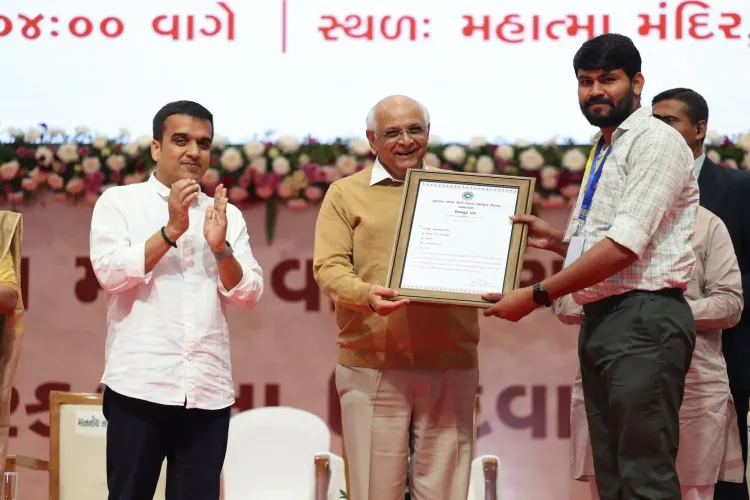
During the event, four candidates were presented with symbolic appointment letters by the Chief Minister. The ceremony also included a presentation on the transparent recruitment process, which was commended by Principal Secretary Harit Shukla, who welcomed the new appointees.
The event, attended by Mayor Meena Patel, numerous MLAs, senior bureaucrats, and hundreds of recruits, highlighted the government's commitment to modernizing the state’s public transport system through enhanced infrastructure, digital innovations, and ongoing workforce development.
Point of View
700 recruits for the GSRTC reflects the government's dedication to improving public transport in Gujarat. This initiative is poised to enhance connectivity, promote professionalism among drivers, and ultimately contribute to the state's development goals. It demonstrates a proactive approach to modernizing transportation infrastructure, which is vital for economic growth and citizen convenience.
NationPress
09/01/2026
Frequently Asked Questions
What is GSRTC?
GSRTC stands for Gujarat State Road Transport Corporation, responsible for public transport services in the state of Gujarat.
How many drivers and helpers were appointed?
A total of 3,084 drivers and 1,658 helpers were appointed.
What is the significance of this event?
This event marks a significant advancement in Gujarat's public transport sector aimed at improving connectivity and service delivery.
What initiatives were launched during the event?
The 'Jan Sarathi Driving School' was inaugurated to provide professional training for drivers.
What are the future goals for GSRTC?
The state aims to increase daily ridership of GSRTC buses to 30 lakh passengers by 2027.