Gujarat floods: Schools shut, Valsad factories suspended as 22,000 evacuated
Synopsis
Gujarat's monsoon crisis deepened on 24 July as authorities shut schools across Ahmedabad, Surat, Vadodara, and five other districts — and, in an unusually sweeping industrial move, ordered all Valsad factories to halt operations. With over 22,000 people already evacuated and Karjan Dam releasing 43,110 cusecs into the river, the state's flood response has crossed from precautionary into emergency mode.
Key Takeaways
Schools, colleges, and anganwadis closed in Ahmedabad , Surat , Bharuch , Tapi , Vadodara , Gandhinagar , and Botad for Friday, 25 July due to heavy rain forecasts.
Valsad district ordered all factories and industrial units to suspend operations amid flood-like conditions.
More than 22,000 people have been evacuated — over 12,000 from Valsad and more than 10,000 from Navsari .
Five gates of the Karjan Dam in Narmada district opened up to 2.60 metres , releasing 43,110 cusecs into the Karjan River.
The Gujarat Gaun Seva Pasandgi Mandal postponed the descriptive departmental exam scheduled for 25 July ; a fresh date is yet to be announced.
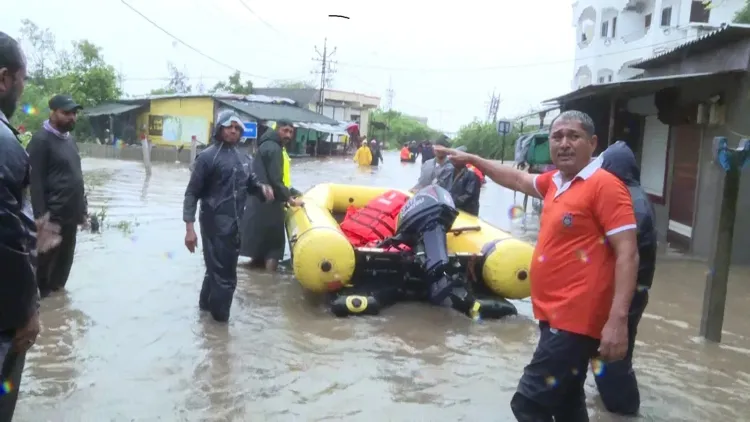
NDRF teams, Army columns, and rescue boats have been deployed across South and Central Gujarat.
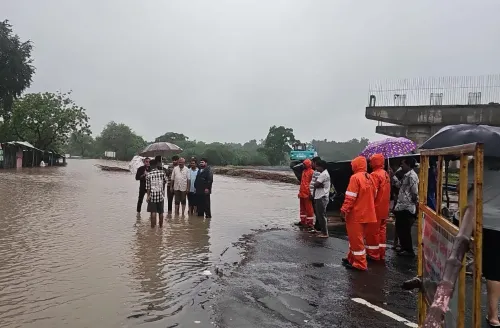
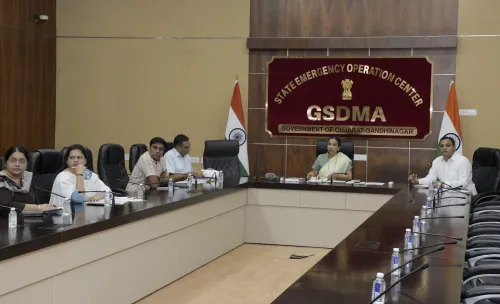
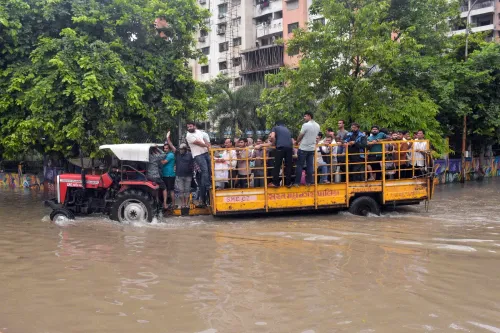
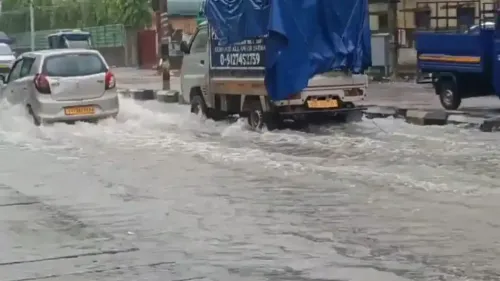
Authorities across Gujarat escalated precautionary measures on Thursday, 24 July 2025, ordering the closure of schools, colleges, and anganwadis in multiple districts and directing factories in Valsad to suspend operations, as forecasts of continued heavy to very heavy rainfall compounded an already severe flood emergency. More than 22,000 people have been evacuated from the worst-affected districts of Valsad and Navsari, with large-scale rescue operations ongoing.
School and College Closures Across Districts
In Ahmedabad, the Ahmedabad Municipal Corporation (AMC) announced that all schools and colleges in the city would remain closed on Friday, 25 July, following an India Meteorological Department (IMD) forecast of heavy to very heavy rainfall. The AMC also ordered all civic-run anganwadis shut until Monday, 28 July, with reopening to be reviewed against updated IMD forecasts.
Officials said the decision was taken with student safety as the highest priority, appealing to citizens to avoid rumours and rely solely on official information. Similar closures were declared across Surat, Bharuch, Tapi, Vadodara, Gandhinagar, and Botad districts, covering government, grant-in-aid, and self-financed institutions alike.
In Tapi, the shutdown marked a second consecutive holiday, with authorities urging residents to avoid rivers, streams, causeways, low-lying areas, electric poles, and trees. Gandhinagar extended its advisory to cover thunderstorms and strong winds alongside heavy rainfall.
Valsad Orders Factories to Halt Operations
In one of the most significant industrial measures of the ongoing weather emergency, the Valsad district administration directed all factories and industrial units to remain closed on Friday owing to heavy rainfall and flood-like conditions. Factory managements were instructed to ensure workers return home safely, retain only minimum staff for essential and emergency functions, secure hazardous chemicals, machinery, and electrical systems, and comply with further administrative directives.
This is a notable escalation — industrial shutdowns during monsoon emergencies remain relatively rare in Gujarat's densely industrialised southern belt, underscoring the severity of conditions on the ground.
Karjan Dam Gates Opened, Downstream Alert Issued
The Narmada district administration opened five gates of the Karjan Dam at Jitgadh village in Nandod taluka by up to 2.60 metres to maintain the reservoir's rule level. Officials said 43,110 cusecs of water was being discharged into the Karjan River, and appealed to residents of downstream villages to stay away from riverbanks and flowing water.
Examinations Postponed, Rescue Operations Intensified
The adverse weather also disrupted government examinations. The Gujarat Gaun Seva Pasandgi Mandal postponed the descriptive Question Paper 4 of the Higher Level Departmental Examination for senior clerk cadre employees, which had been scheduled for 25 July. The objective multiple-choice papers were conducted successfully between 22 and 24 July, but the descriptive paper has been deferred until further notice. A fresh date will be announced separately.
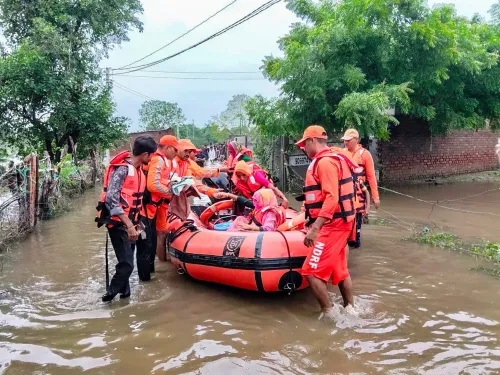
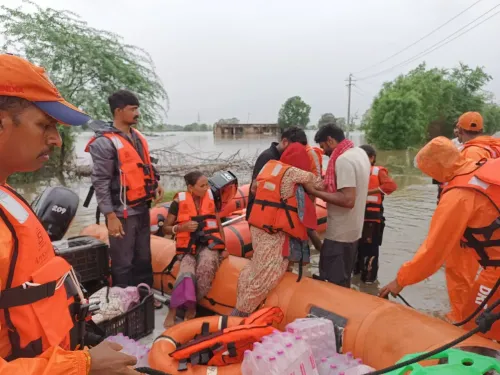
On the relief front, more than 12,000 people had been evacuated from Valsad and over 10,000 from Navsari by Thursday. Additional National Disaster Response Force (NDRF) teams, Army columns, and rescue boats have been deployed across South and Central Gujarat to strengthen flood relief operations.
What Comes Next
The IMD's forecast of continued heavy to very heavy rainfall over coming days means restrictions are likely to remain in place through the weekend. Authorities have urged residents across affected districts to contact district disaster management helplines in case of emergencies and to avoid all unnecessary travel. The situation in Valsad and Navsari — where evacuation numbers remain the highest — will be closely watched as water levels in downstream areas respond to dam releases.
Point of View
000-evacuation figure, while large, has arrived with relatively little friction in public discourse; the real stress test will come if dam releases downstream push water levels into populated areas not yet in the evacuation count. Gujarat's flood response machinery has improved since the 2005 Surat deluge, but the recurring nature of Valsad-Navsari flooding raises pointed questions about whether drainage infrastructure investment has kept pace with the industrial and residential expansion in these districts.
NationPress
22 Oct 2026
Frequently Asked Questions
Which districts in Gujarat have closed schools due to heavy rain on 25 July?
Schools, colleges, and anganwadis have been shut in Ahmedabad, Surat, Bharuch, Tapi, Vadodara, Gandhinagar, and Botad for Friday, 25 July, following IMD forecasts of heavy to very heavy rainfall. The Ahmedabad Municipal Corporation has additionally closed civic anganwadis until Monday, 28 July.
Why did Valsad order factories to suspend operations?
The Valsad district administration directed all factories and industrial units to close on 25 July due to heavy rainfall and flood-like conditions in the district. Factory managements were told to send workers home safely, retain only essential staff, and secure hazardous materials and electrical systems.
How many people have been evacuated in Gujarat's floods?
More than 22,000 people have been evacuated from the worst-affected districts, with over 12,000 from Valsad and more than 10,000 from Navsari. NDRF teams, Army columns, and rescue boats have been deployed to support ongoing relief operations.
What is the status of the Karjan Dam and what does it mean for downstream areas?
The Narmada district administration opened five gates of the Karjan Dam at Jitgadh village in Nandod taluka by up to 2.60 metres, releasing 43,110 cusecs of water into the Karjan River. Residents of downstream villages have been asked to stay away from riverbanks and flowing water.
Has the Gujarat floods situation affected any government examinations?
Yes. The Gujarat Gaun Seva Pasandgi Mandal postponed the descriptive Question Paper 4 of the Higher Level Departmental Examination for senior clerk cadre employees, which was scheduled for 25 July. A fresh examination date has not yet been announced.