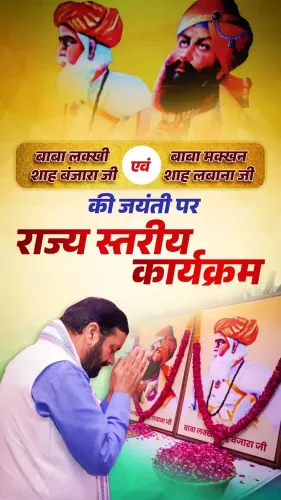
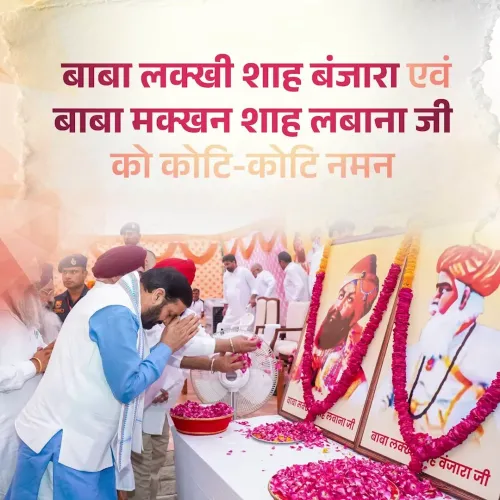
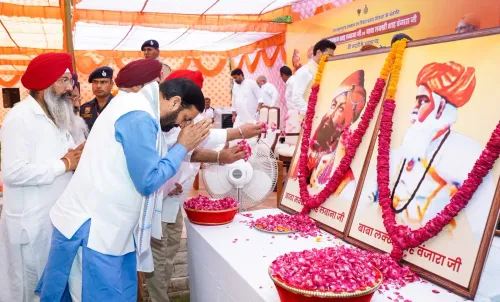
Haryana CM Office pays tribute to Bhai Lakhi Shah Vanjara on Jayanti
Synopsis
The Chief Minister's Office of Haryana paid homage to Bhai Lakhi Shah Vanjara on his birth anniversary on July 4, 2026. The 17th-century Banjara trader and Sikh devotee is revered for cremating Guru Tegh Bahadur's body by burning his own home to evade Mughal authorities in 1675.
Key Takeaways
The Chief Minister's Office of Haryana posted a formal tribute to Bhai Lakhi Shah Vanjara on his jayanti on July 4, 2026 .
Bhai Lakhi Shah Vanjara was a 17th-century Banjara trader who cremated Guru Tegh Bahadur's body in 1675 by setting his own house on fire to avoid Mughal detection.
Guru Tegh Bahadur , the Ninth Sikh Guru, was executed by Mughal authorities in Delhi in 1675 after advocating for Kashmiri Pandits' religious freedom.
The tribute reflects Haryana's broader practice of formally acknowledging Sikh heritage figures given the state's historical and geographic ties to Punjab .
The gesture holds significance for both Sikh devotees and the Vanjara community across Haryana.
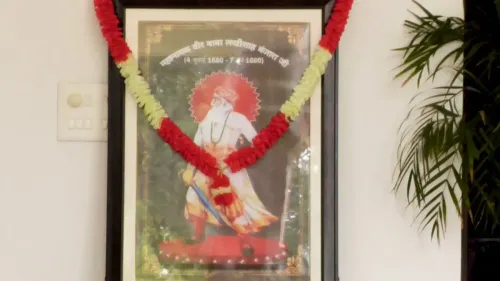
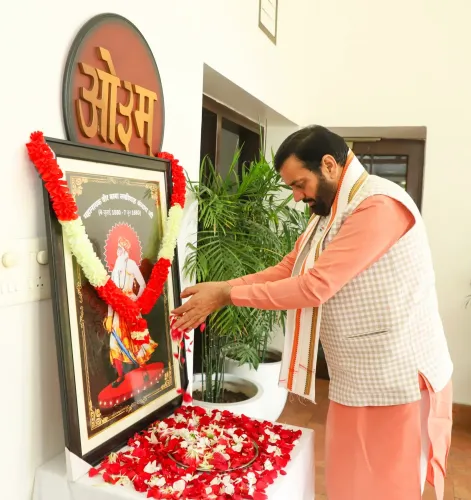
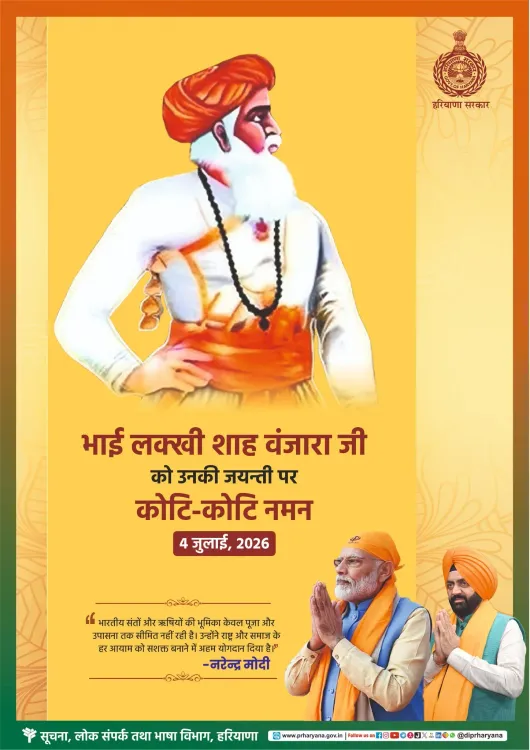
The Chief Minister's Office of Haryana on Saturday, July 4, 2026, paid tribute to Bhai Lakhi Shah Vanjara on his birth anniversary, offering reverential homage to the 17th-century Sikh devotee revered for his extraordinary act of sacrifice.
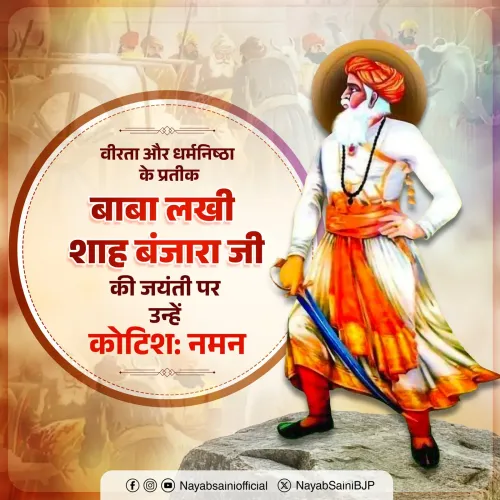
The post, shared on the official CMO Haryana account, read: 'Bhai Lakhi Shah Vanjara ji ko unki jayanti par koti-koti naman' — meaning 'Salutations a crore times to Bhai Lakhi Shah Vanjara ji on his birth anniversary.'
Context
Bhai Lakhi Shah Vanjara was a 17th-century Banjara trader and devoted Sikh disciple who holds a singular place in Sikh history and the collective memory of northern India. When Guru Tegh Bahadur, the Ninth Guru of Sikhism, was publicly executed in Delhi in 1675 by Mughal authorities, his followers feared taking custody of the body under the watchful eyes of the imperial administration. In an act of extraordinary devotion, Lakhi Shah Vanjara and his family transported the Guru's body to their home in what is now Delhi and set their own house ablaze to perform the last rites without detection. This selfless act ensured that the Guru's remains were cremated with dignity, defying Mughal intimidation.Policy Backdrop
State governments across northern India — particularly those in Haryana, Punjab, and Delhi — routinely issue formal tributes on the birth and death anniversaries of medieval religious figures as a means of acknowledging regional heritage and engaging with specific faith communities. Haryana, which shares deep historical and cultural ties with Sikh heritage given its geographic proximity to Punjab and the presence of significant Sikh shrines within its borders, participates actively in such commemorations. The Vanjara community, a historically nomadic trading group, has a presence across several Haryana districts, and tributes to Bhai Lakhi Shah Vanjara carry resonance both for Sikh devotees and members of that community.Stakeholders and Impact
The tribute is significant to two overlapping constituencies: Sikh devotees who regard Bhai Lakhi Shah Vanjara as a martyr-like figure whose courage preserved the sanctity of Guru Tegh Bahadur's final rites, and the broader Vanjara community that claims him as an ancestral icon of courage and faith. Guru Tegh Bahadur himself is remembered as 'Hind di Chadar' — the shield of India — for having advocated the right of Kashmiri Pandits to practice their faith freely, ultimately sacrificing his life in that cause. Tributes to figures associated with him carry layered significance across religious and community lines.What's Next
Gurdwara commemorations and community gatherings in Haryana districts with Vanjara populations are likely to mark the jayanti at the local level. The CMO's public tribute signals the state's intent to formally acknowledge this historical legacy, and such statements often precede or accompany cultural policy engagements with heritage communities. Whether the government announces any dedicated programme or event in connection with the anniversary remains to be seen.Point of View
Yet deeply intertwined with the Sikh historical corridor — making such acknowledgements politically and culturally meaningful. The tribute also implicitly invokes the legacy of Guru Tegh Bahadur, a figure whose sacrifice carries cross-community resonance involving both Sikh and Hindu narratives around Mughal-era religious persecution. State-level commemorations of medieval religious figures have increasingly become a standard instrument of heritage diplomacy in northern India.
NationPress
3 Oct 2026
Frequently Asked Questions
Who was Bhai Lakhi Shah Vanjara?
Bhai Lakhi Shah Vanjara was a 17th-century Banjara trader and devoted Sikh disciple who cremated Guru Tegh Bahadur's body in Delhi in 1675 by burning his own house to avoid detection by Mughal authorities.
Why is Bhai Lakhi Shah Vanjara important in Sikh history?
He is revered for his selfless act of ensuring a dignified cremation for Guru Tegh Bahadur, the Ninth Sikh Guru, at great personal sacrifice when others feared Mughal reprisal.
Why did Haryana's CMO pay tribute to Bhai Lakhi Shah Vanjara?
The Chief Minister's Office of Haryana posted a tribute on his jayanti, or birth anniversary, on July 4, 2026, as part of the state's broader practice of acknowledging Sikh and regional heritage figures.
What is the connection between Guru Tegh Bahadur and Bhai Lakhi Shah Vanjara?
Guru Tegh Bahadur, the Ninth Guru of Sikhism, was executed in Delhi in 1675. Bhai Lakhi Shah Vanjara transported and cremated his body by setting his own home ablaze, an act considered deeply heroic in Sikh tradition.
Who are the Vanjara community?
The Vanjara are a historically nomadic trading community found across several states in northern and central India, including Haryana. Bhai Lakhi Shah Vanjara is considered an important ancestral icon for this community.