CM Himanta tells Rahul Gandhi: defeat is cost of backing anarchy
Synopsis
Assam CM Himanta Biswa Sarma sharpens a post-election attack on Rahul Gandhi, saying a crushing defeat proves voters punish Congress for allying with anarchist forces — even in seats the party once held safely.
Key Takeaways
Himanta Biswa Sarma posted a pointed electoral warning to Rahul Gandhi on October 9, 2026 .
Sarma frames the defeat as a direct consequence of Gandhi 'siding with anarchist forces.' The phrase 'seats you once held' implies Congress lost previously safe constituencies, not just contested targets.
Sarma is the BJP 's convenor of the North-East Democratic Alliance (NEDA) and a senior party communicator.
The post advances a recurring BJP narrative that links Opposition street politics to electoral punishment by voters.
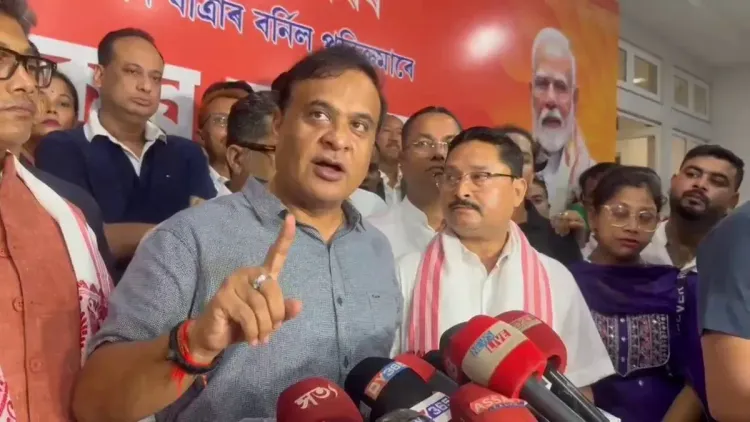
A crushing electoral verdict, a pointed warning, and a political heavyweight pulling no punches — Assam Chief Minister Himanta Biswa Sarma fired a sharp rebuke at Congress leader Rahul Gandhi on Friday, October 9, 2026, framing an election result as direct punishment for what he called an alliance with 'anarchist forces.'
Sarma's post was unambiguous: 'This crushing electoral defeat is a message to Rahul Gandhi — do not side with anarchist forces, you will lose even the seats you once held.' The language is deliberate. 'Even the seats you once held' is not a general jab — it signals that a constituency or stronghold the Congress considered safe ground has now fallen.
The charge of 'anarchist forces'
The phrase 'anarchist forces' is a term BJP leaders have used to describe street-protest movements, agitation politics, and groups they accuse of destabilising governance rather than engaging through democratic processes. By invoking it in the context of an election loss, Sarma is constructing a cause-and-effect argument: voters, he contends, penalised Congress for associating with such forces rather than distancing from them.
Sarma is one of the BJP's most combative communicators and serves as convenor of the North-East Democratic Alliance (NEDA), the coalition that has reshaped the political map of India's northeast over the last decade. His post-election interventions routinely frame results as ideological verdicts, not merely arithmetic outcomes.
What 'seats you once held' signals
The specificity of the phrase matters. Sarma is not saying Congress lost a new target — he is saying it lost ground it already owned. That framing, if borne out by the actual result, would represent a more stinging blow than merely failing to expand: it means shrinkage. In Indian electoral politics, losing a seat your party has held across multiple cycles is treated as a collapse of the base, not just a swing of sentiment.
Without a named constituency or state in the post, the exact theatre of this defeat cannot be independently confirmed from the post alone. What is clear is Sarma's interpretation — that the result carries a moral instruction voters delivered to the Congress president.
Sarma's pattern of post-result messaging
This is not the first time Sarma has used an election outcome as a platform to deliver direct advice — or warnings — to the Opposition leadership. As one of BJP's most prominent faces in the northeast and a figure who has overseen the alliance's consolidation across multiple state elections, he has consistently framed electoral defeats for the Opposition as ideological failures rather than campaign shortcomings.
The timing of the post — late Friday evening — ensures it lands in the weekend news cycle, maximising amplification as political commentators and party spokespersons react through the weekend.
In Indian politics, the loudest post-election voices are rarely those who won quietly. They belong to those who believe the result proves a point — and Sarma, tonight, clearly believes it does.
Point of View
' Sarma escalates the charge — implying not a competitive loss but a base erosion, which is far more damaging to a party's long-term morale and donor confidence. The timing and directness signal that the BJP intends to keep this result in the political conversation well beyond the counting day.
NationPress
9 Oct 2026
Frequently Asked Questions
What did Himanta Biswa Sarma say about Rahul Gandhi after the election result?
Sarma said the crushing electoral defeat is a message to Rahul Gandhi that siding with anarchist forces will cost Congress even the seats it previously held.
Which election result is Himanta Biswa Sarma reacting to?
Sarma's post on October 9, 2026 does not name a specific state or constituency, but refers to a defeat he describes as 'crushing' and significant enough to cost Congress its own strongholds.
What does Himanta Biswa Sarma mean by 'anarchist forces'?
The term is used by BJP leaders to describe groups or movements they accuse of promoting agitation and destabilisation over democratic engagement — and which they say Congress has aligned with.
Who is Himanta Biswa Sarma in Indian politics?
Himanta Biswa Sarma is the Chief Minister of Assam and a senior BJP leader who also serves as convenor of the North-East Democratic Alliance (NEDA), giving him influence across multiple northeastern states.
Why is Sarma's phrase 'seats you once held' significant?
It implies Congress did not merely fail to win new ground but actually lost constituencies it had previously controlled, which would signal a deeper erosion of its voter base rather than a simple swing.