HP Cabinet approves 1,561 new posts in health sector
Synopsis
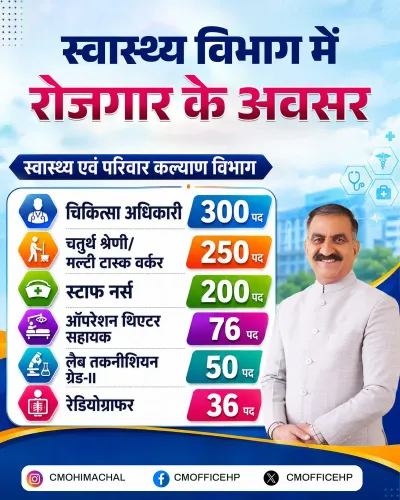
The Himachal Pradesh cabinet has approved creation of 1,000 Rogi Mitra and 561 Junior Office Assistant (IT) posts to improve patient navigation in government hospitals and strengthen the Hospital Management Information System, while generating employment for the state's youth.
Key Takeaways
1,000 Rogi Mitra posts approved to guide patients through government hospitals across Himachal Pradesh.
561 Junior Office Assistant (IT) posts created to strengthen the Hospital Management Information System (HMIS).
Total of 1,561 new positions approved in a single cabinet decision on 15 November 2026 .
Dual objective: improve frontline hospital service delivery and address youth unemployment in the state.
Recruitment notifications, selection criteria, and deployment timelines are yet to be published.
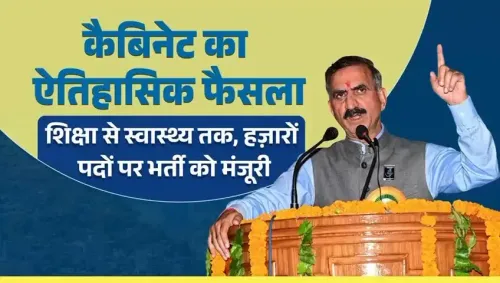
Two decisions out of one cabinet meeting — and Himachal Pradesh has just put 1,561 new jobs on the table while promising better care for every patient who walks into a government hospital. The Chief Minister's Office of Himachal Pradesh announced on Sunday, 15 November 2026 that the state cabinet has approved the creation and filling of 1,000 Rogi Mitra (patient-friend) posts and 561 Junior Office Assistant (IT) positions across the state's public health system.
What a Rogi Mitra actually does in a government hospital
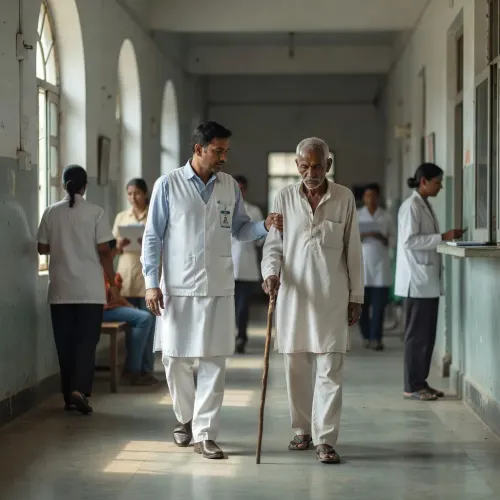
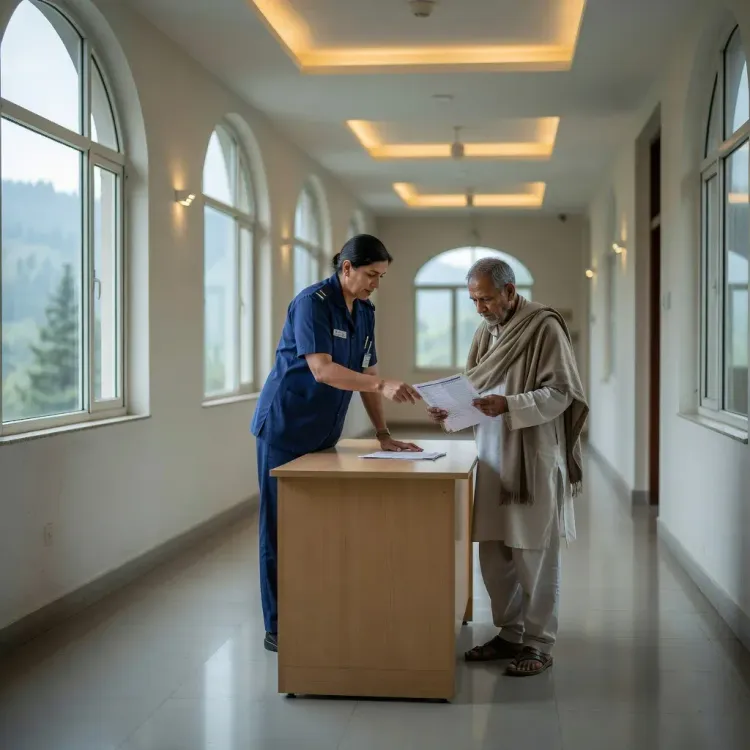
The term Rogi Mitra — literally 'friend of the patient' — describes a frontline facilitation role that several Indian states have experimented with over the past decade. These workers stand between a bewildered patient and the maze of OPD counters, ward blocks, and paperwork queues that define most district hospitals. The CMO's post states the dual intent plainly: 'yuvaon ke haathon ko kaam aur marizon ko behtar sahara mile' — 'to put work in the hands of youth and give patients better support.'
In practice, 1,000 Rogi Mitras spread across Himachal Pradesh's government hospital network would mean a named, accountable person at each major facility whose sole job is guiding visitors — to the right department, the right doctor, the right form. For patients arriving from remote hill districts, often unfamiliar with urban hospital layouts, that guidance is not a convenience. It is frequently the difference between receiving timely care and leaving in confusion.
The 561 IT posts and the hospital management system push
The second approval — 561 Junior Office Assistant (IT) posts — targets the administrative backbone of the same hospitals. The CMO's announcement references strengthening the Hospital Management Information System (HMIS), the digital platform that tracks patient records, bed availability, billing, and supply chains in public health facilities. Hiring trained IT assistants signals that the state intends to close the persistent gap between having a digital system and actually running it at full capacity.
Many Indian states deploy HMIS software but struggle with data entry backlogs and system downtime because frontline staff are stretched across clinical and administrative duties simultaneously. Dedicated IT-cadre hires are a targeted fix — small in scale, but operationally significant if recruitment moves quickly.
Youth unemployment and public-sector hiring: a familiar equation
Himachal Pradesh, like most Indian hill states, faces a sharp mismatch between its educated young workforce and the private-sector opportunities available locally. Cabinet approvals that bundle service-delivery improvements with entry-level job creation have become a standard policy tool — they satisfy two politically sensitive pressure points at once. The combined 1,561 posts represent a meaningful, if incremental, addition to the state's public employment rolls.
The next pressure point will be speed. Approving posts and filling them are two distinct bureaucratic acts separated, in many Indian states, by months of notification, examination, and verification. Recruitment timelines, selection criteria, and the distribution of posts across Himachal Pradesh's districts have yet to be published. Those details will determine whether this cabinet decision translates into tangible change — or quietly joins a queue.
Point of View
Not sequentially. For Himachal Pradesh, a state where patients routinely travel long distances from mountain villages to reach district hospitals, the Rogi Mitra cadre addresses a genuine last-metre problem that technology alone cannot solve. The move also follows a well-worn political calculus: channelling public spending toward roles that simultaneously ease a service-delivery pain point and absorb educated but underemployed youth. The critical variable — how fast the recruitment cycle runs — will ultimately determine whether this is a transformative administrative step or a headline with a delayed and partial delivery.
NationPress
15 Nov 2026
Frequently Asked Questions
What is a Rogi Mitra in Himachal Pradesh hospitals?
A Rogi Mitra ('patient friend') is a frontline hospital facilitator who guides patients to the correct departments, doctors, and administrative counters, reducing confusion for visitors — particularly those arriving from remote areas. The Himachal Pradesh cabinet approved 1,000 such posts in November 2026.
How many new government jobs has the HP cabinet approved in the health sector?
The Himachal Pradesh cabinet approved a total of 1,561 new posts: 1,000 Rogi Mitra positions and 561 Junior Office Assistant (IT) posts, all linked to the state's public hospital network.
What will the 561 Junior Office Assistant (IT) posts do in HP hospitals?
These IT-cadre staff will support and operate the Hospital Management Information System (HMIS), handling data entry, records management, and digital administration tasks in government hospitals across Himachal Pradesh.
When will recruitment for HP Rogi Mitra and JOA IT posts begin?
As of 15 November 2026, the cabinet has approved the creation and filling of these posts; formal recruitment notifications, eligibility criteria, and timelines have not yet been published.
Which department in Himachal Pradesh will manage Rogi Mitra appointments?
The posts fall under the state's health department and hospital administration system; the precise nodal authority for conducting recruitment will be specified in the forthcoming official notification.