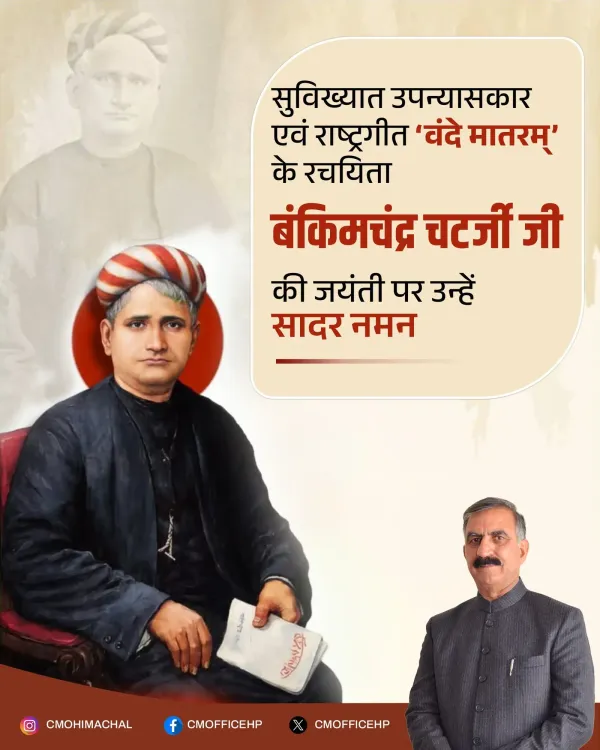
HP CM Office Pays Tribute to Bankim Chandra Chatterjee
Synopsis
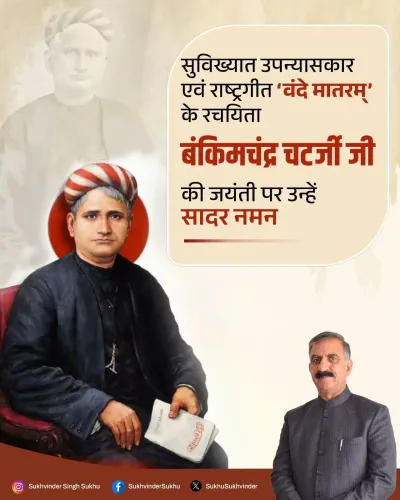
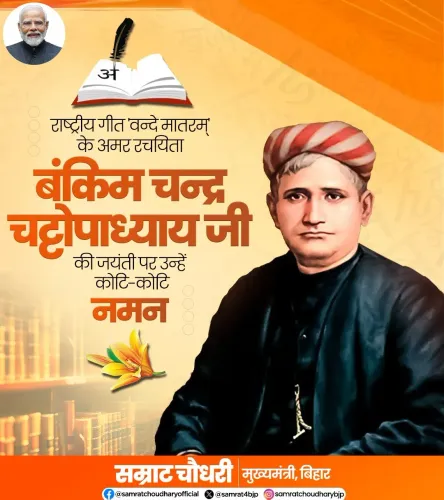
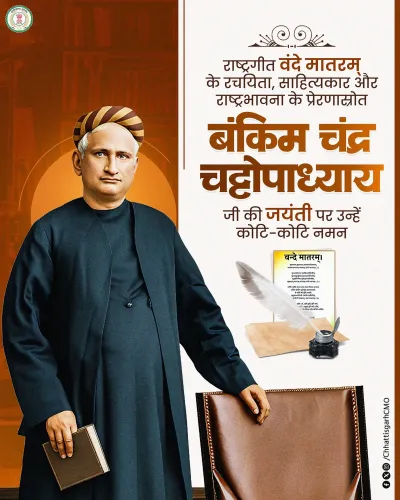
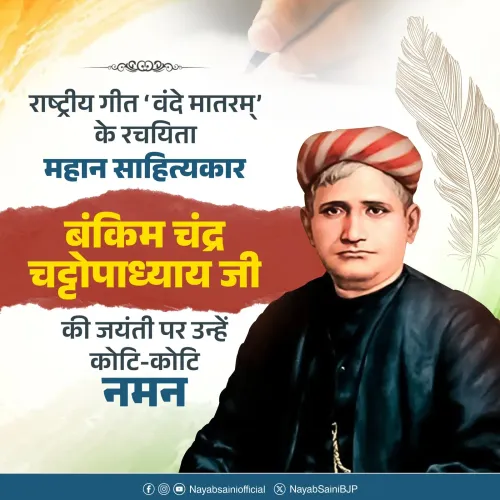
The Chief Minister's Office of Himachal Pradesh paid tribute to legendary Bengali novelist Bankim Chandra Chatterjee on 27 June 2026, honouring his literary legacy and his role in shaping India's national consciousness through works including Anandamath and Vande Mataram.
Key Takeaways
The Chief Minister's Office of Himachal Pradesh posted a tribute to Bankim Chandra Chatterjee on 27 June 2026 .
Chatterjee ( 1838–1894 ) was a pioneering Bengali novelist whose novel Anandamath ( 1882 ) introduced 'Vande Mataram' , India's national song.
The post highlighted his works' continuing relevance for their 'ideas, sensitivity, and national consciousness.' Indian state governments periodically issue such tributes to 19th-century literary figures associated with the independence movement.
The tribute signals institutional endorsement of pan-Indian cultural heritage transcending regional literary boundaries.
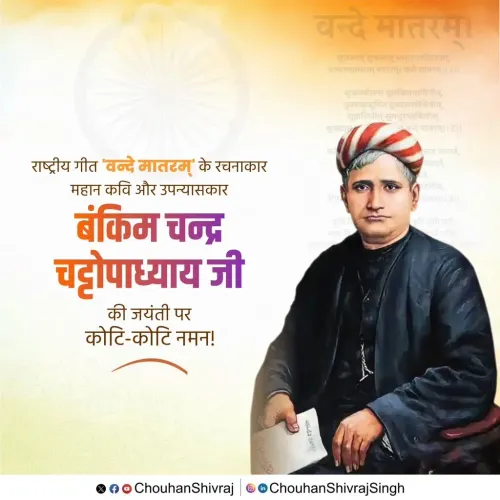
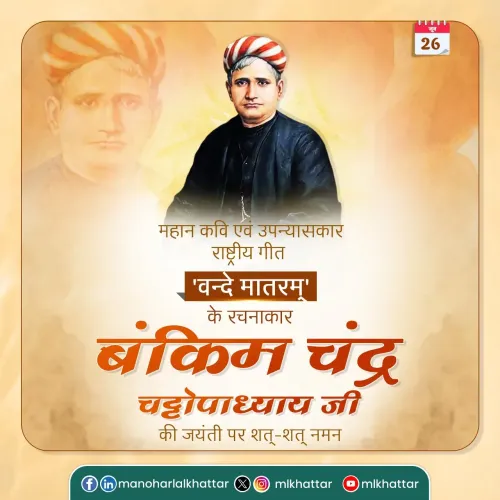
The Chief Minister's Office of Himachal Pradesh on Saturday, 27 June 2026, paid tribute to legendary Bengali litterateur Bankim Chandra Chatterjee, honouring his enduring literary legacy and his contribution to India's national consciousness.
Context
The post, shared in Hindi, salutes Chatterjee as a mahan sahityakar ('great literary figure') whose pen enriched numerous genres of literature. It notes that his works remain relevant today on account of their 'ideas, sensitivity, and national consciousness' — 'vichar, samvedna aur rashtriya chetna'.
The tribute reflects a broader tradition among Indian state governments of publicly commemorating 19th-century writers whose works intersected with the independence movement and social reform.
Policy Backdrop
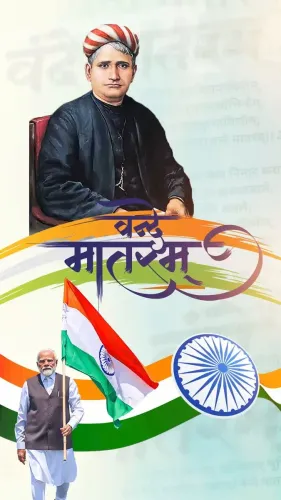
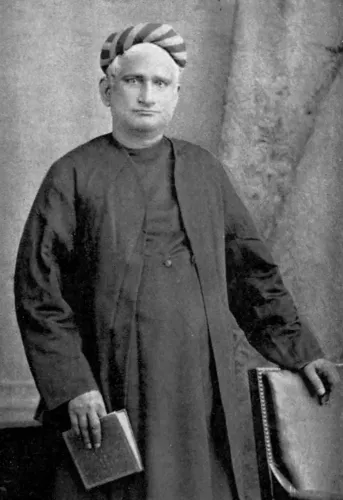
Bankim Chandra Chatterjee (1838–1894) was one of the foremost Bengali novelists of the 19th century and a towering figure in Indian literary history. His novel Anandamath (1882) gave India the song 'Vande Mataram', which later became a rallying anthem of the independence movement and is today enshrined as the national song of the Republic of India.
Chatterjee's writings spanned fiction, essays, and social commentary, addressing themes of nationalism, womanhood, and Hindu philosophy. His influence extends across linguistic regions, making him a figure claimed by the broader Indian cultural canon — not merely the Bengali literary tradition.
Stakeholders and Impact
Tributes of this nature carry symbolic weight for literary scholars, students of Indian history, and educators engaged with 19th-century reform movements. When a state government's highest office amplifies such commemorations, it signals an institutional endorsement of cultural continuity and national heritage.
For Himachal Pradesh, a state with its own rich tradition of hill-region literature, the gesture underscores a pan-Indian cultural solidarity that transcends regional boundaries. It also keeps foundational literary figures visible in public discourse at a time when curriculum debates around colonial-era writers are active across several states.
What's Next
State-level literary commemorations often precede or accompany curriculum reviews, cultural festivals, or academic events centred on 19th-century writers. It remains to be seen whether the Himachal Pradesh government will follow this tribute with any programmatic initiative — such as a reading campaign, school curriculum reference, or cultural event — linked to Chatterjee's legacy.
As India's educational institutions continue to debate the place of colonial-era literary figures in contemporary syllabi, official tributes from state governments provide a meaningful signal of political and cultural priorities for the academic year ahead.
Point of View
' the post frames his legacy in a pan-Indian rather than purely Bengali context, a framing that has political as well as cultural resonance. Such gestures tend to cluster around anniversary dates or curriculum-policy moments, suggesting that official literary tributes are rarely incidental. The move keeps foundational independence-era writers in public view at a time when debates over heritage and syllabus content remain live across Indian states.
NationPress
25 Sept 2026
Frequently Asked Questions
Who was Bankim Chandra Chatterjee?
Bankim Chandra Chatterjee (1838–1894) was a pioneering Bengali novelist and essayist best known for writing 'Vande Mataram' in his novel Anandamath (1882), which became India's national song. His works explored nationalism, social reform, and Hindu philosophy.
Why did the Himachal Pradesh CM Office tribute Bankim Chandra Chatterjee?
The Chief Minister's Office of Himachal Pradesh posted a tribute on 27 June 2026 honouring Chatterjee's literary legacy and his contribution to India's national consciousness, in line with a broader tradition of Indian state governments commemorating 19th-century independence-era writers.
What is 'Vande Mataram' and who wrote it?
'Vande Mataram' is India's national song, composed by Bankim Chandra Chatterjee and first published in his 1882 Bengali novel Anandamath. It became a powerful anthem of the Indian independence movement.
Why do Indian state governments tribute 19th-century literary figures?
Indian state governments periodically issue tributes to 19th-century literary figures associated with the independence movement to emphasise national consciousness, cultural continuity, and heritage — often timed around commemorative dates or academic-year milestones.