HP CM Sukhu: MRI scans now available within Himachal Pradesh
Synopsis
Chief Minister Sukhvinder Singh Sukhu announced on 13 July 2026 that MRI diagnostic services are now available within Himachal Pradesh, sparing residents the need to travel to other cities. The move addresses a long-standing gap in public health infrastructure in the Himalayan state.
Key Takeaways
CM Sukhvinder Singh Sukhu announced on 13 July 2026 that MRI scan facilities are now available within Himachal Pradesh .
Residents previously had to travel to cities like Chandigarh or Delhi for advanced diagnostic imaging, adding financial and physical strain.
The development aligns with the National Health Mission and Ayushman Bharat frameworks for expanding diagnostic access in hilly and remote regions.
The announcement is part of CM Sukhu's stated priority of strengthening public health services since taking office in December 2022 .
Staffing these facilities with qualified radiologists remains a key challenge for sustained service delivery across the state's district hospitals.
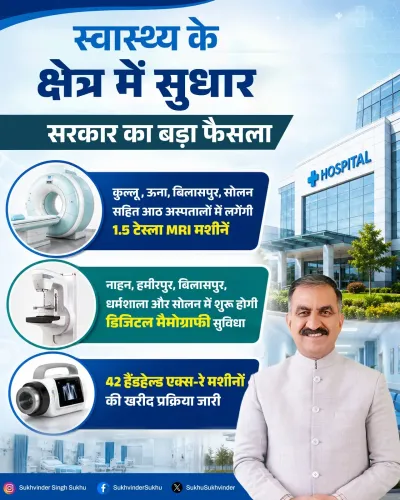
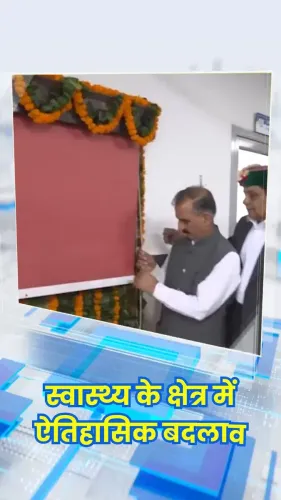
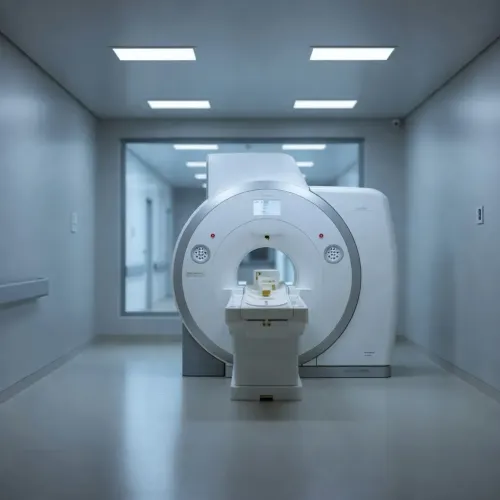
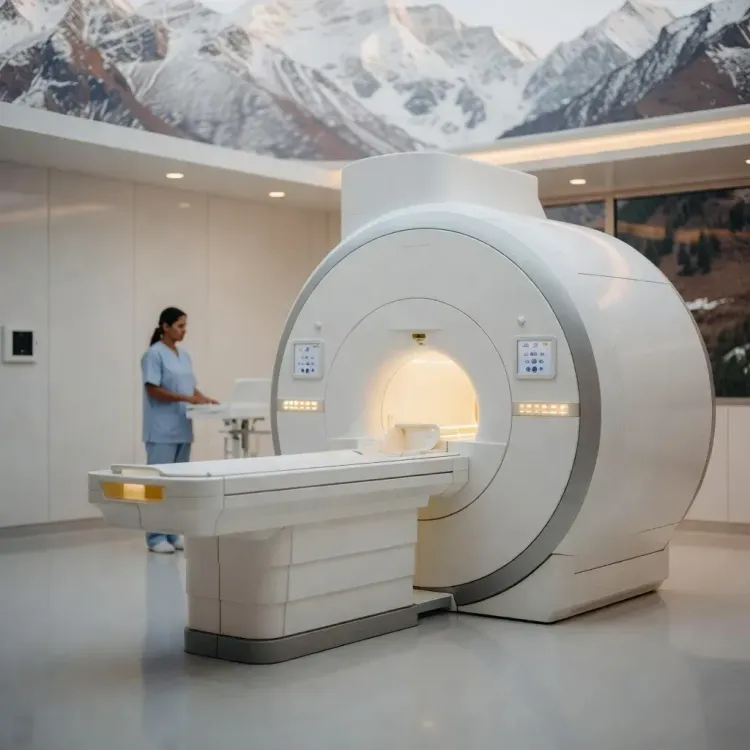
The Chief Minister's Office of Himachal Pradesh announced on Monday, 13 July 2026 that residents of the state will no longer need to travel to other cities for MRI diagnostic services, with Chief Minister Thakur Sukhvinder Singh Sukhu stating that timely, accurate, and world-class diagnostic facilities are now readily available within the state itself.
In a post shared on its official X account, the Chief Minister's Office quoted CM Sukhu as saying: 'Ab MRI jaanch ke liye logon ko doosre shaharon ka rukh nahin karna padega' ('Now people will not have to turn to other cities for MRI examinations'). The statement emphasised that 'timely, accurate, and world-class diagnostic facilities are easily available within the state itself.'
Context
For decades, residents of Himachal Pradesh — a predominantly rural and mountainous state in northern India — have had to travel to cities such as Chandigarh or Delhi, or rely on expensive private centres, to access advanced diagnostic imaging like MRI scans. The geographical challenges of the Himalayan region have historically made such out-of-state travel both costly and time-consuming, particularly for patients from remote districts.
The announcement signals a meaningful shift in the state's public health infrastructure, reducing the burden on patients who previously faced long journeys at a time of medical vulnerability.
Policy Backdrop
The expansion of diagnostic services in government hospitals aligns with the National Health Mission (NHM), operational since 2005, which has funded equipment upgrades in district hospitals across hilly states. Himachal Pradesh has also been integrating its health delivery with the broader Ayushman Bharat Health and Wellness Centres framework, which aims to bring comprehensive primary and secondary care closer to citizens.
CM Sukhu, who assumed office in December 2022, has consistently cited the expansion of public health services as a priority, particularly given the state's dispersed population and difficult terrain. Procurement of high-end imaging equipment for government hospitals is part of a wider national pattern aimed at curbing out-of-pocket expenditure and reducing inter-state patient movement.
Stakeholders and Impact
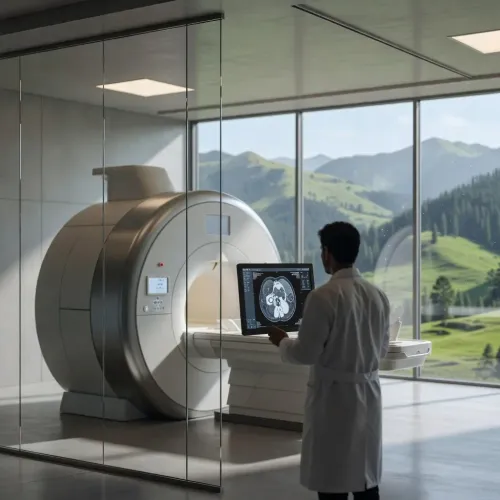
The primary beneficiaries are patients across Himachal Pradesh's district hospitals, especially those in remote and hilly areas who bear the highest cost — financial and physical — of travelling for diagnostics. Access to in-state MRI services is expected to enable faster diagnosis and treatment, which is critical for neurological, orthopaedic, and oncological conditions.
District hospital staff and state health mission administrators are also key stakeholders, as operationalising and maintaining advanced imaging equipment requires trained radiologists and technicians — a human-resource challenge that the state will need to address alongside the infrastructure investment.
What's Next
Attention will now turn to state budget allocations and tender notices for MRI installations in remaining district hospitals, as well as any integration with the National Digital Health Mission for digitising diagnostic records. The government's ability to staff these facilities with qualified radiologists will be a key indicator of whether the announced availability translates into sustained, accessible service for ordinary residents of Himachal Pradesh.
Point of View
Announcing availability and sustaining it are distinct challenges: the real test will be whether the state can post qualified radiologists and maintain equipment in district hospitals beyond the initial rollout. Nationally, this mirrors a broader push by state governments to indigenise diagnostic services and reduce the out-of-pocket burden that drives medical poverty in India.
NationPress
12 Oct 2026
Frequently Asked Questions
Are MRI services now available in Himachal Pradesh government hospitals?
Yes, Chief Minister Sukhvinder Singh Sukhu announced on 13 July 2026 that MRI diagnostic facilities are now available within Himachal Pradesh, so residents no longer need to travel to other cities for these scans.
Why did Himachal Pradesh residents previously travel outside the state for MRI scans?
Due to the state's mountainous terrain and historically limited public health infrastructure, advanced diagnostic imaging like MRI was not widely available in government hospitals, forcing patients to go to cities like Chandigarh or Delhi.
Which government scheme supports MRI equipment in Himachal Pradesh hospitals?
The National Health Mission, operational since 2005, has funded diagnostic equipment upgrades in district hospitals across hilly states including Himachal Pradesh, and the Ayushman Bharat framework also supports expanded diagnostic access.
Who is the Chief Minister of Himachal Pradesh in 2026?
Thakur Sukhvinder Singh Sukhu is the Chief Minister of Himachal Pradesh, having assumed office in December 2022.
What is the significance of in-state MRI services for Himachal Pradesh patients?
In-state MRI access reduces the financial and physical burden on patients — particularly those from remote districts — enabling faster diagnosis for neurological, orthopaedic, and oncological conditions without costly inter-state travel.