HP CMO Greets Devotees on Maa Kushmanda Navratri Day
Synopsis
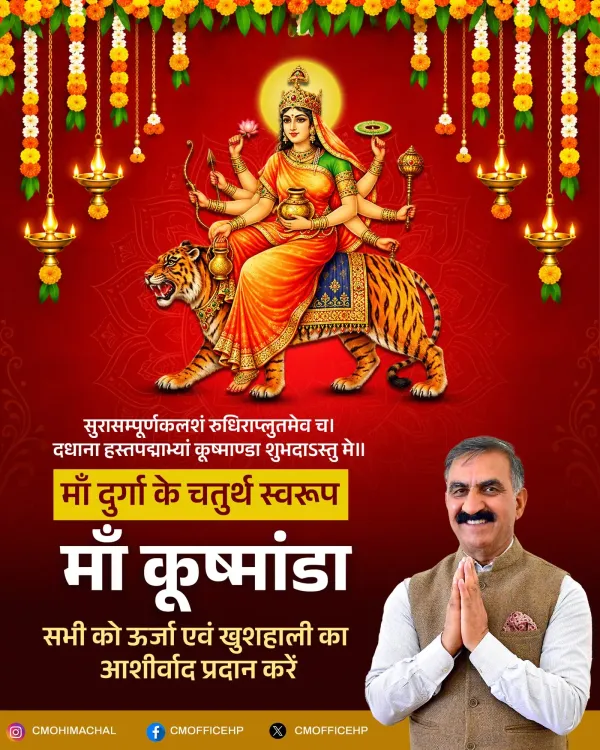
The Chief Minister's Office of Himachal Pradesh marked the fourth day of Navratri on 14 October 2026 by sharing devotional greetings for Maa Kushmanda, the fourth form of Goddess Durga, praying for energy and prosperity for all devotees.
Key Takeaways
The Chief Minister's Office of Himachal Pradesh posted Navratri greetings on 14 October 2026 , the fourth day of the festival.
Maa Kushmanda is the fourth form of Goddess Durga, associated with cosmic creation, energy, and light in Hindu tradition.
The post opened with the Sanskrit salutation 'ॐ देवी कूष्माण्डायै नमः' and prayed for blessings of energy, happiness, and prosperity for all devotees.
Himachal Pradesh is home to major Shakti shrines — including Naina Devi, Jwala Ji, and Chintpurni — where Navratri sees significant pilgrim activity.
The daily devotional series is part of routine cultural engagement by state government offices during major Hindu festivals.
On the fourth day of Navratri, the Chief Minister's Office of Himachal Pradesh invoked the blessings of Maa Kushmanda — the fourth divine form of Goddess Durga — for the well-being, energy, and prosperity of all devotees, posting the greeting on Wednesday, 14 October 2026.
The fourth form: who is Maa Kushmanda?
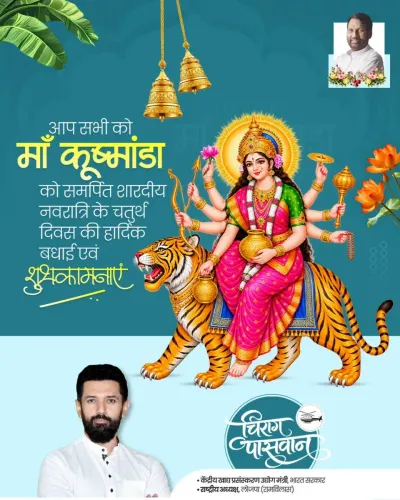
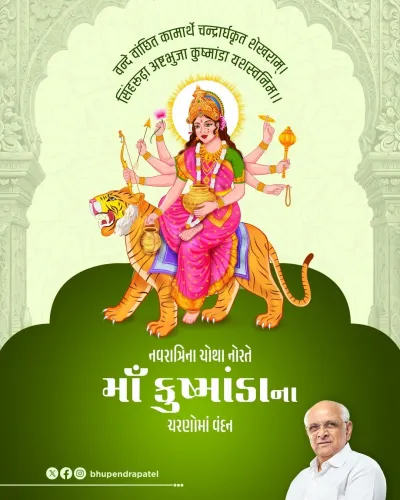
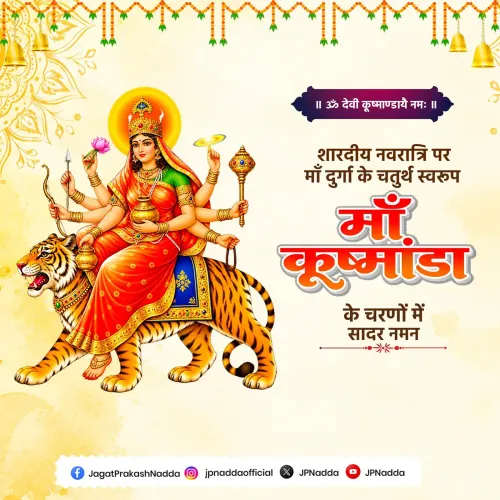
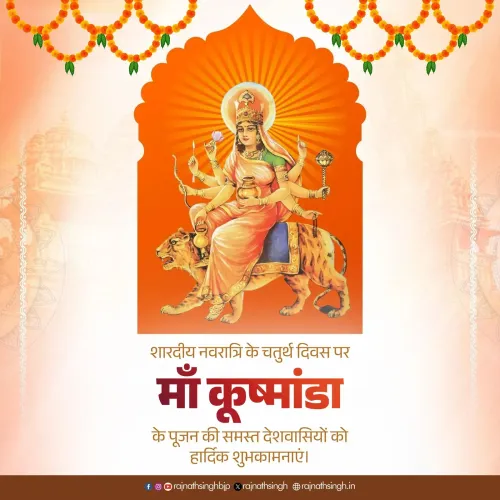
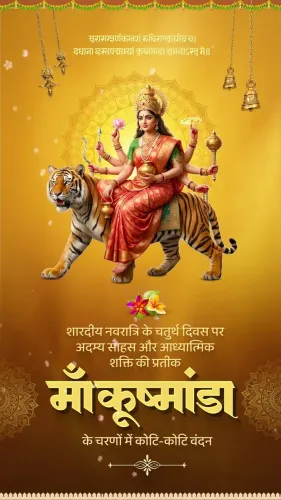
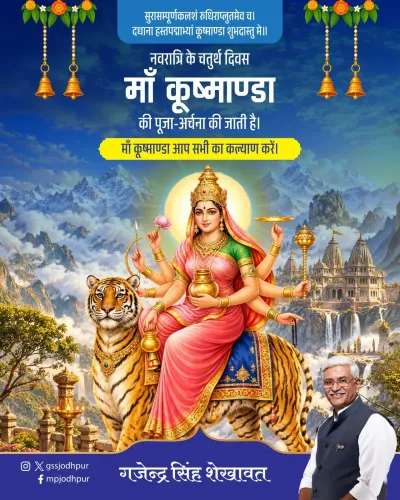
In Hindu tradition, Maa Kushmanda is revered as the creator of the universe, believed to have brought the cosmos into existence through her divine smile. Her name derives from the Sanskrit — Ku (small), Ushma (warmth/energy), and Anda (egg) — signifying the cosmic egg of creation. She is typically depicted with eight arms, radiating a golden aura, and is associated with boundless energy and light.
The CMO's post greeted devotees with the salutation 'ॐ देवी कूष्माण्डायै नमः' ('Om, salutations to Goddess Kushmanda') and conveyed the prayer that the goddess bestow upon all her devotees 'energy, happiness, prosperity, and well-being through her infinite grace.'
Navratri observance in Himachal Pradesh
Himachal Pradesh holds a particularly deep connection with Navratri, home to celebrated Shakti shrines including Naina Devi, Jwala Ji, and Chintpurni — all of which draw large pilgrim footfalls during the nine-day festival. State government offices and elected institutions have a long-standing practice of marking each day of Navratri with devotional greetings aligned to that day's presiding goddess.
This daily cadence of posts from the CMO's office reflects a broader pattern across Indian state governments, where cultural and religious observances are acknowledged as part of routine public engagement — connecting elected offices to the lived calendar of their constituents.
Point of View
Where Shakti temple pilgrimages are both a spiritual tradition and an economic driver, such public acknowledgements carry a soft political logic: they signal cultural alignment with a majority Hindu voter base without any explicit policy content. The daily Navratri series from the CMO's office exemplifies how electoral offices blend devotional expression with institutional visibility. It is worth watching whether these posts are accompanied by any state-supported temple events or infrastructure announcements in the days ahead.
NationPress
14 Oct 2026
Frequently Asked Questions
Who is Maa Kushmanda in Navratri?
Maa Kushmanda is the fourth form of Goddess Durga worshipped on the fourth day of Navratri. She is believed to be the creator of the universe and is associated with cosmic energy, light, and warmth.
Why did the Himachal Pradesh CMO post about Navratri?
The Chief Minister's Office of Himachal Pradesh posted a devotional greeting on 14 October 2026 to mark the fourth day of Navratri, invoking the blessings of Maa Kushmanda for the state's residents — a routine cultural practice by Indian state governments during major festivals.
What are the major Navratri temples in Himachal Pradesh?
Himachal Pradesh is home to prominent Shakti shrines including Naina Devi near Bilaspur, Jwala Ji in Kangra, and Chintpurni in Una district, all of which see large gatherings of pilgrims during the Navratri festival.
What does Maa Kushmanda's name mean?
The name Kushmanda is derived from Sanskrit: 'Ku' (small), 'Ushma' (warmth or energy), and 'Anda' (egg), symbolising the small cosmic egg of creation she is said to have produced with her divine smile.
What is the significance of the salutation 'Om Devi Kushmandayai Namah'?
'ॐ देवी कूष्माण्डायै नमः' is the traditional Sanskrit salutation and mantra offered to Maa Kushmanda. It translates as 'Om, salutations to Goddess Kushmanda' and is recited by devotees during prayers on the fourth day of Navratri.