HP Scheduled Caste Commission Calls on CM Office
Synopsis
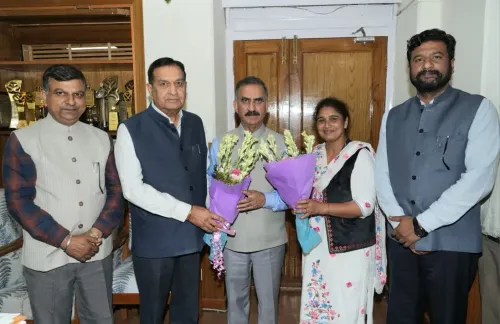
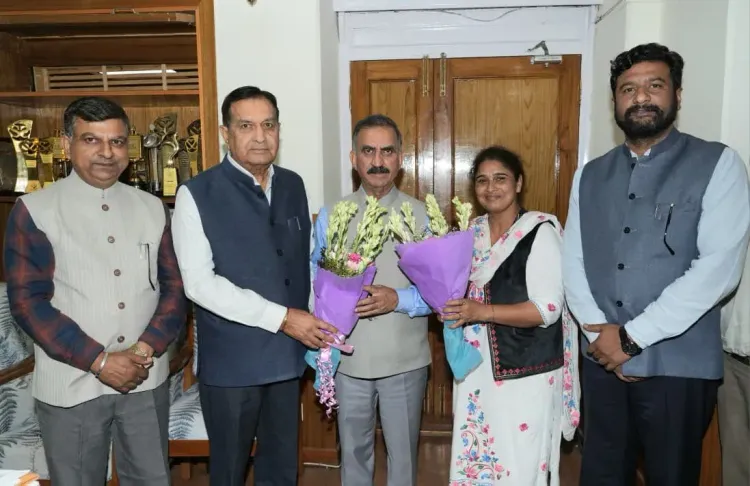
The Himachal Pradesh State Scheduled Caste Commission — Chairman Kuldeep Kumar Dhiman and three members — paid a formal courtesy call on the Chief Minister's Office in Shimla on 28 July 2026, maintaining the standard protocol link between the statutory body and the state executive.
Key Takeaways
Kuldeep Kumar Dhiman , Chairman of the HP State Scheduled Caste Commission, led the courtesy visit to the Chief Minister's Office on 28 July 2026 .
Three Commission members — Digvijay Malhotra , Dr.
Vijay Dogra , and Kumari Shalini Jamwal — accompanied the Chairman.
The HP State Scheduled Caste Commission is a statutory body that monitors constitutional safeguards for Scheduled Castes in the state.
No specific agenda or policy outcome was announced following the meeting.
Such protocol meetings between statutory commissions and the Chief Minister's Office are routine in Indian state administration.
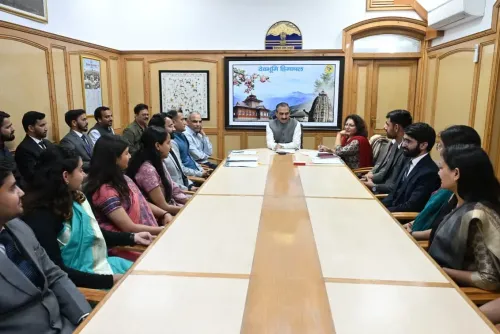
A statutory watchdog met the corridors of power in Shimla on Tuesday, 28 July 2026, as the full bench of the Himachal Pradesh State Scheduled Caste Commission paid a courtesy call on the Chief Minister's Office.
The Chief Minister's Office of Himachal Pradesh confirmed that Commission Chairman Kuldeep Kumar Dhiman, along with members Digvijay Malhotra, Dr. Vijay Dogra, and Kumari Shalini Jamwal, made a formal courtesy visit — shishṭācār bheṃṭ [a protocol meeting] — to the office.
What the Scheduled Caste Commission does
The Himachal Pradesh State Scheduled Caste Commission is a statutory body mandated to investigate complaints, monitor constitutional safeguards, and recommend remedial action for Scheduled Castes across the state. Its periodic engagement with the executive is standard operating procedure in Indian state governance — a channel through which oversight bodies flag concerns and maintain alignment with the government of the day. Courtesy calls of this kind typically precede or follow the submission of annual reports, or mark the beginning of a new commission's working relationship with the Chief Minister's Office. No specific agenda or outcome was indicated in Tuesday's communication.Point of View
A full-bench courtesy call from the Scheduled Caste Commission signals that the statutory body is operationally active and keeping its lines open with the executive — a baseline that matters in a state where SC welfare schemes are both politically sensitive and constitutionally mandated. In Himachal Pradesh, where Scheduled Castes make up roughly 25 percent of the population, the commission's relationship with the CM's Office can shape the pace of complaint redressal and policy follow-through. The Congress-led government under Chief Minister Sukhvinder Singh Sukhu has positioned social equity as a governance priority, making this kind of institutional engagement a visible, if understated, signal of intent.
NationPress
28 Jul 2026
Frequently Asked Questions
What is the Himachal Pradesh State Scheduled Caste Commission?
It is a statutory body constituted by the state government to investigate complaints, monitor constitutional safeguards, and recommend measures for the welfare and protection of Scheduled Castes in Himachal Pradesh.
Who is Kuldeep Kumar Dhiman?
Kuldeep Kumar Dhiman is the Chairman of the Himachal Pradesh State Scheduled Caste Commission, who led the courtesy call on the CM's Office on 28 July 2026.
What is a courtesy call or shishṭācār bheṃṭ in Indian governance?
A courtesy call — shishṭācār bheṃṭ — is a formal protocol meeting in which officials of statutory bodies or commissions visit senior government functionaries to maintain institutional coordination, typically without a specific agenda being made public.
Why do state commissions meet the Chief Minister's Office?
State commissions meet the Chief Minister's Office to maintain coordination between statutory oversight bodies and the executive, often ahead of or following submission of annual reports or recommendations.
What are the Scheduled Caste Commission's powers in Himachal Pradesh?
The Commission has powers to investigate complaints of rights violations, monitor the implementation of SC-related schemes and constitutional provisions, and submit findings and recommendations to the state government.