IIMUN founder Rishabh Shah calls for civil discourse, no slurs against PM or LoP
Synopsis
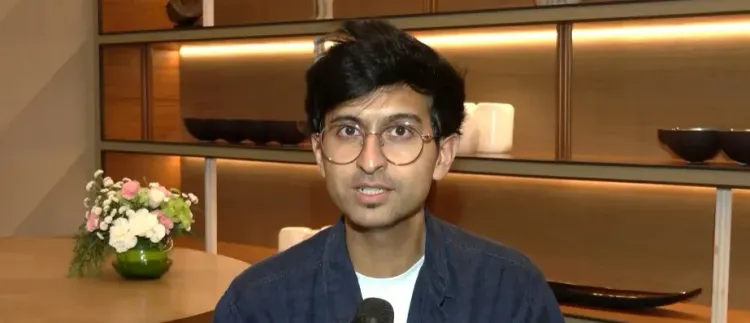
IIMUN founder Rishabh Shah stepped into the Jantar Mantar protest controversy on 8 August, calling for an end to abusive language against any political leader — PM or LoP — while invoking RSS chief Mohan Bhagwat's defence of Gen Z and arguing that both protest and dialogue are valid democratic expressions.
Key Takeaways
Rishabh Shah , founder of IIMUN , on 8 August called for an end to derogatory language against any political leader, including PM Narendra Modi and the Leader of the Opposition .
His remarks followed the circulation of videos allegedly showing abusive slogans at a Jantar Mantar protest.
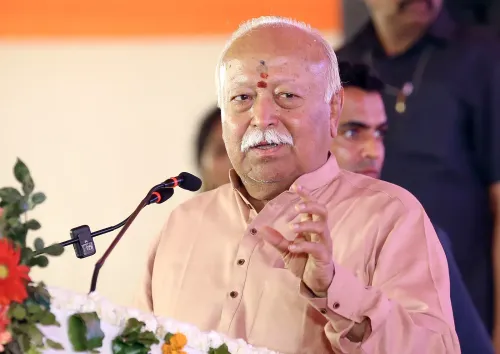
Shah cited RSS Chief Mohan Bhagwat's statement that Gen Z is not anti-national, while leaving open the possibility of an inquiry if other elements were involved.
He argued that Gen Z participants at the protest and at Bhagwat's interaction share the same core aspirations — education, climate action, and mental health.
Shah stressed that society, politics, and cinema collectively shape the values of younger generations, including Gen Alpha .
Rishabh Shah, founder and President of India's International Movement to Unite Nations (IIMUN), on Saturday, 8 August called for an end to derogatory language in public discourse, stating that no abusive speech should be directed at any political leader — whether the Prime Minister or the Leader of the Opposition. His remarks came in the context of videos circulating on social media allegedly showing protesters at Jantar Mantar using abusive language against Prime Minister Narendra Modi.
Shah's Appeal for Civility
Speaking to reporters, Shah emphasised that the responsibility for maintaining civil discourse rests with society at large, not just individuals. He said, 'I want to say that no derogatory language should be used by us against anyone, whether it is the Prime Minister or the Leader of the Opposition.'
Shah extended his concern beyond politics to the broader social environment, arguing that children absorb the values modelled by adults around them. 'Their upbringing is ultimately shaped by us. The current and previous generations are responsible for raising them, and the environment in which they grow up is also created by society,' he said.
Role of Politics and Cinema in Shaping Youth
The IIMUN President noted that both politics and cinema exert significant influence on young minds. 'Whatever we show children and whatever they see around them influences and inspires them. Therefore, society must also ask itself how it is raising the next generation, including Gen Z and Gen Alpha,' he said, adding that the collective responsibility to set the right example falls on all of society.
On Anti-National Allegations and the Jantar Mantar Protest
Asked whether anti-national elements could have been involved in the Jantar Mantar protest and whether an investigation was warranted, Shah referenced recent remarks by Rashtriya Swayamsevak Sangh (RSS) Chief Mohan Bhagwat, who had stated publicly that Gen Z is not anti-national and is speaking for itself. Shah said, 'If the government or others believe that, apart from Gen Z, there were additional elements involved in the protest, then there should certainly be an inquiry. However, I believe that the vast majority of those present were members of Gen Z who were there for genuine reasons.'
Gen Z: More Similar Than Different
Shah was also asked about the apparent contrast between the Gen Z audience at Bhagwat's interaction and those who participated in the Jantar Mantar protest. He said he saw more commonalities than differences. 'Gen Z's aspirations, concerns, and priorities are largely the same. They want progress in education, climate action, and mental health, among other issues. The difference lies mainly in the way they choose to express their views,' he said.
Shah added that both forms of expression — whether at an RSS interaction or a street protest — are legitimate in a democracy. 'Both are necessary in a healthy democratic society,' he said. His remarks reflect a broader conversation in India about the boundaries of political dissent and the role of institutions in shaping civic values among younger generations.
Point of View
And he invokes Bhagwat selectively to neutralise the anti-national framing without endorsing the protest's conduct. What mainstream coverage misses is the institutional subtext: IIMUN works with thousands of school and college students, making Shah's voice on Gen Z civic behaviour more consequential than a typical civil-society statement. The deeper question his remarks raise — whether India's political culture, from parliamentary rhetoric to social media pile-ons, has itself normalised the language it now decries in young protesters — goes unasked in most coverage.
NationPress
22 Sept 2026
Frequently Asked Questions
What did IIMUN founder Rishabh Shah say about the Jantar Mantar protest?
Rishabh Shah called for an end to derogatory language against any political leader, stating that no abusive speech should target the Prime Minister or the Leader of the Opposition. He made the remarks on 8 August amid the circulation of videos allegedly showing abusive slogans at the Jantar Mantar protest.
Who is Rishabh Shah and what is IIMUN?
Rishabh Shah is the founder and President of India's International Movement to Unite Nations (IIMUN), an organisation that engages students in Model United Nations and civic education programmes across India.
What did RSS Chief Mohan Bhagwat say about Gen Z?
RSS Chief Mohan Bhagwat reportedly stated that Gen Z is not anti-national and is speaking for itself. Shah cited this remark when responding to questions about whether anti-national forces were involved in the Jantar Mantar protest.
Did Rishabh Shah call for an investigation into the Jantar Mantar protest?
Shah said that if the government or others believed additional elements beyond Gen Z were involved in the protest, an inquiry would be warranted. However, he also said he believed the vast majority of protesters were genuine Gen Z participants.
How does Rishabh Shah view the difference between Gen Z protesters and Gen Z attendees at Bhagwat's event?
Shah said he saw more similarities than differences, arguing that Gen Z's core aspirations — education, climate action, and mental health — are largely the same across groups. He said the difference lies in the mode of expression, and that both forms are valid in a democracy.