How Did India Achieve Its Fastest Growth in Six Quarters Despite US Tariff Pressures?
Synopsis
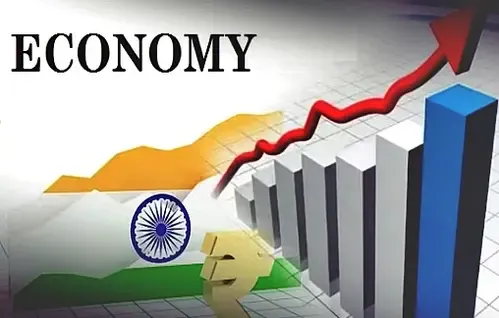
In a remarkable turn of events, India’s economy recorded an 8.2 percent growth in the July-September quarter, defying US tariffs. This growth not only outpaced predictions but highlights India's resilience and strategic economic shifts.
Key Takeaways
8.2 percent GDP growth in July-September quarter.
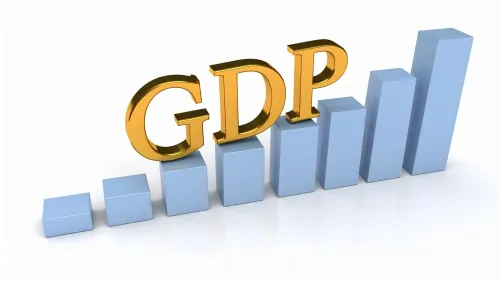
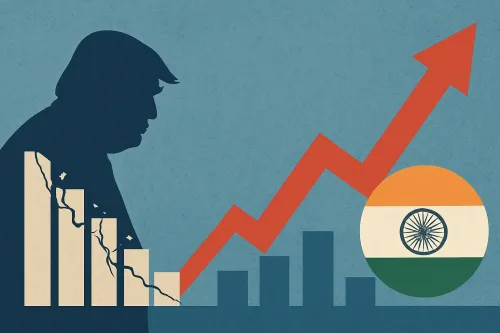
New Delhi, Dec 1 (NationPress) India’s economy saw a remarkable growth of 8.2 percent in the July–September quarter, marking the fastest pace in six quarters, even in the face of significant tariffs imposed by the US, indicating a shift away from the era of economic intimidation, according to a report.
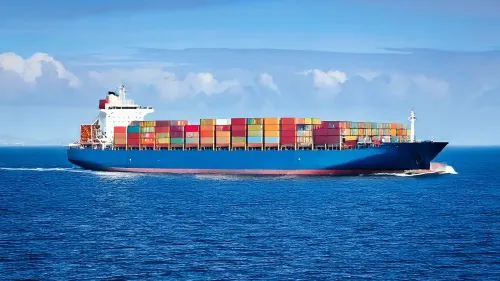
While the tariffs impacted shipments to the US, total merchandise and services exports experienced a boost of 5 to 6 percent in this quarter, driven by export diversification and supportive policies, as per a report by India Narrative.
“Production-linked incentives attracted assembly lines for phones, medications, and solar panels, transforming India from an importer into an exporter. Factories, previously reliant on American buyers, adeptly transitioned to new markets,” the report highlighted.
“Investments in infrastructure—where roads have doubled in length and airports have tripled—have reduced logistics costs, enabling companies to remain competitive post-tariff. Fiscal responsibility has curtailed deficits without sacrificing capital investment, stabilizing rates and attracting foreign investment amid global uncertainties,” it continued.
The report also mentioned that exports to the US, which account for about one-fifth of India's total shipments, declined by double digits in key months following tariff increases. However, overall exports rose, supported by increased demand from the Gulf, Europe, Africa, and East Asia.
India's real GDP growth surpassed economists’ predictions of 7.9 percent and represented a significant recovery from 5.6 percent during the same quarter last year.
Nominal growth approached 9 percent, bolstered by easing inflation. The manufacturing sector surged over 9 percent, construction exceeded 7 percent, and services such as finance and real estate grew by double digits.
“Agriculture experienced modest growth in the mid-single digits, highlighting that this economic expansion is driven by factories and urban demand rather than the unpredictability of the monsoon,” the report stated.
The traditional Indian model, heavily reliant on the US, has effectively decoupled to withstand pressures, the report noted, emphasizing that the resilient consumption sector and expanding manufacturing base empower India to negotiate from a position of strength on matters such as digital taxes, trade agreements, and defense.
Point of View
I believe that India’s resilient economic performance, despite external pressures, showcases the country's evolving landscape. The robust manufacturing sector and diversified exports position India strongly on the global stage.
NationPress
13 Oct 2026
Frequently Asked Questions
What factors contributed to India's economic growth?
India's economic growth was fueled by production-linked incentives, infrastructure investments, and a diversification of export markets.
How did US tariffs impact India's exports?
While US tariffs led to a decline in exports to America, overall exports rose due to increased demand from other regions.
What was the GDP growth rate for India?
India's real GDP growth rate was 8.2 percent for the July-September quarter.
How did manufacturing and services perform?
Manufacturing surged over 9 percent , while services expanded by double digits, indicating strong economic performance.
What is the future outlook for India's economy?
With a resilient consumption sector and growing manufacturing base, India is well-positioned to negotiate on various global economic fronts.