India targets 500 GW clean energy by 2030, says Minister Pralhad Joshi
Synopsis
India has hit its 50% non-fossil fuel electricity target five years ahead of schedule — and Union Minister Pralhad Joshi says the country is now gunning for 500 GW of installed renewable capacity by 2030. With a record 6.1 GW wind addition in 2025–26 and two-thirds of peak demand recently met by renewables, India's green energy story is moving faster than its own timelines.
Key Takeaways
Union Minister Pralhad Joshi confirmed India's 500 GW renewable capacity target for 2030 at the Resilient Futures Summit 2026 on 29 April 2026 .
India achieved the 50% non-fossil fuel electricity milestone five years ahead of schedule .
Nearly 30% of India's electricity now comes from renewables including wind, solar, battery, and pumped storage.
During peak demand, almost two-thirds of power requirement was recently met through renewable energy.
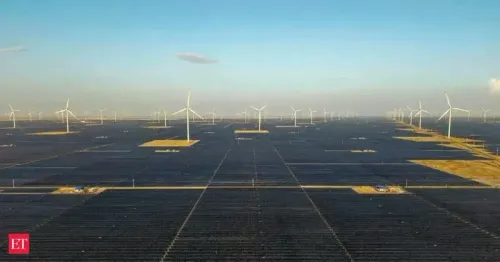
India recorded a historic 6.1 GW wind energy addition in 2025–26 , ranking fourth globally with 56.1 GW installed capacity.
An additional 28 GW of wind capacity is currently under implementation.
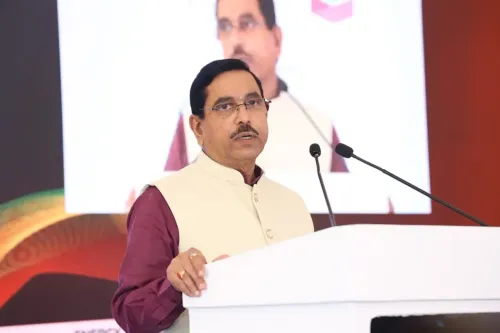
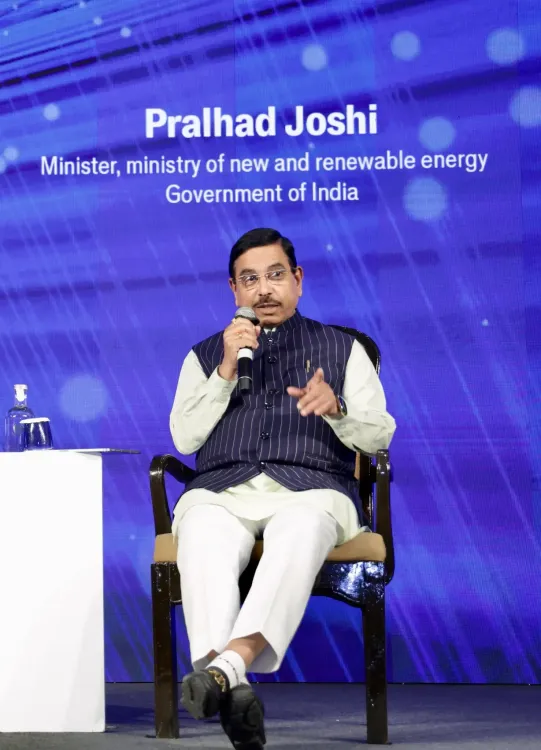
Union Minister Pralhad Joshi on Wednesday, 29 April 2026 said India is on course to achieve 500 gigawatts (GW) of installed renewable power capacity by 2030, describing the country's clean energy transition as a major success story. Joshi made the remarks on the sidelines of the 'Resilient Futures Summit 2026' in New Delhi.
Key Milestones Already Achieved
Joshi highlighted that India has already met its target of sourcing 50 per cent of its electricity from non-fossil fuel sources — and did so five years ahead of schedule. "India has already achieved its goal of sourcing 50 per cent of its electricity from non-fossil fuel sources — five years ahead of schedule — demonstrating the government's ability to surpass its own targets," he stated.
He further noted that nearly 30 per cent of India's electricity is now generated from a mix of renewable sources, including wind, solar, battery storage, and pumped storage. During peak demand periods, almost two-thirds of the country's power requirement was recently met through renewable energy alone, underscoring gains in both generation capacity and transmission efficiency.
The Road to 2027 and Beyond
Joshi indicated that the government is targeting key milestones by 2027, with expansion to be driven through a utility-led model. "While substantial capacity has already been installed, significant work remains, which the government aims to complete through a utility-led model," he said. Several large-scale projects are currently underway and are expected to sustain growth momentum in the sector.
This comes amid a broader global push toward decarbonisation, and India's pace of renewable capacity addition has drawn attention as one of the fastest among major economies. Notably, this is the third consecutive year that India has reported record-level renewable additions.
Record Wind Energy Addition in 2025–26
Earlier this month, Joshi announced that India recorded its best-ever annual increase in wind energy capacity, with a historic addition of 6.1 GW during 2025–26. Speaking at the foundation day event of the Wind Independent Power Producers Association (WIPPA) on 22 April, he said India now ranks fourth globally in wind energy, with more than 56.1 GW of installed capacity and an additional 28 GW under implementation.
What the Push Means for India
India's accelerated green energy expansion carries significant implications for energy security, import dependence, and climate commitments under the Paris Agreement. A diversified renewable mix — spanning solar, wind, storage, and pumped hydro — reduces vulnerability to fossil fuel price shocks and positions India as a credible voice in global climate negotiations. The utility-led model signals a shift toward structured, large-scale procurement over fragmented project development.
With the 500 GW target now firmly in focus, the pace of project commissioning, grid integration, and financing will determine whether India converts its policy ambition into verified installed capacity before the decade ends.
Point of View
Dispatchable power remains the sector's unresolved tension. Hitting 500 GW by 2030 is an ambitious target; the harder question is how much of that capacity will be grid-ready when demand peaks. The utility-led model Joshi referenced is a structural improvement over ad hoc procurement, but without aggressive transmission infrastructure investment and storage mandates, headline capacity numbers risk overstating actual energy security gains. India's track record of beating its own timelines on renewables is genuinely impressive — the next test is whether the grid can absorb what the generators produce.
NationPress
20 Sept 2026
Frequently Asked Questions
What is India's renewable energy target for 2030?
India is targeting 500 GW of installed renewable power capacity by 2030, according to Union Minister Pralhad Joshi. The government plans to achieve this through a utility-led model, with key milestones set for 2027.
Has India already met any of its clean energy goals?
Yes. India has already achieved its target of sourcing 50 per cent of its electricity from non-fossil fuel sources, doing so five years ahead of the original schedule. Nearly 30 per cent of electricity currently comes from renewable sources including wind, solar, battery storage, and pumped storage.
What is India's current wind energy capacity?
India has more than 56.1 GW of installed wind energy capacity and ranks fourth globally in wind power. An additional 28 GW is under implementation, and 2025–26 saw a record 6.1 GW annual addition.
What did Pralhad Joshi say at the Resilient Futures Summit 2026?
Union Minister Pralhad Joshi said India is on track to achieve 500 GW of renewable capacity by 2030 and highlighted that during peak demand, almost two-thirds of India's power needs were recently met through renewable energy. He described India's clean energy progress as a major success story.
What is the utility-led model for India's energy expansion?
The utility-led model refers to the government's approach of channelling remaining renewable capacity additions through large utilities rather than fragmented smaller projects. Joshi indicated this model will be central to completing the significant work that still remains to meet the 2030 target.