India mulls credit guarantees to speed up electric bus and truck adoption
Synopsis
India is weighing partial credit guarantees and interest subvention schemes to unlock private-sector financing for electric buses and trucks — a segment critical to the country's Net Zero 2070 goal but stalled by high upfront costs. With the World Bank, SIDBI, and major banks at the table, the Ministry of Heavy Industries is building a multi-stakeholder financing architecture that could reshape India's commercial EV landscape.
Key Takeaways
The Ministry of Heavy Industries held a high-level meeting on 29 April 2025 , chaired by Secretary Kamran Rizvi , to address EV financing barriers for commercial vehicles.
Two key instruments under consideration: a partial credit guarantee scheme and an interest subvention scheme for private buyers of electric buses and trucks.
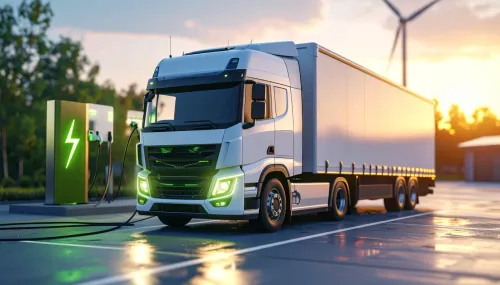
The commercial vehicle segment is a major contributor to India's road transport emissions and fuel consumption.
Stakeholders included the World Bank , SIDBI , NIIF , major banks, SIAM , AIMTC , and BOCI .
The initiative supports India's Net Zero by 2070 target and the Viksit Bharat@2047 vision.
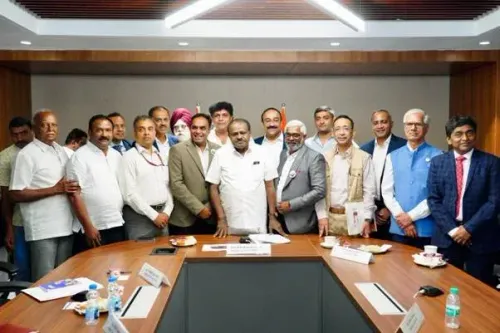
The Ministry of Heavy Industries convened a high-level meeting in New Delhi on Wednesday, 29 April to deliberate on financing mechanisms needed to accelerate the adoption of electric buses and trucks in the private sector. The meeting was chaired by Heavy Industries Secretary Kamran Rizvi and brought together a wide cross-section of government departments, financial institutions, and industry bodies.
Key Financing Mechanisms Under Consideration
Officials discussed two primary support instruments currently being evaluated. The first is a partial credit guarantee scheme designed to de-risk lending by financial institutions, thereby encouraging banks and non-banking financial companies (NBFCs) to extend credit to commercial electric vehicle (EV) buyers. The second is an interest subvention scheme aimed at reducing the cost of borrowing for private sector purchasers of electric buses and trucks.
According to an official statement, the deliberations also covered the current status of financing for heavy electric vehicles and the structural challenges that have so far limited private sector uptake.
Why Commercial EV Electrification Is Critical
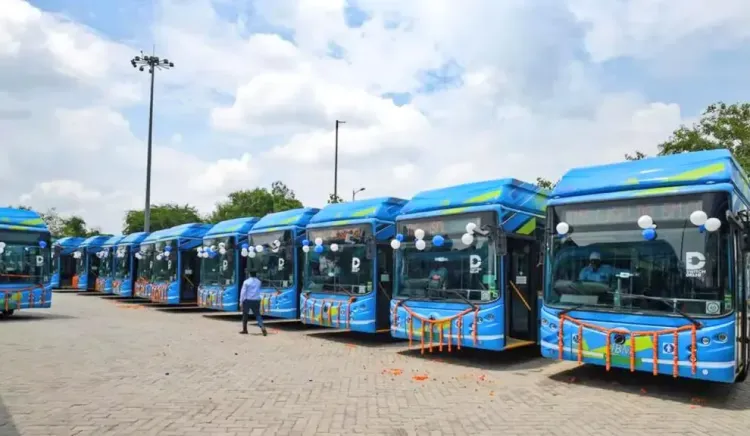
The commercial vehicle segment occupies a central place in India's decarbonisation agenda. Public transport buses form the backbone of urban and inter-city mobility across the country, while trucks carry a substantial share of domestic freight. At the same time, this segment is a significant contributor to road transport emissions, fuel consumption, and particulate matter pollution.
The government's official statement noted that electrifying buses and trucks is essential for meeting India's Net Zero by 2070 goal, as well as broader targets for energy security and emission reduction under the Aatmanirbhar Bharat and Viksit Bharat@2047 frameworks.
Stakeholders at the Table
The meeting saw participation from a notably broad coalition of institutions. On the government side, the Finance Ministry's Department of Financial Services was represented. Multilateral support came from the World Bank. Major public and private sector banks attended alongside apex institutions including SIDBI and NIIF.
Industry representation included bus operators, truck operators, and vehicle manufacturers, as well as bodies such as the Society of Indian Automobile Manufacturers (SIAM), the All India Motor Transport Congress (AIMTC), and the Bus Operators Confederation of India (BOCI). The breadth of participation signals that the ministry is seeking a consensus-driven, multi-stakeholder financing architecture rather than a top-down mandate.
What Comes Next
The Ministry of Heavy Industries framed the meeting as part of a proactive effort to develop actionable financing solutions that can remove the key barriers to EV adoption in the commercial segment. No timeline for finalising the financing framework was specified in the official statement, but the convening of this platform suggests that concrete proposals could follow in the coming months. The outcome of these deliberations will be closely watched by vehicle manufacturers and fleet operators who have cited high upfront costs as the single biggest deterrent to switching from diesel to electric fleets.
Point of View
Yet private-sector fleet electrification has lagged because the economics simply do not work without financing support — diesel remains cheaper on a total cost of ownership basis when capital costs are fully loaded. A partial credit guarantee scheme is a structurally sound intervention, but its effectiveness will depend entirely on the guarantee coverage ratio and whether banks actually price risk lower as a result. The inclusion of the World Bank signals that concessional capital may be part of the eventual package, which would be a meaningful differentiator from past announcements. What is still missing is a clear demand-side signal: without a credible scrappage policy or emissions-based fleet replacement mandate, subsidised credit alone may not be sufficient to shift fleet operators at scale.
NationPress
16 Sept 2026
Frequently Asked Questions
What financing schemes is India considering for electric buses and trucks?
India is evaluating a partial credit guarantee scheme to de-risk bank lending and an interest subvention scheme to lower borrowing costs for private sector buyers of electric buses and trucks. These were discussed at a Ministry of Heavy Industries meeting on 29 April 2025.
Why is electrifying commercial vehicles important for India?
Buses and trucks are major contributors to road transport emissions, fuel consumption, and particulate matter pollution in India. Electrifying this segment is considered essential for meeting India's Net Zero by 2070 target and broader energy security goals.
Who participated in the Ministry of Heavy Industries EV financing meeting?
The meeting included the Finance Ministry's Department of Financial Services, the World Bank, major public and private sector banks, NBFCs, SIDBI, NIIF, bus and truck operators, vehicle manufacturers, and industry bodies SIAM, AIMTC, and BOCI.
What is the biggest barrier to electric bus and truck adoption in India?
High upfront costs are the primary deterrent for private sector fleet operators considering a switch from diesel to electric commercial vehicles. The government is seeking to address this through subsidised credit and risk-sharing mechanisms.
How does this initiative connect to Aatmanirbhar Bharat and Viksit Bharat@2047?
The Ministry of Heavy Industries has framed commercial vehicle electrification as supporting indigenous advanced manufacturing and long-term energy independence — both central pillars of the Aatmanirbhar Bharat and Viksit Bharat@2047 policy frameworks.