Should India Define Its Own Development Path and Resist External Pressures?
Click to start listening
Synopsis
Gautam Adani, Chairman of the Adani Group, emphasized India's need for self-defined development and resilience against external influences at the IIT Dhanbad centenary. He highlighted the importance of mastering natural resources and energy systems as the foundation for India's economic independence and called for a focus on sustainability metrics.
Key Takeaways
- India needs to chart its unique development path.
- Mastering natural resources is vital for economic independence.
- Resisting external pressures is essential for national sovereignty.
- India has achieved significant non-fossil energy capacity ahead of schedule.
- Mining remains a crucial sector for future economic growth.
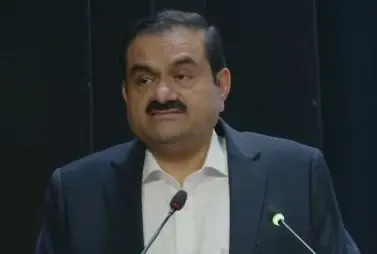
New Delhi, Dec 9 (NationPress) India must carve out its unique development trajectory and stand firm against external influences, stated Gautam Adani, Chairman of the Adani Group, on Tuesday.
During the centenary celebrations at the Indian Institute of Technology (Indian School of Mines), Dhanbad, Gautam Adani emphasized that the sovereignty of nations in the 21st century will hinge on their control over natural resources and energy systems.
“We must master the resources beneath our feet and harness the energy that drives our progress,” Gautam Adani asserted, identifying these as the dual pillars of India’s economic independence.
He stressed the importance of resisting outside pressures that attempt to dictate its developmental priorities, advocating for actions that primarily serve India.
“Without controlling our own narrative, our aspirations could be undermined, and our pursuit of a better standard of living framed as a global offense,” warned the Chairman of the Adani Group.
He also raised concerns about what he termed “narrative colonization,” suggesting that nations with historical emissions are trying to sway how developing countries should approach growth.
Referencing global data, Gautam Adani highlighted that India remains one of the lowest per-capita emitters worldwide, achieving over 50% non-fossil installed capacity ahead of schedule.
He noted that attempts to undermine India’s sustainability without considering per-capita metrics or historical accountability show biases ingrained in global ESG frameworks.
Labeling this era as India’s “Second Freedom Struggle”—this time for economic and resource sovereignty—Gautam Adani stated that mining, minerals, and earth sciences will shape the country's future capabilities.
“Some may view mining as part of the old economy. However, without it, there can be no new economy,” he remarked.
Gautam Adani also pointed out that IIT Dhanbad originated from a vision of national foresight. Over a century ago, under British governance, the Indian National Congress proposed creating an institute to develop India’s vital capabilities in mining and geology.
He explained that this vision was rooted in a profound understanding that a nation cannot thrive without mastering the potential of its own land, while introducing two initiatives for IIT (ISM) Dhanbad: a yearly program offering 50 paid internships with pre-placement opportunities, and the Adani 3S Mining Excellence Centre in collaboration with TEXMiN, featuring metaverse labs, drone fleets, seismic sensing systems, and precision mining technologies.
The industrialist encouraged students to “dream fearlessly, act relentlessly,” embrace innovation, and contribute to building a confident, self-reliant India by becoming “custodians of the core” who develop India’s sovereign capabilities.
Point of View
It's crucial to recognize the importance of Gautam Adani's insights regarding India's development narrative. His emphasis on sovereignty, resource management, and the necessity to resist external pressures highlights a growing sentiment of self-reliance within the nation. It serves as a reminder that India must forge its own path to ensure sustainable development and economic independence.
NationPress
09/12/2025
Frequently Asked Questions
What did Gautam Adani emphasize about India's development?
Gautam Adani emphasized the need for India to define its own development path and resist external pressures that attempt to dictate its priorities.
Why is resource mastery important for India according to Adani?
Adani stated that mastery over natural resources and energy systems is crucial for India's economic independence in the 21st century.
What did Adani mean by 'narrative colonisation'?
Adani referred to 'narrative colonisation' as attempts by historically polluting nations to influence how developing countries should pursue growth.
How did Adani address India's sustainability performance?
He pointed out that India remains one of the lowest per-capita emitters globally and criticized biases in global ESG frameworks that overlook per-capita metrics.
What initiatives did Adani announce for IIT Dhanbad?
Adani announced a yearly program offering 50 paid internships and the establishment of the Adani 3S Mining Excellence Centre in partnership with TEXMiN.