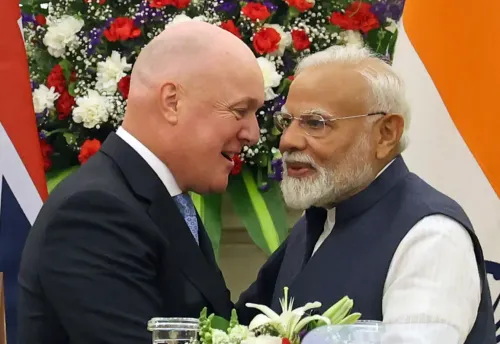
India-NZ FTA: Luxon calls deal 'once-in-a-generation opportunity'
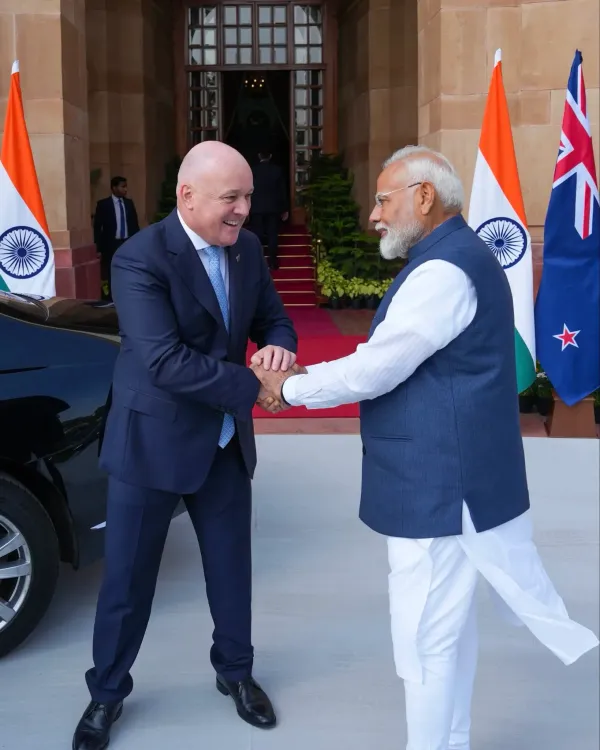
Synopsis
New Zealand PM Christopher Luxon has called the freshly minted India-New Zealand FTA a 'once-in-a-generation opportunity' — and the numbers back the enthusiasm. With 57% of Kiwi exports going tariff-free from day one and India's 1.5 billion-strong consumer base in play, this is arguably the most consequential trade deal New Zealand has signed in a generation.
Key Takeaways
The India-New Zealand FTA was finalised on 27 April 2025 in New Delhi and is expected to come into force by the end of the year.
New Zealand PM Christopher Luxon called the deal a "once-in-a-generation opportunity," citing India's 1.5 billion population and rising income levels.
57 per cent of New Zealand's exports to India will become tariff-free from day one , with further reductions phased in over time.
Commerce and Industry Minister Piyush Goyal described it as India's seventh FTA under his tenure in the past three-and-a-half years .
The deal was signed alongside New Zealand's Trade and Investment Minister Todd McClay .
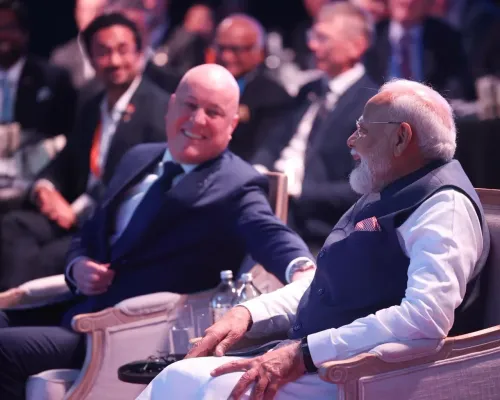
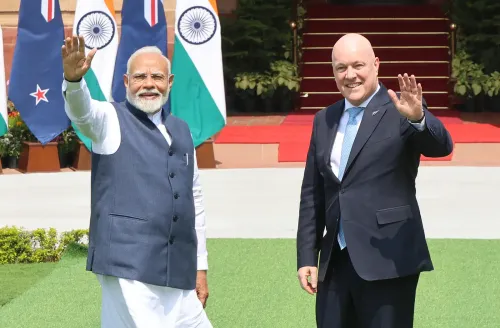
New Zealand Prime Minister Christopher Luxon on Wednesday, 29 April 2025, described the India-New Zealand Free Trade Agreement (FTA) as a "once-in-a-generation opportunity," underscoring the scale and potential of the Indian market. Speaking days after the agreement was finalised in New Delhi, Luxon pointed to India's emergence as the world's most populous nation and a rapidly expanding consumer economy.
What Luxon Said
In a video message shared on social media platform X, Luxon said, "This deal is extremely exciting for New Zealand. It's going to create jobs, lift wages and provide more opportunities to Kiwis." He further noted that with a population of around 1.5 billion and rising income levels, India presents "a vast and increasingly affluent market seeking high-quality goods and services."
Luxon emphasised that the FTA positions New Zealand to align closely with India's economic trajectory as it transitions toward becoming one of the world's largest economies. He stated that the agreement would significantly reduce trade barriers, with 57 per cent of New Zealand's exports to India becoming tariff-free from day one, and further reductions phased in over time. "This would enhance the competitiveness of New Zealand products in the Indian market and allow Kiwi exporters to better compete globally," he added.
Key Terms of the Agreement
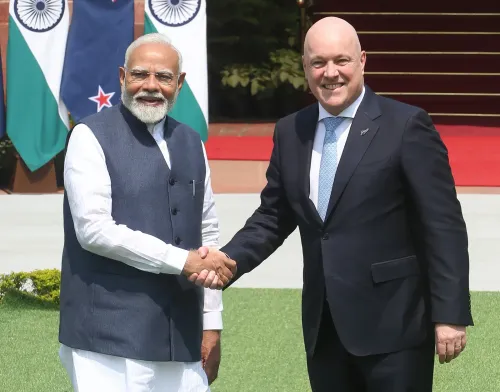
The India-New Zealand FTA was finalised on 27 April 2025 in New Delhi, marking a pivotal moment in bilateral relations between the two nations. The deal was formally signed alongside New Zealand's Trade and Investment Minister Todd McClay and is expected to come into force by the end of the year. Both governments have described it as a transformative step, opening new avenues for trade, investment, and strategic cooperation at a time when global economic alignments are rapidly shifting.
India's Perspective and Commerce Ministry's View
From India's side, the agreement reflects an accelerating push to expand its global trade footprint. Commerce and Industry Minister Piyush Goyal described the pact as the seventh free trade agreement concluded under his tenure in the past three-and-a-half years. This comes amid India's broader strategy of deepening trade ties with key economies across the Indo-Pacific and beyond, as New Delhi seeks to diversify its export markets and attract foreign investment.
Broader Significance
Notably, this FTA arrives at a time of shifting global trade dynamics, with major economies reassessing supply chains and bilateral partnerships. For New Zealand, whose exports to India have historically faced high tariff walls, the immediate tariff relief on 57 per cent of goods represents a significant competitive advantage. For India, the deal signals continued momentum in its trade diplomacy, adding to agreements with the UAE, Australia, and other partners in recent years. The deal is expected to boost sectors ranging from dairy and agriculture on the New Zealand side to pharmaceuticals and textiles on India's end, though detailed sectoral schedules are yet to be made public.
Point of View
Long dependent on China as its primary export destination, deepening ties with India is a strategic hedge — and the 57% day-one tariff relief is a tangible win. For India, this is the seventh FTA in three-and-a-half years, a pace that reflects a deliberate shift from the protectionist posture that stalled deals for decades. The real test, however, lies in implementation: sectoral schedules, rules of origin, and dispute mechanisms will determine whether the headline numbers translate into actual trade flows. Past FTAs — including the one with ASEAN — have shown that poorly structured agreements can widen deficits rather than close them.
NationPress
19 Sept 2026
Frequently Asked Questions
What is the India-New Zealand Free Trade Agreement?
The India-New Zealand FTA is a bilateral trade agreement finalised on 27 April 2025 in New Delhi, aimed at reducing tariffs and expanding trade and investment between the two countries. It is expected to come into force by the end of 2025.
What does the FTA mean for New Zealand exporters?
Under the agreement, 57 per cent of New Zealand's exports to India will become tariff-free from day one, with further reductions phased in over time. This is expected to boost the competitiveness of New Zealand goods — including dairy, agriculture, and other high-quality products — in India's large consumer market.
How many FTAs has India signed under Piyush Goyal?
Commerce and Industry Minister Piyush Goyal described the India-New Zealand FTA as the seventh free trade agreement concluded under his tenure in the past three-and-a-half years, reflecting India's accelerated trade diplomacy.
When will the India-New Zealand FTA come into effect?
The agreement is expected to come into force by the end of 2025, following formal signing by both sides. New Zealand's Trade and Investment Minister Todd McClay signed the deal alongside India's Commerce Minister Piyush Goyal.
Why is the India-New Zealand FTA significant?
The deal is significant because it opens a vast, rapidly growing market of 1.5 billion consumers to New Zealand exporters, while giving India a strategic trade partner in the Indo-Pacific. It also signals India's continued push to expand its global trade footprint after years of limited FTA activity.