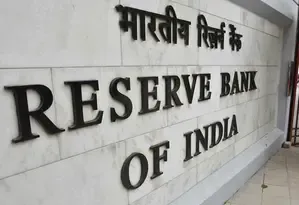
RBI: India among fastest-growing major economies despite global headwinds
Synopsis
The RBI's July 2026 bulletin delivers a broadly confident verdict on India's economy — industrial output firm, FPI back in positive territory, and the India-UK trade deal adding fresh momentum to exports. The one watch point: an uneven southwest monsoon and a June uptick in headline inflation that the central bank says comfortable foodgrain stocks should contain.
Key Takeaways
The RBI's July 2026 bulletin affirms India remains among the fastest-growing major economies globally.
Both industrial and services sector indicators remained firm through June 2026 .
Gross and net FDI in April-May 2026 were higher than the same period a year earlier.
Net FPI flows turned positive in June and held positive into July amid policy support and easing geopolitical tensions.
The India-UK Comprehensive Economic and Trade Agreement is expected to further strengthen external trade momentum.
An uneven southwest monsoon poses a risk to food inflation, though comfortable foodgrain stocks are expected to provide a buffer.
The Reserve Bank of India (RBI) has affirmed that India remains among the fastest-growing major economies globally, sustaining economic momentum through June 2026, with both industrial and services sector indicators holding firm, according to the central bank's July 2026 bulletin. The assessment comes even as the global economy grapples with supply chain disruptions, fragmented trade relationships, and an uncertain macroeconomic environment.
Domestic Economy Holds Steady
The RBI noted that India's domestic economy has navigated external uncertainties well, underpinned by healthy demand conditions and resilient performance across the industrial and services sectors. Headline retail inflation edged up in June, though core inflation — particularly when precious metals are excluded — remained low. Liquidity conditions improved further, supporting robust credit growth.
The farm sector is contending with an uneven southwest monsoon, but the RBI indicated that the impact on food inflation may be cushioned by comfortable foodgrain stocks currently held in reserve.
Trade and External Sector Outlook
The momentum in external trade remained intact, with high growth recorded in both exports and imports in Q1 2026-27. The RBI bulletin pointed to the recent operationalisation of the India-UK Comprehensive Economic and Trade Agreement as a key development likely to strengthen trade flows further, alongside ongoing progress in other bilateral trade agreements.
India's external vulnerability indicators remained sound. The gross and net foreign direct investment (FDI) figures for April-May 2026 came in higher than the corresponding period of the previous year, signalling a revival of investor confidence in the economy.
Foreign Investment Flows Turn Positive
Net foreign portfolio investment (FPI) flows turned positive in June and maintained that trajectory into July, supported by policy measures and easing geopolitical tensions. The RBI noted that India's key external sector vulnerability indicators remained well-anchored as of end-March 2026.
Indian equity markets registered gains in June. However, following the cessation of a ceasefire in early July, markets turned range-bound, reflecting residual geopolitical caution among investors.
What the RBI Bulletin Said
According to the bulletin, 'Headline retail inflation inched up in June while core inflation, especially excluding precious metals remained low. Liquidity conditions improved further, supporting the ongoing robust credit growth. India's external sector remains steady with improving outlook, aided by inflows of foreign investments.'
The bulletin also noted that the recovery of foreign investments in recent months reflects renewed confidence in India's economic trajectory, even as global peers continue to struggle with structural and cyclical pressures.
Outlook and Key Risks
Going forward, the trajectory of the southwest monsoon, global commodity prices, and geopolitical developments will remain critical variables. The progress of bilateral trade agreements — particularly after the India-UK deal — could provide additional tailwinds to export growth. Markets and policymakers will closely watch inflation data in the coming months to assess whether the June uptick in headline retail inflation is transient or signals a broader trend.
Point of View
FDI rising year-on-year, and credit growth holding up. But the June uptick in headline retail inflation deserves more scrutiny than the bulletin affords it: if the monsoon remains uneven through August, the foodgrain buffer argument weakens quickly. The equity market turning range-bound after the ceasefire ended in early July is also a reminder that geopolitical risk has not been priced out. India's growth story is real, but its external resilience is still partly a function of how long global tensions stay contained — a variable the RBI does not control.
NationPress
23 Jul 2026
Frequently Asked Questions
What did the RBI July 2026 bulletin say about India's economy?
The RBI's July 2026 bulletin stated that India remains among the fastest-growing major economies globally, with industrial and services sector indicators holding firm through June 2026. The central bank noted healthy demand conditions, improving liquidity, and a steady external sector as key positives.
How did India's foreign investment perform in 2026?
Gross and net FDI in April-May 2026 were higher than the corresponding period of the previous year. Net FPI flows turned positive in June and remained positive into July, supported by policy measures and easing geopolitical tensions.
What is the impact of the India-UK trade agreement on the economy?
The India-UK Comprehensive Economic and Trade Agreement, which recently became operational, is expected to strengthen the momentum of external trade. High growth in both exports and imports was already recorded in Q1 2026-27, and the deal is seen as a further tailwind.
What risks does India's economy face according to the RBI?
The RBI flagged an uneven southwest monsoon as a risk to food inflation, though it noted that comfortable foodgrain stocks could mitigate the impact. Globally, supply chain disruptions and fragmented trading relationships remain concerns. Equity markets also turned range-bound after a ceasefire ended in early July.
What happened to India's retail inflation in June 2026?
Headline retail inflation edged up in June 2026, according to the RBI bulletin. However, core inflation — especially when excluding precious metals — remained low, and the RBI said improved liquidity conditions continued to support robust credit growth.