India-Singapore sign 2 MoUs, LoI on maritime, food safety, telecom at 4th Ministerial Roundtable
Synopsis
India and Singapore signed two MoUs and an LoI at the 4th Ministerial Roundtable, spanning maritime heritage, food safety, and telecom regulation — but the bigger story is the economic architecture behind it: $194.68 billion in cumulative FDI, $36.1 billion in annual trade, and Singapore now India's single largest FDI source, making this the most consequential bilateral relationship India has in ASEAN.
Key Takeaways
India and Singapore signed 2 MoUs and 1 Letter of Intent on 20 August covering maritime heritage, food safety, and telecom and broadcasting regulation.
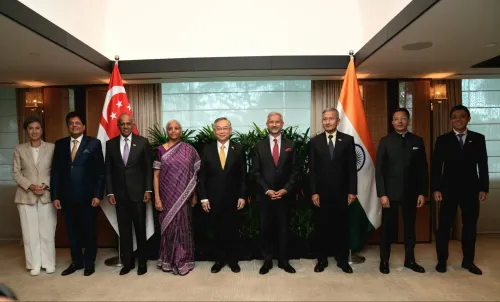
The agreements were formalised at the 4th India-Singapore Ministerial Roundtable in Singapore.
Bilateral trade grew from $6.7 billion (FY 2004-05) to $36.1 billion (FY 2025-26) after the CECA.
Singapore was India's largest FDI source in FY 2025-26, with inflows of $19.8 billion ; cumulative FDI stands at $194.68 billion .
Around 9,000 Indian companies are registered in Singapore; Invest India is set to open an office there following PM Modi's September 2024 visit.
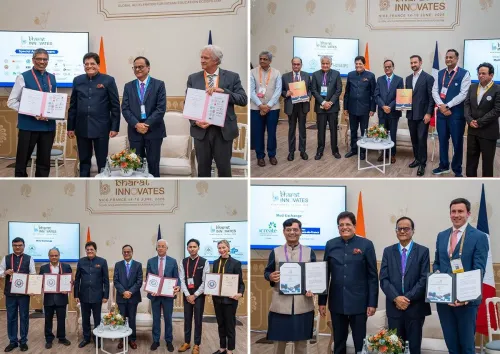
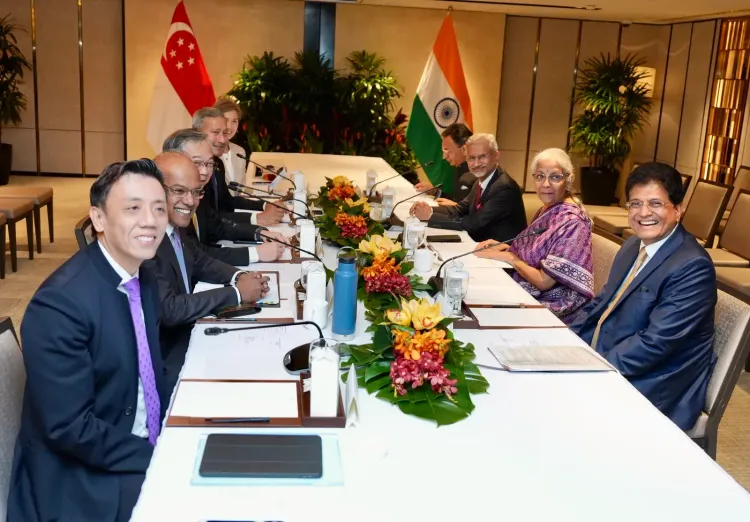
India and Singapore on Thursday, 20 August signed two Memorandums of Understanding (MoUs) and one Letter of Intent (LoI) covering maritime heritage cooperation, food safety, and telecommunications and broadcasting regulations — deepening a bilateral partnership that has grown into one of India's most strategically significant economic relationships in Southeast Asia.
Key Agreements Signed
The three accords were formalised on the sidelines of the 4th India-Singapore Ministerial Roundtable, held in Singapore. The MoUs address maritime heritage cooperation and food safety, while the LoI focuses on collaboration in telecommunications and broadcasting regulation — sectors where both nations have identified growing convergence of interest.
According to a Finance Ministry statement issued after the meeting, the agreements are expected to further strengthen bilateral cooperation across diverse areas of mutual interest.
Who Attended the Roundtable
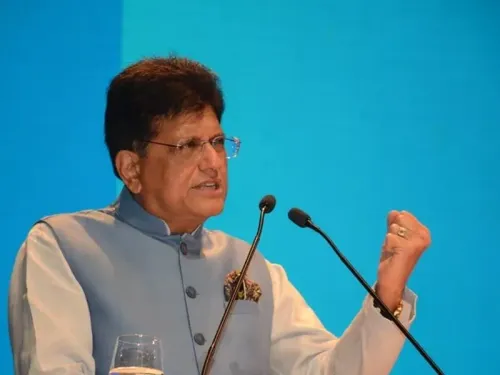
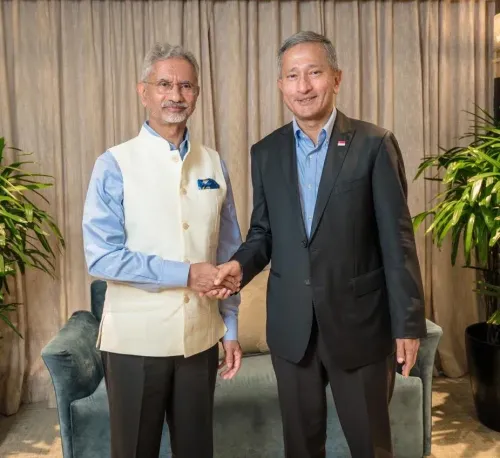
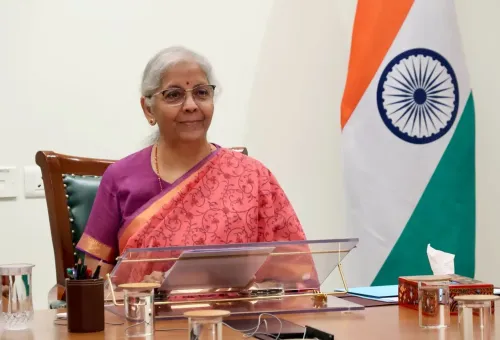
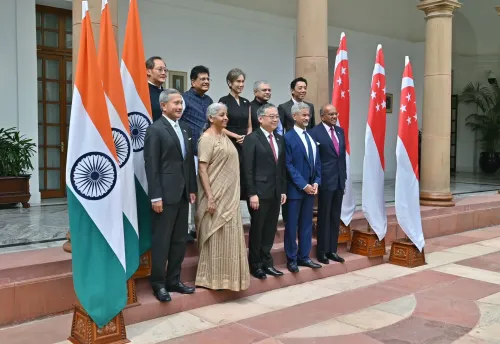
The Indian delegation comprised Finance Minister Nirmala Sitharaman, External Affairs Minister S. Jaishankar, Commerce and Industry Minister Piyush Goyal, and Minister of State for Electronics and IT and Commerce and Industry Jitin Prasada.
Singapore was represented by Deputy Prime Minister and Minister for Trade and Industry Gan Kim Yong, alongside Senior Minister K. Shanmugam, Foreign Affairs Minister Vivian Balakrishnan, Minister for Digital Development and Information Josephine Teo, and Minister for Transport and Second Minister for Finance Jeffrey Siow.
Six Pillars of Cooperation Reviewed
The Roundtable reviewed progress and explored fresh opportunities across six key pillars: Advanced Manufacturing, Connectivity, Digitalisation, Healthcare and Medicine, Skills Development, and Sustainability. Discussions reaffirmed the strong momentum in the partnership and the commitment to translate it into concrete outcomes, the Finance Ministry statement said.
The Economic Weight Behind the Partnership
Singapore is India's largest trade partner within ASEAN and its sixth largest overall, accounting for approximately 2.96% of India's total trade. Bilateral trade has surged from $6.7 billion in FY 2004-05 to $36.1 billion in FY 2025-26, following the conclusion of the Comprehensive Economic Cooperation Agreement (CECA).
In FY 2025-26, India's imports from Singapore stood at $24.24 billion against exports of $11.86 billion, leaving a trade deficit of $12.38 billion. Singapore was also India's largest source of Foreign Direct Investment (FDI) in FY 2025-26, with inflows of $19.8 billion. Cumulative FDI from Singapore between April 2000 and March 2026 reached $194.68 billion — roughly one-quarter of India's total FDI inflows over that period.
Top sectors attracting Singapore FDI include Services, Computer Software and Hardware, Trading, Telecommunications, and Drugs and Pharmaceuticals. Notably, around 9,000 Indian companies are registered in Singapore, alongside offices of six PSUs, 10 banks, and industry bodies CII and FICCI.
What Comes Next
The agreements build on the momentum from Prime Minister Narendra Modi's visit to Singapore in September 2024, during which it was announced that Invest India would open an office in Singapore to facilitate inbound investments from the Southeast Asian nation. The Roundtable's outcomes signal that both governments intend to move beyond trade volumes toward deeper regulatory and sectoral alignment — a shift that could unlock new corridors in digital infrastructure, food standards, and maritime history preservation.
Point of View
But they sit atop an economic relationship of extraordinary depth — Singapore accounts for roughly a quarter of all FDI into India since 2000, a concentration that warrants both celebration and scrutiny. The Roundtable's six-pillar framework is ambitious, yet the persistent trade deficit of $12.38 billion in FY 2025-26 suggests India's export competitiveness into Singapore remains underdeveloped. The real test of these ministerial meetings is whether they produce regulatory convergence that enables Indian exporters to move up the value chain, or whether they remain largely investment-attraction exercises that benefit Singapore-routed capital more than Indian producers.
NationPress
20 Aug 2026
Frequently Asked Questions
What agreements did India and Singapore sign on 20 August?
India and Singapore signed two MoUs and one Letter of Intent covering maritime heritage cooperation, food safety, and collaboration in telecommunications and broadcasting regulations. The agreements were signed at the 4th India-Singapore Ministerial Roundtable held in Singapore.
Who represented India at the 4th India-Singapore Ministerial Roundtable?
The Indian delegation included Finance Minister Nirmala Sitharaman, External Affairs Minister S. Jaishankar, Commerce and Industry Minister Piyush Goyal, and Minister of State Jitin Prasada. Singapore was led by Deputy Prime Minister Gan Kim Yong.
How large is the India-Singapore trade relationship?
Bilateral trade stood at $36.1 billion in FY 2025-26, up from $6.7 billion in FY 2004-05. Singapore is India's sixth largest trade partner overall and its largest within ASEAN, accounting for about 2.96% of India's total trade.
Why is Singapore significant for India's FDI?
Singapore was India's single largest source of FDI in FY 2025-26, with inflows of $19.8 billion. Cumulative FDI from Singapore between April 2000 and March 2026 reached $194.68 billion — approximately one-quarter of India's total FDI inflows over that period.
What are the six pillars of the India-Singapore Ministerial Roundtable?
The Roundtable covers six pillars: Advanced Manufacturing, Connectivity, Digitalisation, Healthcare and Medicine, Skills Development, and Sustainability. These form the framework within which both governments review progress and identify new areas of cooperation.