India-Switzerland sign MoUs on trade, infra, and innovation at Modi-Parmelin talks
Synopsis
India and Switzerland inked a clutch of MoUs on 5 October covering professional mobility, transport tech, and startup innovation — setting the stage for a wider India-EFTA Prosperity Summit on 7 October. Modi's explicit mention of joint research in health, clean energy, and space signals this is more than routine diplomacy: it is a bid to anchor Switzerland's deep-tech edge inside India's innovation ecosystem.
Key Takeaways
India and Switzerland signed multiple MoUs on 5 October 2026 at Hyderabad House , New Delhi, covering infrastructure, professional exchange, innovation, and technology transfer.
The Young Professionals Scheme (YPS) allows 300 persons annually per country to take up temporary employment, scalable to 500 .
A MoU on Transportation Technologies covers electric vehicles, ropeways, tunnels, and circular economy solutions.
The DST-SNSF Letter of Intent establishes long-term India-Switzerland research collaboration in mutually agreed priority areas.
The AIT India programme under a bilateral Implementation Arrangement will support early-stage startups through joint workshops and capability building.
An India-EFTA Prosperity Summit is scheduled for 7 October to convert trade partnership commitments into concrete outcomes.
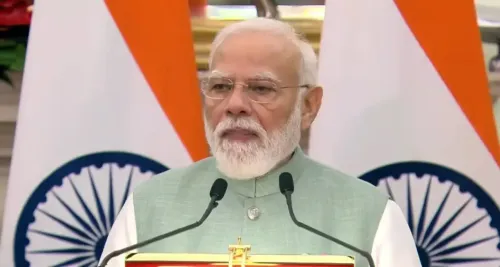
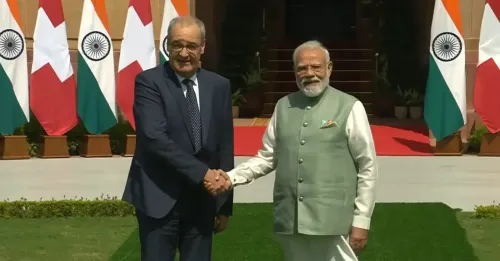
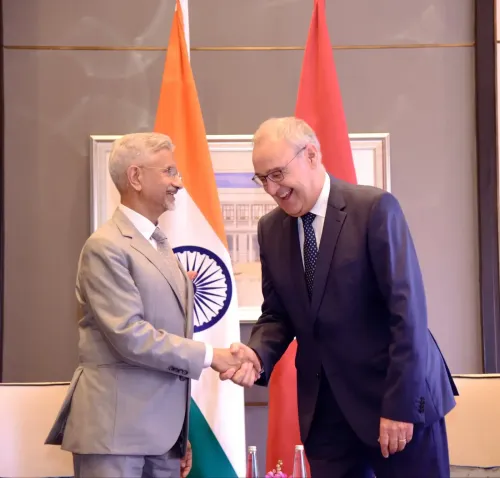
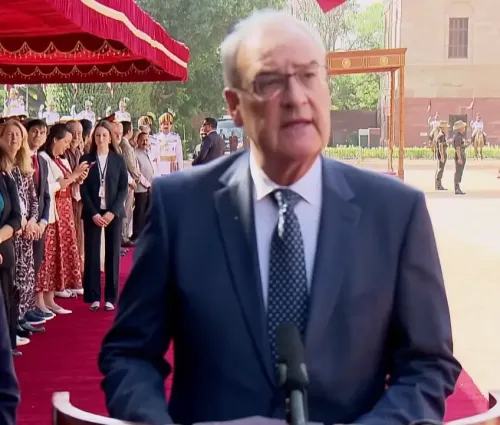
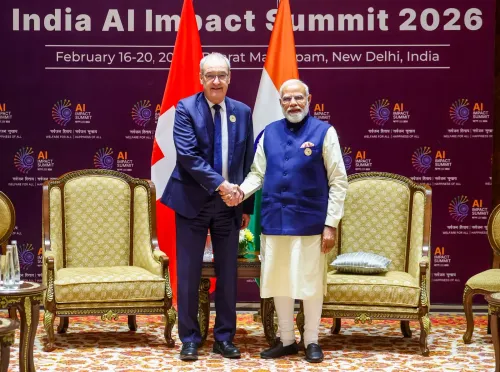
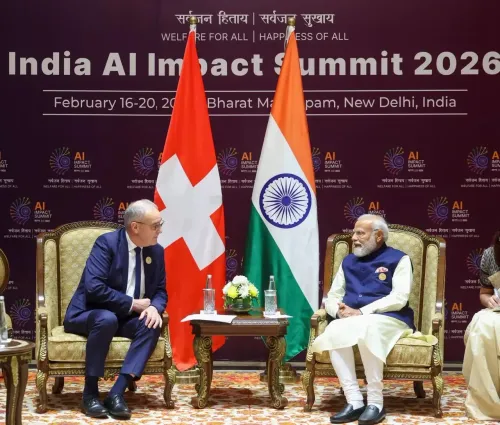
India and Switzerland on Monday, 5 October 2026, signed multiple Memoranda of Understanding (MoUs) and agreements to deepen bilateral cooperation across sustainable infrastructure, exchange of young professionals, innovation, technology transfer, and entrepreneurship. Prime Minister Narendra Modi and Swiss President Guy Parmelin held a comprehensive meeting at Hyderabad House in New Delhi to review the full spectrum of ties between the two countries.
Key Agreements Signed
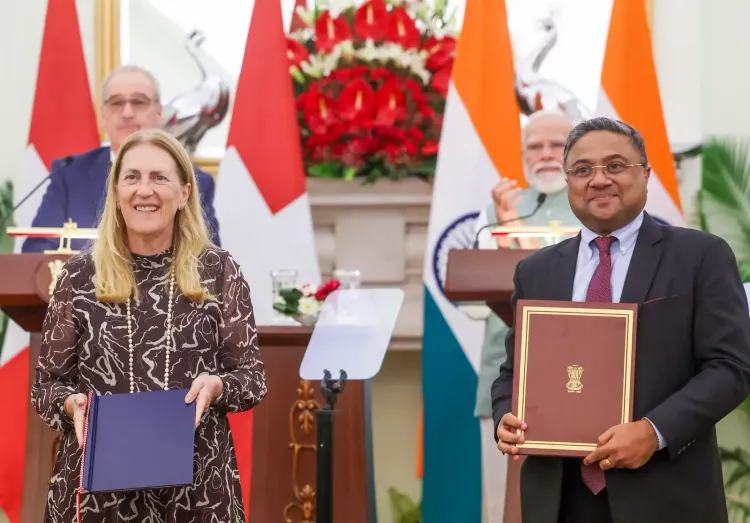
According to a Ministry of External Affairs (MEA) statement, the agreement on the Exchange of Young Professionals (YPS) is designed to govern temporary cross-country employment for young professionals, helping them advance their professional and language skills. The YPS framework provides for an exchange of 300 persons annually per country, with the potential to scale up to 500, and sets a timeline of 30 to 90 days for verification of nationality and residency status, among other provisions.
A separate MoU on the 'Promotion and Collaboration on Transportation Technologies' targets sustainable infrastructure development with a focus on transportation and mobility systems. It covers technologies and infrastructure spanning electric vehicles, ropeways, circular economy, tunnels, and other transport sectors — areas where Switzerland's engineering expertise is globally recognised.
Science, Innovation, and Startups
A Letter of Intent (LoI) was formalised between India's Department of Science and Technology (DST) and the Swiss National Science Foundation (SNSF) to promote long-term cooperation between the two countries' research communities. The LoI supports exploratory scientific collaboration, builds partnerships for future joint research, and establishes a broader framework for sustained long-term initiatives across mutually agreed priority areas.
Additionally, an Implementation Arrangement (IA) was signed to establish bilateral cooperation in innovation, technology transfer, and entrepreneurship. It will be delivered through the Indo-Swiss Academia-Industry Training (AIT India) programme, which supports early-stage startups via bilateral exchange, joint workshops, capability building, and networking.
Prime Minister Modi said: "I am very pleased that we will soon be launching new joint research projects in priority areas such as health, clean energy, and space. We also welcome the agreement reached with the University of Zurich to build the capacity of India's science startups."
Prosperity Summit on the Horizon
On 7 October, India is set to host a 'Prosperity Summit' bringing together business leaders from India and the European Free Trade Association (EFTA). The summit follows the landmark India-EFTA Trade and Economic Partnership Agreement (TEPA) concluded earlier this year, and is expected to translate its provisions into on-ground investment commitments.
Modi described the upcoming summit as "a significant platform to transform the promise of our trade and investment partnership into concrete outcomes." Switzerland is a key EFTA member, making Monday's bilateral engagement a direct precursor to the multilateral business dialogue.
Wider Context and What It Means
This comes amid India's broader diplomatic push to deepen ties with European partners, even as it pursues a separate bilateral free trade agreement with the European Union. Switzerland, as Europe's innovation and finance hub, offers India critical access to deep-tech collaboration, precision manufacturing know-how, and global capital. Notably, the YPS agreement mirrors similar pacts India has signed with Germany and Japan — part of a pattern of managed professional mobility that serves both India's skilled diaspora and partner nations' labour markets.
The signing of the DST-SNSF LoI is particularly significant for India's research ecosystem at a time when the government has prioritised science-led growth through the Anusandhan National Research Foundation. As the two sides look ahead, the success of Monday's agreements will be measured by the pace of research partnerships and the number of startups that translate AIT India training into scalable ventures.
Point of View
Yet 300-to-500 annual exchanges remain modest relative to the scale of India's skilled workforce looking outward. The DST-SNSF LoI is the most consequential of the lot: anchoring Swiss research funding to Indian science institutions could yield dividends that outlast any single government. The 7 October Prosperity Summit is the more immediate test — whether the India-EFTA TEPA investment pledge of $100 billion begins to materialise or remains a headline number is a question Indian industry will be watching closely.
NationPress
5 Oct 2026
Frequently Asked Questions
What MoUs did India and Switzerland sign on 5 October 2026?
India and Switzerland signed several agreements including a Young Professionals Scheme (YPS), a MoU on Transportation Technologies, a Letter of Intent between DST and the Swiss National Science Foundation, and an Implementation Arrangement for the AIT India startup programme. The signing took place at Hyderabad House in New Delhi during a meeting between PM Modi and Swiss President Guy Parmelin.
What is the India-Switzerland Young Professionals Scheme?
The YPS is a bilateral agreement governing temporary employment exchanges for young professionals between India and Switzerland. It allows up to 300 persons annually per country — expandable to 500 — and sets a 30-to-90-day window for nationality and residency verification.
What is the India-EFTA Prosperity Summit on 7 October?
The Prosperity Summit, scheduled for 7 October 2026, will bring together business leaders from India and the European Free Trade Association (EFTA) to translate the trade and investment partnership into concrete outcomes. Switzerland is a key EFTA member, and Monday's bilateral talks are seen as a direct lead-up to the multilateral summit.
How does the DST-SNSF Letter of Intent benefit India's research sector?
The LoI between India's Department of Science and Technology and the Swiss National Science Foundation aims to foster long-term research collaboration by supporting exploratory scientific projects, building joint research partnerships, and creating a sustained framework across mutually agreed priority areas such as health, clean energy, and space.
What is the AIT India programme signed between India and Switzerland?
The Indo-Swiss Academia-Industry Training (AIT India) programme supports early-stage startups through bilateral exchange, joint workshops, capability building, and networking. It is implemented under the bilateral Implementation Arrangement signed on 5 October 2026 and is linked to agreements with institutions including the University of Zurich.