India-UAE CEPA crosses $100 billion trade mark 4 years on: Piyush Goyal
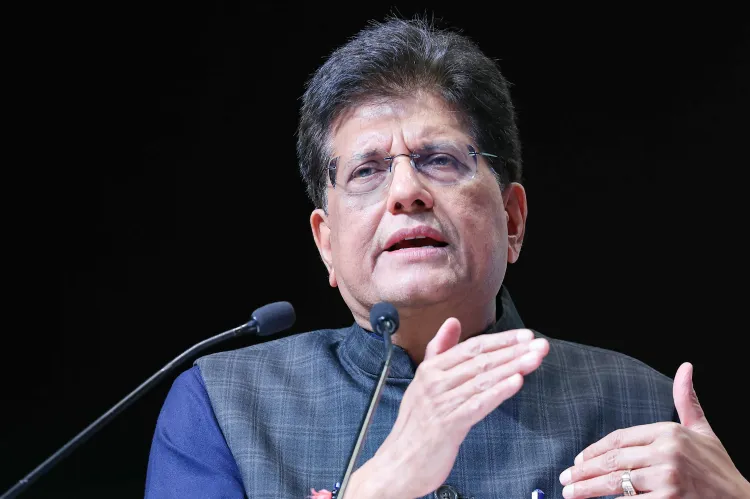
Synopsis
Four years into the India-UAE CEPA, bilateral merchandise trade has crossed $100 billion — a milestone Union Minister Piyush Goyal says reflects transformational gains for Indian farmers, MSMEs, and exporters across gems, engineering, electronics, and agriculture. On the same day, Goyal held talks with the UK's trade secretary on the India-UK CETA, signalling New Delhi's parallel push to expand its global trade footprint.
Key Takeaways
India-UAE CEPA has completed four years in force, with bilateral merchandise trade crossing $100 billion .
Services trade has also risen steadily, opening new markets for Indian companies.
Key growth sectors include gems and jewellery , engineering goods , electronics , and agriculture .
Rising UAE FDI into India and increased Indian overseas investments reflect deepening economic ties.
Union Minister Piyush Goyal also held virtual talks with UK Secretary Peter Kyle on the India-UK CETA on 1 May 2025 .
Union Minister Piyush Goyal on 1 May 2025 said the India-UAE Comprehensive Economic Partnership Agreement (CEPA) has driven bilateral merchandise trade past the $100 billion mark, four years after the pact came into force, creating new avenues for Indian farmers, MSMEs, and exporters. Goyal made the remarks in a post on social media platform X, highlighting the agreement's impact across multiple sectors.
Trade Milestones Under CEPA
Bilateral merchandise trade between India and the United Arab Emirates (UAE) has crossed the $100 billion threshold since the CEPA came into force, according to Goyal. Services trade has also recorded steady growth, enabling Indian companies to access new markets and enhance value creation. "Bilateral merchandise trade has grown strongly, crossing $100 billion, with services trade also rising steadily and opening new markets and greater value," Goyal stated.
Key Sectors Driving Expansion
Sectors including gems and jewellery, engineering goods, electronics, and agriculture have recorded notable expansion under the CEPA framework. These gains are translating into tangible benefits for exporters and entrepreneurs, strengthening India's position in global trade. "Expansion across key sectors like gems and jewellery, engineering goods, electronics, and agriculture is delivering tangible gains," Goyal explained.
FDI and Investment Linkages
Rising foreign direct investment (FDI) inflows from the UAE into India, alongside increased overseas investments by Indian firms, further reflect the deepening economic partnership between the two nations, according to the minister. Goyal described these as evidence of "deepening economic linkages" between the two countries.
India-UK Trade Talks
Separately, earlier on 1 May, Goyal held a virtual interaction with UK Secretary of State for Business and Trade Peter Kyle to explore ways to deepen bilateral trade and investment ties. Both leaders discussed fully leveraging the India-UK Comprehensive Economic and Trade Agreement (CETA), Goyal said in a separate social media post. This comes amid India's broader push to expand its trade agreement footprint across key global partners.
What's Next
With the CEPA now in its fifth year, industry stakeholders and exporters will be watching whether sectoral gains — particularly in agriculture and electronics — continue to scale. The India-UK CETA discussions signal that New Delhi is simultaneously pursuing fresh trade architecture even as it consolidates existing agreements.
Point of View
And the numbers suggest momentum. But crossing a trade threshold is not the same as improving trade quality: the composition of exports, the share of value-added goods, and the actual employment generated for Indian MSMEs remain the harder metrics to track. Goyal's simultaneous engagement on the India-UK CETA suggests New Delhi is racing to build a bilateral trade agreement web — a strategic pivot from multilateral WTO frameworks that have stalled. The risk is that deal-making outpaces implementation capacity, leaving the gains concentrated in large exporters rather than the farmers and small businesses the minister cited.
NationPress
20 Sept 2026
Frequently Asked Questions
What is the India-UAE CEPA and when did it come into force?
The India-UAE Comprehensive Economic Partnership Agreement (CEPA) is a bilateral trade pact between India and the United Arab Emirates. It came into force four years ago and has since driven bilateral merchandise trade past $100 billion, according to Union Minister Piyush Goyal.
Which sectors have benefited most from the India-UAE CEPA?
Gems and jewellery, engineering goods, electronics, and agriculture have recorded notable expansion under the CEPA framework. These sectors are delivering tangible gains for Indian exporters and entrepreneurs, according to Goyal.
Has services trade also grown under the India-UAE CEPA?
Yes, services trade has shown steady growth under the CEPA, helping Indian companies access new markets and enhance value creation, as stated by Piyush Goyal on 1 May 2025.
What is the India-UK CETA and how does it relate to these developments?
The India-UK Comprehensive Economic and Trade Agreement (CETA) is a separate bilateral trade pact under discussion between India and the United Kingdom. On 1 May 2025, Goyal held a virtual meeting with UK Secretary of State for Business and Trade Peter Kyle to explore ways to deepen trade and investment ties under this agreement.
What do rising UAE FDI inflows into India indicate?
Rising UAE FDI inflows into India, alongside increased overseas investments by Indian firms, reflect the deepening economic partnership between the two countries under the CEPA framework, according to Goyal.