India's multi-pronged economic shield: ESF, RELIEF scheme, RoDTEP and more
Synopsis
India has quietly assembled a multi-layered economic defence — a new Economic Stabilisation Fund, the RELIEF export scheme, RoDTEP restoration, ECLGS 5.0, and a liberalised ECB framework — all activated simultaneously. With household savings jumping from ₹13.9 lakh crore to ₹21.5 lakh crore in three years and demat accounts at 22.5 crore, the domestic financial base looks stronger, but the real stress test lies ahead as global headwinds intensify.
Key Takeaways
The government has constituted a new Economic Stabilisation Fund (ESF) to provide fiscal buffers against global shocks.
Export support measures include the RELIEF Scheme , Bharat Maritime Insurance Pool , restored RoDTEP benefits, customs duty relief, and ECLGS 5.0 .
Net household financial savings rose from ₹13.9 lakh crore in 2022-23 to ₹21.5 lakh crore in 2025-26, per RBI data.
Total demat accounts reached approximately 22.5 crore by end of March 2026 .
MSMEs with turnover up to ₹5 crore can now file GST returns quarterly while paying tax monthly.
The Income Tax Act, 2025 introduces higher turnover thresholds for presumptive taxation on digital transactions.
The Indian government has adopted a comprehensive, multi-pronged policy framework to protect fiscal stability, export competitiveness, and investment flows against mounting global geopolitical uncertainties, Minister of State for Finance Pankaj Chaudhary informed the Lok Sabha on Monday, 10 August. Central to this strategy is the newly constituted Economic Stabilisation Fund (ESF), which is designed to give the government financial headroom to absorb external shocks and respond to unforeseen global events.
Export and Industry Support Measures
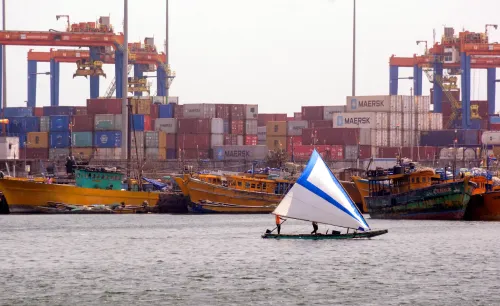
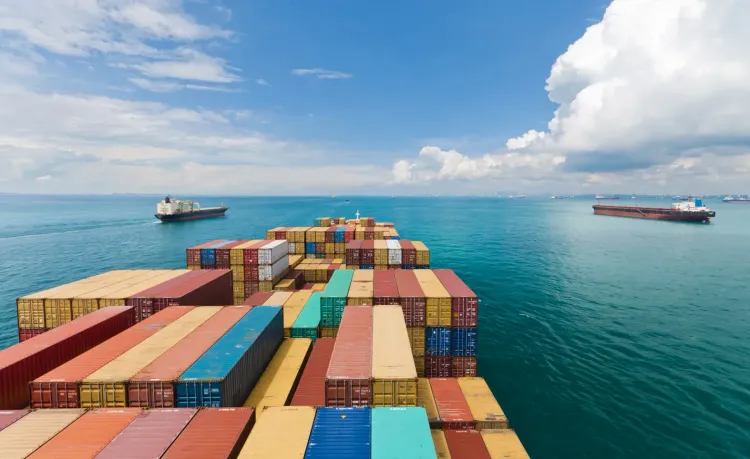
To shore up exports and industrial resilience, the government has rolled out a suite of targeted interventions. These include the RELIEF (Resilience & Logistics Intervention for Export Facilitation) Scheme, the Bharat Maritime Insurance Pool, restoration of RoDTEP (Remission of Duties and Taxes on Exported Products) benefits, selective customs duty relief, and the Emergency Credit Line Guarantee Scheme (ECLGS) 5.0. Together, these instruments aim to cushion exporters from supply chain disruptions and cost pressures linked to global volatility.
Trade Agreements and FDI Policy
On the trade front, the government is actively deepening its network of Free Trade Agreements (FTAs) and Comprehensive Economic Partnership/Cooperation Agreements (CEPAs/CECAs) to diversify market access and reduce dependence on any single trade corridor. Simultaneously, an investor-friendly Foreign Direct Investment (FDI) policy framework is being maintained to attract long-term capital. The Reserve Bank of India (RBI) is complementing these efforts by liberalising the External Commercial Borrowing (ECB) framework, facilitating foreign investment channels, and promoting local currency settlement to reduce exchange rate risk.
MSME Tax and Compliance Simplification
Chaudhary highlighted a parallel push to ease the compliance burden on Micro, Small and Medium Enterprises (MSMEs). Under the Goods and Services Tax (GST) regime, small suppliers below prescribed turnover thresholds are exempt from registration. Eligible taxpayers can opt for the Composition Levy Scheme, which offers concessional tax rates and simplified filing. Businesses with turnover up to ₹5 crore are permitted to file GST returns on a quarterly basis while continuing to pay tax monthly.
On the direct tax side, digital tools — including e-filing of income tax returns, pre-filled return forms, faceless assessment, and online taxpayer services — have streamlined compliance. The Income Tax Act, 2025 further introduces simplified presumptive taxation schemes with higher turnover thresholds for businesses conducting digital transactions, reducing the documentation load on smaller enterprises.
Household Savings and Retail Market Participation
Household financial health has shown a marked improvement, according to data cited by the minister. Net household financial savings rose from ₹13.9 lakh crore in 2022-23 to ₹21.5 lakh crore in 2025-26, according to RBI data. Retail participation in securities markets has also surged, with the total number of demat accounts reaching approximately 22.5 crore by end of March 2026.
The RBI's Financial Stability Report, June 2026, assessed the household sector as resilient, pointing to improving borrower profiles and healthy loan repayment performance. This combination of rising savings and broader market participation signals a deepening of India's financial ecosystem even as global conditions remain uncertain.
With multiple policy levers now active — from export facilitation and trade agreements to MSME relief and household financial resilience — the government's strategy will face its real test in the months ahead as global headwinds, including geopolitical tensions and potential demand slowdowns in key export markets, continue to evolve.
Point of View
Meaning its actual corpus and deployment rules remain untested. The RELIEF scheme and RoDTEP restoration address symptoms of export stress rather than the structural competitiveness gap that FTAs alone cannot close. The household savings jump is real and significant, but the RBI's own Financial Stability Report has previously flagged rising retail leverage alongside rising demat participation — a contradiction the minister's statement does not address. The real question is not whether these tools exist, but whether they are adequately funded and fast enough to deploy when the next global shock arrives.
NationPress
25 Sept 2026
Frequently Asked Questions
What is India's Economic Stabilisation Fund?
The Economic Stabilisation Fund (ESF) is a newly constituted fiscal buffer announced by the Indian government to provide financial headroom for responding to global geopolitical shocks and unforeseen economic events. It was referenced by Minister of State for Finance Pankaj Chaudhary in a written reply to the Lok Sabha on 10 August.
What is the RELIEF scheme for Indian exporters?
The RELIEF (Resilience & Logistics Intervention for Export Facilitation) Scheme is a government initiative designed to support Indian exporters against supply chain disruptions and logistical challenges arising from global uncertainty. It is one of several export-support measures introduced alongside RoDTEP restoration, the Bharat Maritime Insurance Pool, and ECLGS 5.0.
How much have Indian household financial savings grown?
According to RBI data cited in Parliament, net household financial savings rose from ₹13.9 lakh crore in 2022-23 to ₹21.5 lakh crore in 2025-26. The RBI's Financial Stability Report of June 2026 also noted improving borrower profiles and healthy repayment performance in the household sector.
What GST relief has been provided to MSMEs?
Small suppliers below prescribed turnover thresholds are exempt from GST registration. Eligible businesses can opt for the Composition Levy Scheme with concessional rates, and those with turnover up to ₹5 crore can file GST returns on a quarterly basis while paying tax monthly.
How many demat accounts are there in India as of March 2026?
The total number of demat accounts in India reached approximately 22.5 crore by end of March 2026, reflecting a significant rise in retail participation in securities markets in recent years.