Why Did IndiGo's Domestic Market Share Decline in November?
Synopsis
IndiGo's domestic market share has taken a hit, dropping to 63.6% in November amidst operational challenges and crew shortages. In contrast, Air India and new regional airlines are gaining ground. This article explores the implications of these shifts in India's aviation landscape.
Key Takeaways
IndiGo's market share fell to 63.6% in November.
Air India Group's share increased to 26.7%.
Akasa Air's market share decreased to 4.7%.
Passenger growth was recorded at 6.92% for November.
Three new airlines have received government approval to operate.
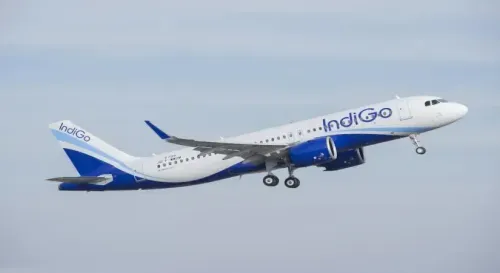
New Delhi, Dec 28 (NationPress) The low-cost airline IndiGo, which encountered significant challenges earlier this month, experienced a decline in its domestic market share to 63.6 percent in November, as reported by the Directorate General of Civil Aviation (DGCA).
In October, the airline held a market share of 65.6 percent.
The market presence of the Air India Group (including Air India and Air India Express) rose to 26.7 percent in November, up from 25.7 percent in the previous month.
Meanwhile, Akasa Air saw its market share decrease to 4.7 percent in November, down from 5.2 percent in October.
According to DGCA data, the number of passengers carried by domestic airlines from January to November 2025 reached 1,526.35 lakhs, an increase from 1,464.02 lakhs during the same period last year, indicating an annual growth of 4.26 percent and a monthly increase of 6.92 percent.
The overall cancellation rate for scheduled domestic airlines in November 2025 was 1.33 percent.
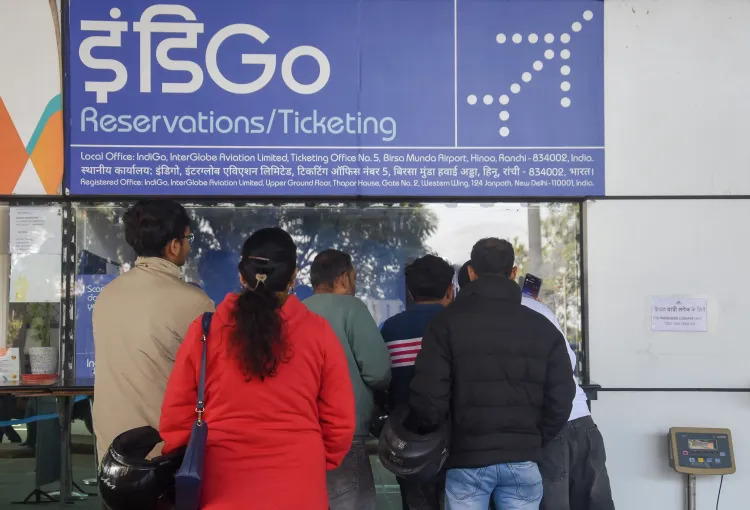
In response to the recent turmoil in IndiGo's operations, which stranded passengers nationwide for several days and raised concerns about its dominant market position, the government has provisionally approved three new airlines to commence operations.
The civil aviation ministry has issued a “no-objection certificate” to regional carriers Shankh Air, Al Hind Air, and FlyExpress.
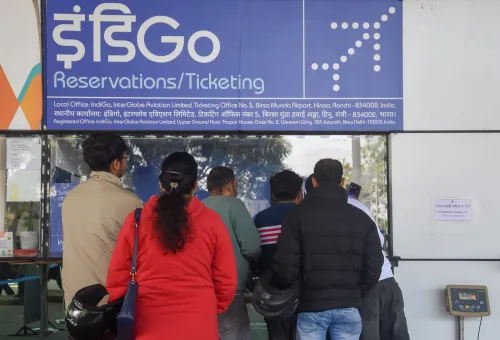
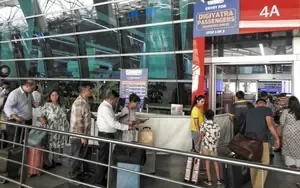
This month, IndiGo was compelled to cancel over 4,000 flights across key destinations including Delhi, Mumbai, Hyderabad, and Bengaluru, primarily due to a shortage of crew members. The airline faced a critical crew deficit as a result of implementing the second phase of flight duty time limitations (FDTL), leading to stranded aircraft at airports and disarray in travel schedules.
The government has initiated an investigation into IndiGo’s extensive flight cancellations, which affected thousands of travelers at various airports throughout the nation.
Point of View
The decline in IndiGo's market share underscores the challenges faced by major airlines in maintaining operational efficiency. The increasing presence of Air India and new entrants suggests a potential shift in competition within the industry. It's crucial for airlines to address operational issues swiftly to retain passenger trust and market position.
NationPress
22 Oct 2026
Frequently Asked Questions
What caused IndiGo's market share decline?
IndiGo's market share declined due to significant operational challenges, including crew shortages that led to over 4,000 flight cancellations.
How did Air India's market share change?
Air India's market share increased to 26.7% in November, up from 25.7% in October.
What is the overall passenger growth for domestic airlines?
Domestic airlines in India experienced an annual growth of 4.26% and a monthly growth of 6.92% in passenger numbers from January to November 2025.
What are the new airlines approved by the government?
The government has granted provisional approval to three new airlines: Shankh Air, Al Hind Air, and FlyExpress.
What was the cancellation rate for domestic airlines in November?
The overall cancellation rate for scheduled domestic airlines in November was 1.33%.