Jabalpur GST fraud: EOW files 8 cases over ₹8.68 crore ITC scam
Synopsis
No hacking was needed. The accused in Jabalpur's alleged ₹8.68 crore GST fraud reportedly gained traders' trust, used screen-sharing software and collected their OTPs. Through that access, they allegedly ran fake bills for nearly four years and diverted input tax credit to firms owned by them and their relatives.
Key Takeaways
Madhya Pradesh EOW registered eight cases against five persons on 27 November 2026 in an alleged ITC fraud in Jabalpur .
The total loss to the complainant firms is ₹8,68,30,286 , according to the EOW.
The accused allegedly used screen-sharing software and owners' OTPs to tamper with MARG accounting records between 1 March 2022 and 26 December 2025 .
Fake GST bills were generated without actual trade, and the credit was allegedly moved to firms of the accused and their relatives.
The case is registered under multiple sections of the Bharatiya Nyaya Sanhita , and investigation is ongoing.
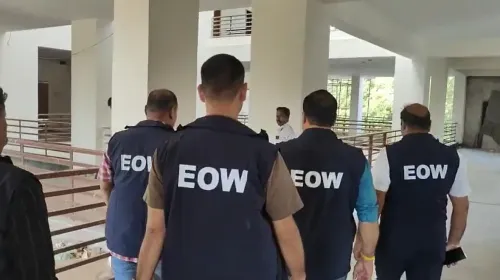
The Economic Offences Wing (EOW) of Madhya Pradesh has registered eight cases against five persons in Jabalpur over an alleged Input Tax Credit (ITC) fraud worth ₹8.68 crore. The fraud involved eight medical and business firms. The cases were registered on 27 November 2026 after complaints from affected traders, and the agency says further investigation is underway.
According to an EOW press note issued on Saturday, 28 November 2026, the complainant firms together suffered a loss of ₹8,68,30,286.
How the Alleged Fraud Was Carried Out
EOW investigators found that the accused allegedly won the trust of the firm owners. They then gained access to the firms' accounting data through screen-sharing software.
The accused also reportedly collected one-time passwords (OTPs) sent to the owners' mobile phones, saying they needed them to file GST returns.
Using this access, the accused allegedly entered data stored in the firms' MARG accounting software and tampered with bills and electronic records. This allegedly took place between 1 March 2022 and 26 December 2025.
According to the EOW, the accused generated fake GST bills without any actual purchase or sale of goods. They allegedly showed inflated business turnover and ITC figures. The tax credit was then transferred to firms owned by the accused and their relatives.
Complainants and the Investigation
Eight traders filed the complaints. They include Deepanshu Dixit, proprietor of Mahadev Pharma, and Mohan Ambwani, proprietor of ST Drug House. The press note says the fraud came to light only after these complaints were received.
Deputy Superintendent of Police Swarnjit Singh Dhami of the EOW's Jabalpur unit investigated the complaints. The agency also examined an inquiry report and evidence from the State Tax (GST) Department before registering the cases.
The Accused and Charges Invoked
The EOW has identified the five accused as:
- Ashish Kotwani, proprietor of Unique Trade and Company
- Nikhil Kotwani, proprietor of Nikhil Enterprises
- Ashok Kotwani, proprietor of Madhushree Metal
- Jasmeet Kotwani, proprietor of Mahakal Metal
- Accountant Yogesh Sahu
The crime has been registered under Sections 316(2), 318(4), 336(3), 338, 340(2) and 61(2) of the Bharatiya Nyaya Sanhita. These sections deal broadly with criminal breach of trust, cheating, forgery, use of forged records and criminal conspiracy.
“All eight cases have been taken up for investigation. Further investigation is underway,” the EOW said in its press note.
Why the Case Matters
The case shows how much small and mid-sized businesses depend on outside accountants and intermediaries for GST compliance. In this instance, those routine tasks were allegedly used to gain access to the firms' systems.
The alleged method did not involve hacking. It relied on trust, screen-sharing tools and OTPs handed over voluntarily. This exposes a gap that technical safeguards alone may not close.
Notably, the alleged manipulation ran for nearly four years before it was detected. That raises questions about how closely affected firms, and the tax system, monitor unusual movements of ITC.
Investigators are expected to trace the transferred tax credit and the beneficiary firms. Any arrests or further recoveries will shape the next phase of the case.
Point of View
Which points to monitoring gaps. Until ITC verification catches anomalies in real time, small businesses that outsource compliance will remain easy targets.
NationPress
28 Nov 2026
Frequently Asked Questions
What is the Jabalpur GST fraud case?
It is an alleged ₹8.68 crore Input Tax Credit fraud involving eight medical and business firms in Jabalpur. Madhya Pradesh's EOW registered eight cases against five persons on 27 November 2026.
How was the alleged ITC fraud carried out?
The accused allegedly gained the owners' trust and accessed their accounting data through screen-sharing software. They also collected OTPs on the pretext of filing GST returns, then tampered with MARG software records and generated fake GST bills.
Who are the accused in the Jabalpur GST fraud?
The accused are Ashish Kotwani, Nikhil Kotwani, Ashok Kotwani, Jasmeet Kotwani and accountant Yogesh Sahu. The four Kotwanis are proprietors of Unique Trade and Company, Nikhil Enterprises, Madhushree Metal and Mahakal Metal respectively.
Under which laws has the case been registered?
The EOW registered the case under Sections 316(2), 318(4), 336(3), 338, 340(2) and 61(2) of the Bharatiya Nyaya Sanhita. All eight cases are under investigation.
How long did the alleged fraud continue?
According to the EOW, the alleged tampering took place between 1 March 2022 and 26 December 2025, a period of nearly four years.