Jaishankar urges stronger IORA voice at 25th ministers' meet
Synopsis
Hosting the 25th IORA Council of Ministers in New Delhi, Jaishankar pressed the 23-nation bloc to find a stronger collective voice amid geopolitical upheaval. Using Vision Mahasagar as its guide, India wants IORA to deliver practical results and build stronger institutions as the Indian Ocean becomes more contested.
Key Takeaways
EAM S Jaishankar opened the 25th IORA Council of Ministers meeting in New Delhi on 27 November 2026 .
He urged greater coordination among member states and meaningful collaboration with dialogue partners amid significant geopolitical changes .
India's chairship is guided by Vision Mahasagar , building on the earlier SAGAR doctrine.
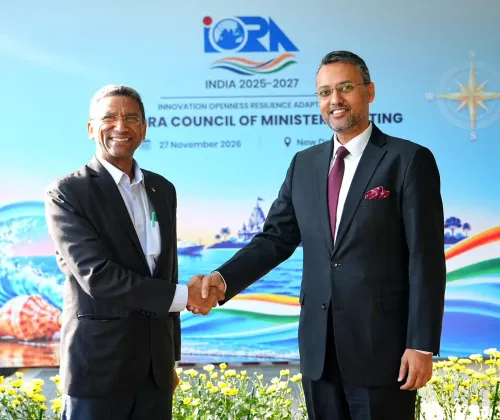
The chairship theme is 'Innovation, Openness, Resilience and Adaptability in the Indian Ocean region' .
Jaishankar thanked Sri Lanka as the previous chair and welcomed Mauritius as Vice Chair and future chair.
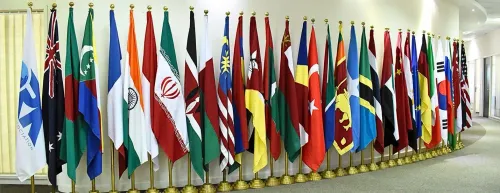
IORA has 23 member states and 12 dialogue partners , including the US, China and Russia.
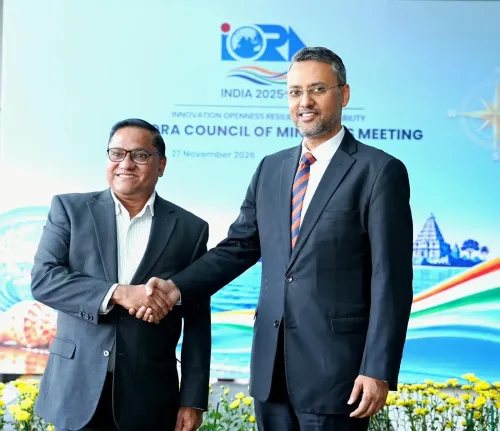
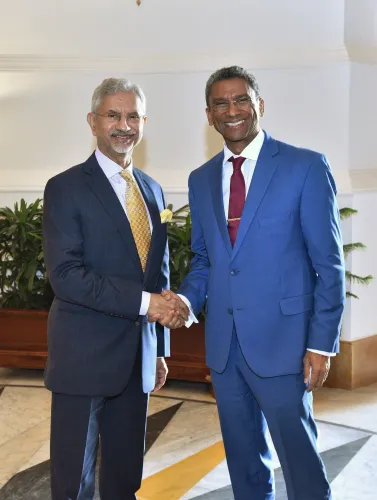
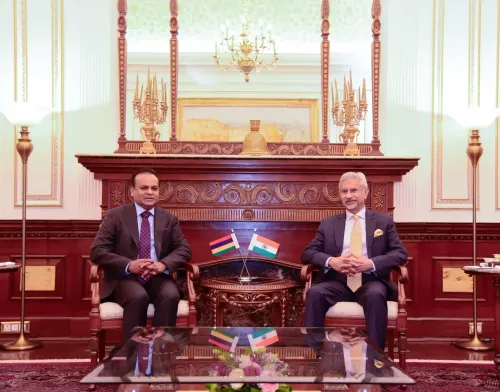
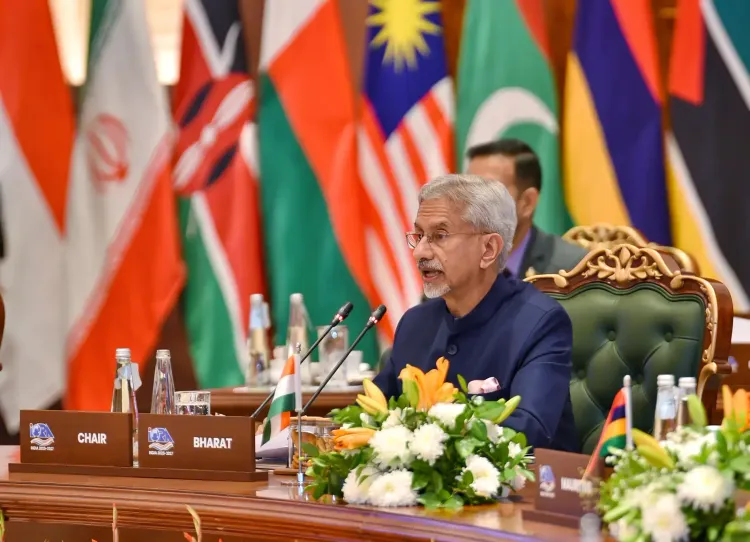
External Affairs Minister S Jaishankar on Friday, 27 November 2026, called on Indian Ocean Rim Association (IORA) member states to coordinate more closely and work meaningfully with dialogue partners so the grouping can strengthen its collective voice amid major geopolitical shifts. He made the remarks while opening the 25th Council of Ministers (COM) Meeting of IORA in New Delhi, where India is steering the Association as chair.
His address set out India's agenda for the grouping. It stressed practical cooperation, institutional strengthening and a more assertive regional presence in a changing global order.
Key Developments at the 25th Council of Ministers
Jaishankar began by thanking Sri Lanka for its leadership as the previous chair of the Association. He also welcomed Mauritius as Vice Chair and future chair of IORA.
“At a time of significant geopolitical changes, IORA must enhance its collective voice and reinforce its role as an inclusive regional platform. Achieving these requires greater coordination among Member States, meaningful collaboration with dialogue partners and a strong focus on practical cooperation,” he said.
He said he was confident the day's deliberations would “help advance these objectives and provide a clear direction for the future of our Association.”
Why the Indian Ocean Matters
The minister described the Indian Ocean as a region of immense diversity, opportunity and shared challenges. He said member states and dialogue partners share responsibility for keeping it stable.
“The Indian Ocean is central to global trade, energy security, connectivity and economic prosperity. It is also a region of immense diversity, opportunity, and of shared challenges. Our collective responsibility is to ensure that it remains peaceful, stable, secure and conducive to development,” Jaishankar said.
India's Chairship Agenda and Vision Mahasagar
Jaishankar said India's chairship aims to deepen cooperation across IORA's priority areas and cross-cutting issues. He said it also seeks to expand engagement with dialogue partners, promote practical regional initiatives and strengthen the Association's finances and institutions.
“A stronger institutional foundation is essential for IORA to fulfil its larger role in the region. In this context, the theme of today's meeting, a stronger regional voice positioning IORA in a changing global order, is particularly relevant,” he said.
He said India's approach is guided by Vision Mahasagar, which stands for Mutual and Holistic Advancement for Security and Growth Across Regions. Mahasagar builds on India's earlier SAGAR doctrine of security and growth for all in the region.
“Our Chairship theme is 'Innovation, Openness, Resilience and Adaptability in the Indian Ocean region'. These principles reflect our conviction that IORA must remain responsive and adaptive to the changing regional and global environment while delivering tangible benefits to its Member States,” he added.
Who Is at the Table
The Council of Ministers is IORA's highest decision-making body. It is made up of the foreign ministers of member states.
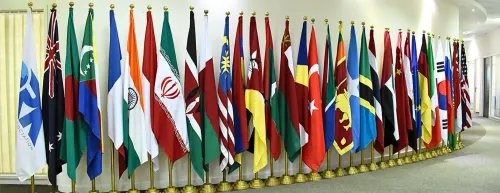
The Association has 23 member states: India, Australia, Bangladesh, Indonesia, Iran, Kenya, Madagascar, Comoros, France, Malaysia, Maldives, Mauritius, Mozambique, Oman, Seychelles, Singapore, Somalia, South Africa, Sri Lanka, Tanzania, Thailand, the United Arab Emirates and Yemen.
Its 12 dialogue partners are China, Egypt, the European Union, Germany, Italy, Japan, South Korea, Russia, Saudi Arabia, Turkey, the United Kingdom and the United States. The list includes several major powers with competing strategic interests in the region.
What Comes Next
The meeting's outcomes are expected to shape IORA's direction for the rest of India's chairship. Mauritius, as Vice Chair, is set to take over the chair next. Whether the grouping can turn calls for a “stronger regional voice” into funded programmes and stronger institutions will be the main test of India's term.
Point of View
China and Russia, whose rivalries increasingly play out in Indian Ocean waters. A consensus-driven body may struggle to speak with one voice in that setting. India's real test is whether Mahasagar can turn into funded, deliverable projects before the chair passes to Mauritius. Rhetoric alone will not make IORA matter.
NationPress
27 Nov 2026
Frequently Asked Questions
What did Jaishankar say at the 25th IORA Council of Ministers meeting?
Jaishankar said IORA must enhance its collective voice and reinforce its role as an inclusive regional platform amid significant geopolitical changes. He called for greater coordination among member states, meaningful collaboration with dialogue partners and a focus on practical cooperation.
What is Vision Mahasagar?
Mahasagar stands for Mutual and Holistic Advancement for Security and Growth Across Regions, and it guides India's approach to its IORA chairship. It builds on India's earlier SAGAR vision of security and growth for all in the region.
What is the theme of India's IORA chairship?
India's chairship theme is 'Innovation, Openness, Resilience and Adaptability in the Indian Ocean region'. Jaishankar said these principles reflect India's view that IORA must stay adaptive while delivering tangible benefits to member states.
How many members does IORA have?
IORA has 23 member states, including India, Australia, Indonesia, South Africa, France and the UAE. It also has 12 dialogue partners, among them the United States, China, Russia, Japan and the European Union.
Who will chair IORA after India?
Mauritius, welcomed by Jaishankar as Vice Chair, is set to be the future chair of the Association. Sri Lanka was the previous chair before India.